
You’ve tried everything. The supplements. The perfect diet. The meditation apps.
Yet every time life gets overwhelming, your body betrays you with the same exhausting symptoms — racing heart, digestive chaos, brain fog that won’t lift, and inflammation that seems baked into your cells.
Here’s what most wellness advice gets wrong: chronic stress isn’t just in your head.
It’s a full-body cascade that rewires your nervous system, reshapes your brain, and fundamentally changes how every system in your body functions.
The encouraging news? Recent research shows these changes aren’t permanent.
With the right approach, you can reverse chronic stress effects and reclaim the vitality you thought was gone forever.
In this article, you’ll discover the science behind how chronic stress damages your body, why standard stress management falls short, and the evidence-based protocols that actually restore nervous system function.
Whether you’re dealing with unexplained health issues or simply feel like stress has aged you a decade, keep reading — somewhere in here is the key to your recovery.
In This Article
- Key Takeaways
- The Real Damage Behind Chronic Stress Effects
- Why Stress Management Isn’t Enough
- The Science-Backed Protocol for Reversing Chronic Stress Effects
- Moving from Reactive to Proactive
- Your Nervous System Can Heal
- Sources
Key Takeaways
- Chronic stress creates lasting changes in your HPA axis,¹ the system controlling your stress hormones and impacting every organ system in your body.
- The damage extends beyond cortisol: chronic stress triggers persistent inflammation,²,³ disrupts your gut-brain connection through the vagus nerve,⁴ and can actually shrink critical brain regions²,⁵.
- Recovery requires more than “managing” stress — you need to actively reverse the physiological changes through targeted nervous system retraining.
- Ancient practices like Qigong and breathwork may help support vagus nerve function,⁶ shifting your body from constant fight-or-flight into genuine rest and repair.
- Exercise increases neurogenesis in the hippocampus, reversing stress-induced brain shrinkage while simultaneously reducing inflammatory markers²,⁷.
- Both the oral and gut microbiomes play surprisingly central roles in stress resilience — dysbiosis in either can amplify systemic inflammation and weaken your stress response⁸,⁹,¹⁰.
- Most importantly: the sooner you intervene, the more reversible the damage becomes.¹,¹⁵
The Real Damage Behind Chronic Stress Effects
When stress becomes your baseline, your body doesn’t just feel tired — it fundamentally reorganizes itself around survival mode.
The hypothalamic-pituitary-adrenal axis, or HPA axis, is your body’s central stress response system.¹
Under normal conditions, it follows a predictable rhythm: stress triggers cortisol release, cortisol helps you respond to the challenge, then a negative feedback loop shuts everything down and you recover.
Clean. Efficient. Adaptive.
Chronic stress breaks this elegant system.
The HPA axis loses its ability to regulate properly, leading to either constantly elevated cortisol or a blunted stress response where your body can’t muster the hormones it needs.¹
Neither pattern is good.
Both lead to the same outcome: your body’s stress management system becomes dysregulated, and that dysregulation creates a cascade of problems throughout every system.
Research shows that chronic HPA axis dysfunction increases vulnerability to autoimmune conditions,³ metabolic diseases,¹ cardiovascular problems,¹¹ and even neurodegenerative conditions.¹
The HPA Axis Dysfunction Cascade
How one system breakdown triggers full-body dysfunction
Healthy Stress Response
✓ Cortisol rises to meet challenge
✓ You respond effectively
✓ Cortisol drops naturally
✓ Recovery complete
Feedback Loop Weakens
⚠️ Chronic stress persists
⚠️ Recovery signals fail
⚠️ System stays activated
⚠️ Regulation deteriorates
HPA Axis Dysfunction
🔴 Constantly elevated cortisol OR
🔴 Blunted stress response
🔴 Neither pattern is functional
🔴 Body stuck in survival mode
Full-Body Consequences
🧠 Brain: Hippocampus shrinks, amygdala enlarges²,⁵
🔥 Inflammation: Systemic, crosses blood-brain barrier²
📉 Vagus Nerve: Tone drops, loses regulatory control⁴
🦠 Gut: Microbiome disruption, permeability increases⁸,⁹,¹⁰,¹⁴
🫀 Heart: HRV decreases, disease risk rises⁴,¹¹
⚡ Immune: Autoimmune vulnerability increases³
💡 Key Insight: Each dysfunction feeds into the next, creating a self-perpetuating cycle that standard stress management cannot interrupt.
The inflammation triggered by dysregulated stress hormones doesn’t stay local — it becomes systemic, breaking down the blood-brain barrier and allowing inflammatory proteins to damage your brain.²
Your hippocampus, the brain region responsible for learning and memory, is particularly vulnerable.²
Prolonged exposure to stress hormones causes this region to shrink,² which explains why chronic stress leaves you foggy, forgetful, and unable to concentrate.
Meanwhile, your amygdala — the fear and emotion center — actually grows larger,⁵ making you more reactive, more anxious, and less able to regulate your emotional responses.
Here’s what makes this even more insidious: stress also disrupts your vagus nerve, the master regulator connecting your brain to nearly every organ in your body.⁴
When vagal tone drops — meaning your vagus nerve isn’t functioning optimally — your body loses its ability to shift out of fight-or-flight mode.⁴
Digestion suffers. Inflammation runs unchecked. Your heart rate variability decreases, a marker associated with poor health outcomes and increased disease risk.⁴,¹¹
This is why fixing one symptom never works.
Chronic stress effects aren’t isolated — they’re interconnected, each dysfunction feeding into the next, creating a self-perpetuating cycle that conventional stress management can’t touch.
Why Stress Management Isn’t Enough
Most stress advice tells you to “manage” your stress better.
Take a bath. Try journaling. Download a meditation app.
The problem? Management implies coping with something that will always be there.
It’s reactive. Defensive. It treats stress as inevitable rather than addressing the root cause: a nervous system stuck in survival mode.
What you actually need is stress mastery — the ability to actively shift your nervous system from dysregulation back to balance.
This isn’t about eliminating stress from your life (impossible) or becoming better at tolerating it (exhausting). It’s about fundamentally changing how your body responds to stress at the physiological level.
Think of it this way: stress resilience practices work by retraining your HPA axis, strengthening your vagal tone, and restoring your body’s natural ability to recover from activation.
Stress Management vs. Stress Mastery
The paradigm shift from coping to transforming
STRESS MANAGEMENT
🔄 Reactive Approach
Goal: Coping with persistent stress
Focus: Temporary symptom relief
Methods: Relaxation apps, baths, journaling
Impact: Surface-level comfort
Result: Tolerance without transformation
STRESS MASTERY
✨ Proactive Transformation
Goal: Retraining nervous system response
Focus: Lasting physiological change
Methods: Vagal tone training, HPA restoration, Qigong
Impact: Root-cause resolution
Result: Systemic resilience
The Critical Difference
Management treats stress as inevitable and focuses on coping. Mastery changes how your body responds to stress at the physiological level.
💡 Key Insight: You can’t cope your way to recovery. True healing requires retraining your nervous system’s baseline response through consistent, targeted practices that restore HPA axis function and vagal tone.
They don’t just make you feel calmer — they literally reverse the structural and functional changes that chronic stress has created in your brain and body.
This is where ancient practices like Qigong, tai chi, and specific breathwork protocols shine. These aren’t just relaxation techniques.
Research confirms they may help support vagus nerve function, reduce inflammatory markers, increase heart rate variability, and improve HPA axis regulation.⁶
The Science-Backed Protocol for Reversing Chronic Stress Effects
Recovery isn’t guesswork. We now have clear evidence about what actually reverses chronic stress damage.
Vagus Nerve Reactivation
Your vagus nerve is the master switch for moving out of fight-or-flight.
When functioning optimally, it activates your parasympathetic nervous system — the rest, digest, and repair mode your body desperately needs.⁴
Low vagal tone, measured by heart rate variability, is associated with chronic stress, inflammation, anxiety, and depression.⁴,¹¹
High vagal tone, conversely, correlates with better stress resilience, improved mood, and enhanced recovery from stressful events.⁴
Vagal Tone: Your Nervous System’s Master Switch
Understanding the difference between dysregulation and optimal function
LOW VAGAL TONE⁴,¹¹
⚡ Nervous System: Stuck in fight-or-flight mode
🦠 Digestion: Poor gut function, dysbiosis
🔥 Inflammation: Unchecked, systemic spread
🫀 Heart: Low heart rate variability
😰 Mental Health: Anxiety, depression symptoms
⏳ Recovery: Slow return to baseline after stress
HIGH VAGAL TONE⁴,¹¹
✅ Nervous System: Rest, digest, repair activated
✨ Digestion: Optimal gut function, balanced microbiome
🛡️ Inflammation: Regulated, protective response
💚 Heart: High heart rate variability
😊 Mental Health: Improved mood, resilience
⚡ Recovery: Quick bounce-back from stressful events
💡 Key Insight: Vagal tone isn’t fixed — it can be actively strengthened through specific breathwork, cold exposure, humming, and movement practices that stimulate the vagus nerve.⁶,¹²
The breakthrough? You can actively strengthen vagal tone through specific practices.
Stress reduction techniques like deep breathing, cold exposure, humming, and specific movement practices may help support the vagus nerve and restore its regulatory function.⁶,¹²
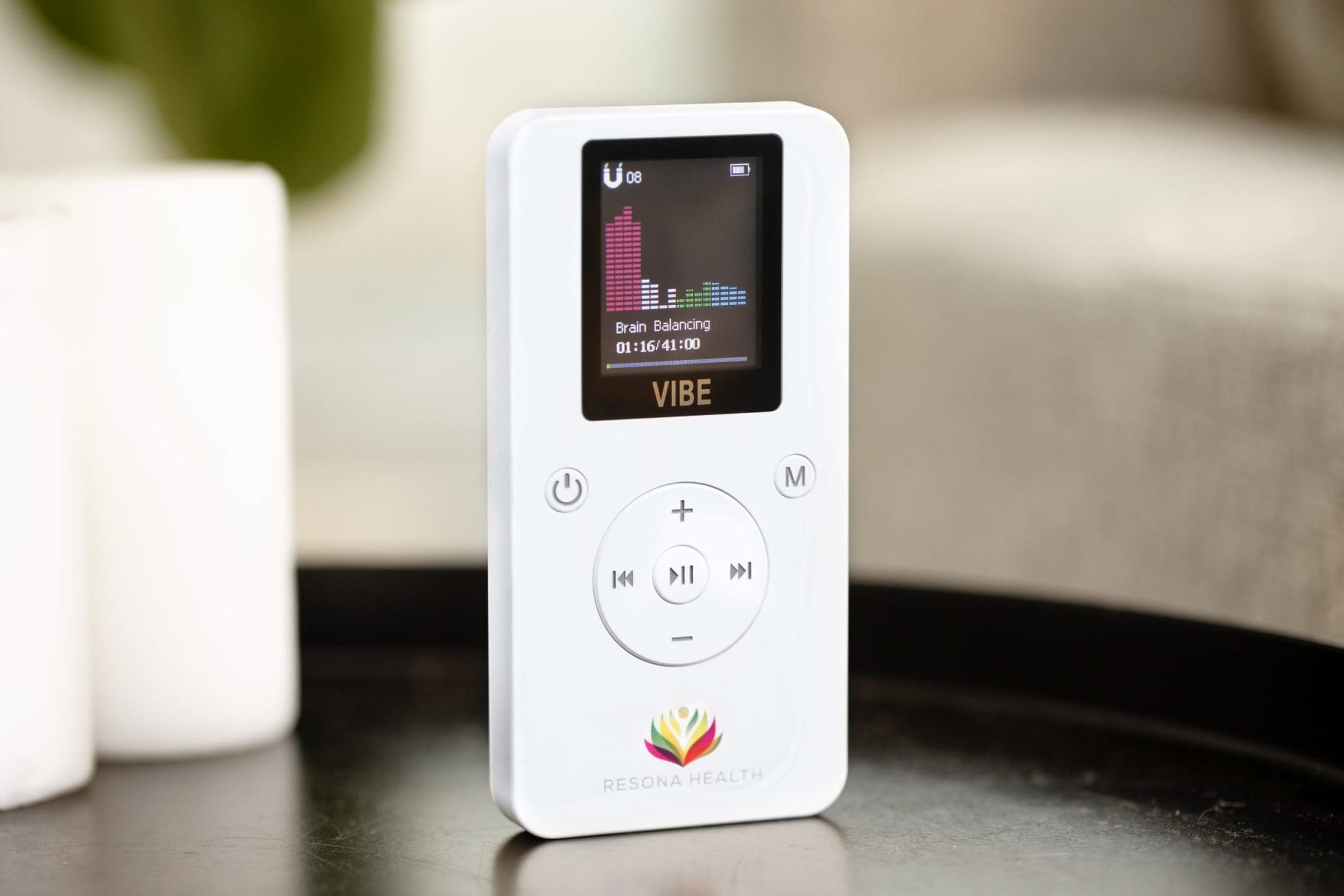
For those dealing with severe vagal dysfunction, the VIBE vagus nerve stimulator offers targeted support.
This NASA-derived technology uses pulsed electromagnetic fields to directly activate the vagus nerve. The manufacturer reports high user-satisfaction rates for PTSD symptoms, and published vagus nerve stimulation research links VNS to reduced anxiety, inflammation, and improved stress resilience.⁴,¹¹
It provides professional-grade vagal nerve stimulation without requiring surgery or prescription.
Exercise as Neurological Medicine
Exercise doesn’t just make you feel better temporarily — it actively reverses stress-induced brain damage.
Research shows regular physical activity increases neurogenesis in the hippocampus, growing new brain cells in the exact region that chronic stress shrinks.²,⁷
It simultaneously reduces inflammatory markers throughout the body and brain, tackles the oxidative stress that kills neurons, and improves mood and cognitive function.²,⁷
You don’t need extreme workouts.
Even moderate activity — walking 30 minutes most days — produces measurable benefits. The key is consistency, not intensity.
Sleep Restoration
Cortisol dysregulation destroys sleep architecture, and poor sleep further dysregulates your HPA axis, creating a vicious cycle.¹³
Breaking this cycle requires actively restoring circadian rhythm through consistent sleep-wake times, light exposure management, and pre-sleep routines that support vagal activation.
Quality sleep is non-negotiable for HPA axis recovery.
During deep sleep, your brain clears inflammatory proteins, consolidates memories, and resets stress hormones to their natural rhythm.¹³
Targeted Nutritional Support
While no supplement can replace lifestyle changes, certain nutrients support HPA axis recovery.
Adaptogens like ashwagandha help buffer the stress response.¹⁶ Omega-3 fatty acids reduce neuroinflammation.¹⁷ B vitamins support neurotransmitter production.¹⁸ Magnesium aids nervous system regulation.¹⁸
Both the oral and gut microbiomes deserve special attention here.
Emerging research shows that dysbiosis in either the oral or gut microbiome amplifies systemic inflammation, which directly impacts your stress response and HPA axis function.⁸,⁹,¹⁰,¹⁴
The oral-brain and gut-brain axes are bidirectionally connected — oral pathogens can migrate to the gut, while gut dysbiosis can increase intestinal permeability and trigger chronic inflammation that affects both oral health and brain function.⁸,⁹,¹⁰,¹⁴
Testing both your oral microbiome through Gateway to Health’s Orobiome testing and assessing your gut health can reveal hidden inflammatory triggers sabotaging your recovery.
Understanding the stress and gut health connection is crucial for complete nervous system restoration.
Mind-Body Integration
Here’s what decades of research on stress recovery consistently shows: the most effective interventions combine physical and mental elements.
Meditation for gut health works because it simultaneously calms the mind AND may help support the vagus nerve, which directly impacts your gut-brain axis.
This is why ancient practices like Qigong are so powerful — they integrate breathwork, movement, and focused attention in ways that simultaneously address multiple aspects of stress physiology.
One practice, multiple mechanisms of healing.
Moving from Reactive to Proactive
The biggest shift in reversing chronic stress effects isn’t learning new techniques — it’s changing your relationship with stress itself.
Reactive stress management treats each stressor as an isolated event to be handled.
Proactive stress mastery builds systemic resilience so your body recovers naturally from life’s inevitable challenges.
It’s the difference between firefighting and fireproofing.
Think about the stress and gut health connection. When your nervous system is dysregulated, every meal becomes a potential trigger for digestive symptoms.
But when you restore vagal tone and HPA axis function, your gut suddenly tolerates foods that used to cause problems. The food didn’t change — your stress physiology did.
This is what recovery looks like: not the absence of challenges, but a body that handles them gracefully.
Your Nervous System Can Heal
Here’s the truth most wellness content won’t tell you: recovery from chronic stress takes time.
The damage accumulated over years won’t reverse in weeks.
But it will reverse.
Research consistently shows that stress-induced brain changes can be restored, HPA axis function can normalize, and inflammatory patterns can shift.¹⁵
The key is consistent, targeted intervention that addresses root physiology rather than surface symptoms.
You don’t need to be perfect. You need to be persistent.
Start with one practice — maybe the breathing exercises in Temple Grounds, or daily walks, or a commitment to consistent sleep. Build from there. Each small change creates positive feedback loops that make the next change easier.
Your body wants to heal. It’s designed to recover. Chronic stress effects have blocked that natural healing process, but they haven’t destroyed it.
With the right approach, you can restore your nervous system’s innate resilience and reclaim the energy, clarity, and health that stress has been stealing.
The question isn’t whether you can recover. It’s whether you’re ready to stop managing and start mastering.
Sources
- An Integrative Approach to HPA Axis Dysfunction: From Recognition to Recovery. The American Journal of Medicine. 2025.
- Chronic Stress-Associated Depressive Disorders: The Impact of HPA Axis Dysregulation and Neuroinflammation on the Hippocampus. International Journal of Molecular Sciences, 2025.
- Chronic Stress and Autoimmunity: The Role of HPA Axis and Cortisol Dysregulation. International Journal of Molecular Sciences. 2025.
- Vagus Nerve as Modulator of the Brain–Gut Axis in Psychiatric and Inflammatory Disorders. Frontiers in Psychiatry.
- A meta-analysis of structural brain abnormalities in PTSD. Neuroscience & Biobehavioral Reviews. 2006.
- Tai Chi Chuan in Medicine and Health Promotion. Evidence-Based Complementary and Alternative Medicine. 2013.
- Effect of aerobic exercise on hippocampal volume in humans: A systematic review and meta-analysis. NeuroImage. 2018.
- The oral microbiome is associated with HPA axis response to a psychosocial stressor. Scientific Reports. 2024.
- From gums to moods: Exploring the impact of the oral microbiome on depression. Brain Behav Immun Health. 2025.
- Inflammatory Networks Linking Oral Microbiome with Systemic Health and Disease. Journal of Dental Research. 2020.
- The relationship of autonomic imbalance, heart rate variability and cardiovascular disease risk factors. International Journal of Cardiology. 2010.
- Breath of Life: The Respiratory Vagal Stimulation Model of Contemplative Activity. Frontiers in Human Neuroscience. 2018.
- Interactions between sleep, stress, and metabolism: From physiological to pathological conditions. Sleep Science. 2015.
- The Role of Short-Chain Fatty Acids From Gut Microbiota in Gut-Brain Communication. Frontiers in Endocrinology. 2020.
- Psychological therapy helps reduce chronic inflammation in body. UCLA Health. 2020.
- Arumugam V, Vijayakumar V, Balakrishnan A, et al. Effects of Ashwagandha (Withania Somnifera) on stress and anxiety: A systematic review and meta-analysis. Explore (NY). 2024.
- Malau IA, Chang JP, Lin YW, Chang CC, Chiu WC, Su KP. Omega-3 Fatty Acids and Neuroinflammation in Depression: Targeting Damage-Associated Molecular Patterns and Neural Biomarkers. Cells. 2024.
- Functional nutrition: a non-pharmacological approach to supporting cognitive health. Scientific Reports. 2026.