
You used to handle everything. Tight deadlines, difficult conversations, unexpected problems— you took them in stride.
Now?
A delayed email sends your heart racing. Small inconveniences feel overwhelming.
Your shoulders are permanently tight, and you wake up already exhausted.
That’s not a weakness.
That’s chronic stress depleting your stress reduction techniques and capacity to handle life’s demands.
Here’s the thing — the conventional advice about “just relaxing more” or “taking deep breaths” isn’t working because it’s addressing symptoms, not the root cause.
Chronic stress doesn’t just live in your mind.
It rewires your nervous system, disrupts your stress hormones, and changes how your body responds to everything.¹
In this article, you’ll learn evidence-based natural stress relief practices that work on a physiological level, not just psychological.
You’ll discover quick interventions for when stress hits hard, plus long-term strategies to rebuild your resilience.
And you’ll understand why your stress tolerance has decreased — and how to restore it.
The best part?
These holistic stress reduction methods don’t require hours of your day.
Even five minutes can shift your nervous system from fight-or-flight to rest-and-restore.
Keep reading — you’ll find practical techniques you can use today, backed by decades of research and clinical experience.
Key Takeaways
- Chronic stress creates a physiological state requiring physiological solutions, not just mental strategies.
- Quick 5-minute practices can immediately shift your nervous system from sympathetic to parasympathetic activation.
- Slow breathing activates your vagus nerve and can reduce cortisol levels within minutes.⁵,⁶,⁹
- Nature exposure for just 20-30 minutes produces measurable stress hormone reduction.¹⁰
- Building stress resilience requires consistent daily practice, not just reactive coping.
- December’s year-end pressure makes this the perfect time to interrupt the stress cycle.
- Ancient practices like breathwork work because they address nervous system regulation at the cellular level.
Master Ancient Stress-Relief in Just 10-15 Minutes Daily
Temple Grounds teaches the complete system of stress-mastery practices from Taoist temple training. These aren’t quick fixes — they’re time-tested techniques that fundamentally rewire your nervous system for lasting resilience.
Ancient breathwork, meditation & Qigong techniques
Rewire your stress response at the nervous system level
Just 10-15 minutes daily for profound results
Also available free for 2 weeks through The Urban Monk Academy trial
What’s Really Happening When Stress Becomes Chronic
I’ve been working with stressed-out professionals for decades.
The pattern I see repeatedly is people who used to be unshakeable now feel like one minor inconvenience away from a breakdown.
This isn’t a character flaw — it’s physiology.
When stress becomes chronic, your hypothalamic-pituitary-adrenal (HPA) axis — your body’s main stress response system — stops functioning properly.²
Baseline cortisol levels stay elevated, your body’s cortisol response to acute stress becomes blunted, and it takes longer for stress-induced cortisol to return to normal.³
Think of it like this: your stress response system was designed for occasional threats, not the constant pressure of modern life.
Chronic activation creates wear and tear that degrades the entire system. Your capacity to handle stress literally decreases.
And December can make everything worse. Year-end work pressure. Holiday obligations. Family dynamics. Financial strain.
The cumulative effect on your nervous system is real and measurable.
The Chronic Stress Degradation Cycle
How chronic activation wears down your stress response system
The HPA Axis Pathway
Hypothalamus → Pituitary → Adrenal glands
Your body’s main stress response system — designed for occasional threats
Constant Modern Pressure
Work deadlines • Financial strain • Family dynamics • Digital overwhelm
HPA Axis Dysfunction
• Baseline cortisol stays elevated
• Blunted cortisol response to new stress
• Slower recovery after stress events
Decreased Stress Capacity
Minor inconveniences feel overwhelming • Constantly on edge • Exhausted but wired
⚡ Intervention Point
Physiological practices that restore nervous system function and rebuild stress capacity
Five-Minute Practices for Immediate Stress Relief
Look, I get it — you’re time-starved.
The last thing you need is another elaborate self-care routine.
These daily stress relief practices take five minutes or less and produce immediate physiological changes.
The Physiological Sigh
Here’s the fastest way to shift from sympathetic to parasympathetic activation:
Take two short inhales through your nose, then one long, slow exhale through your mouth.⁴
Why it works:
This breathing pattern — double inhale, extended exhale — activates your vagus nerve faster than any other technique.
The vagus nerve is your body’s main relaxation pathway, and when you stimulate it, you trigger an immediate calming response.⁵
Your Body’s Master Relaxation Pathway
The vagus nerve connects your brain to key organs throughout your body
Brain Stem Origin
Where your vagus nerve begins its journey
Heart Rate Regulation
Slows racing heart • Improves heart rate variability • Supports cardiovascular calm
Breathing Control
Deepens breath • Activates diaphragm • Triggers relaxation response
Digestive Calm
Supports healthy digestion • Reduces gut tension • Strengthens gut-brain communication
💡 The Key to Stress Resilience
Strong vagal tone means better emotional regulation, lower inflammation, and faster stress recovery
How to Activate Your Vagus Nerve
Deep diaphragmatic breathing • Extended exhalation • Meditation • Cold exposure • Humming or chanting
Do this three times when you’re stuck in traffic, before a difficult conversation, or when your inbox feels overwhelming.
You’ll feel the shift within seconds.
Extended Exhalation Breathing
Slow breathing — particularly when you make your exhale longer than your inhale — activates your parasympathetic nervous system and lowers cortisol.⁶
Try this: Breathe in for a count of four, hold for four, breathe out for a count of six.
Repeat for five minutes.
Research shows this simple pattern improves heart rate variability (a marker of stress resilience) and reduces anxiety almost immediately.⁷
The key is the longer exhale — it signals safety to your nervous system.
Access the Complete Stress-Mastery Library Free for 2 Weeks
The Urban Monk Academy gives you Temple Grounds plus an entire library of breathwork, meditation, and Qigong courses. Learn the ancient practices that rewire your stress response, backed by a supportive healing community.
Full Temple Grounds course plus 50+ additional wellness courses
Community support for accountability and encouragement
Time-tested methods from Taoist temple training
Cancel anytime during your 2-week free trial period
Join thousands learning stress-mastery through ancient wisdom
The 5-4-3-2-1 Grounding Technique
When stress creates rumination and racing thoughts, this technique brings you back to the present moment:
- Name five things you see,
- four things you feel (texturally),
- three things you hear,
- two things you smell,
- one thing you taste.
This isn’t just a distraction.
It interrupts the stress response by engaging your sensory awareness instead of your worry circuits.
Use it in the bathroom at work, before family gatherings, or anytime anxiety spikes.
Building Long-Term Stress Resilience
Quick interventions help at the moment.
But if you want to stop feeling constantly overwhelmed, you need to build actual resilience — the capacity to handle stress without breaking down.
Vagus Nerve Activation
Your vagus nerve is like the master control for your parasympathetic nervous system.
Strong vagal tone means better emotional regulation, lower inflammation, and improved stress recovery.⁸
Deep, diaphragmatic breathing stimulates the vagus nerve with every breath.⁹
That’s why meditation practitioners report such profound calm — they’re literally strengthening their nervous system’s relaxation pathways.
Technology-Assisted Vagus Nerve Activation for Stress Relief
The VIBE Vagus Nerve Stimulator uses precise electromagnetic frequencies to activate vagal tone when you don’t have energy for active practice. The Brainwave Alpha & Theta protocol specifically targets deep calm and nervous system balance.
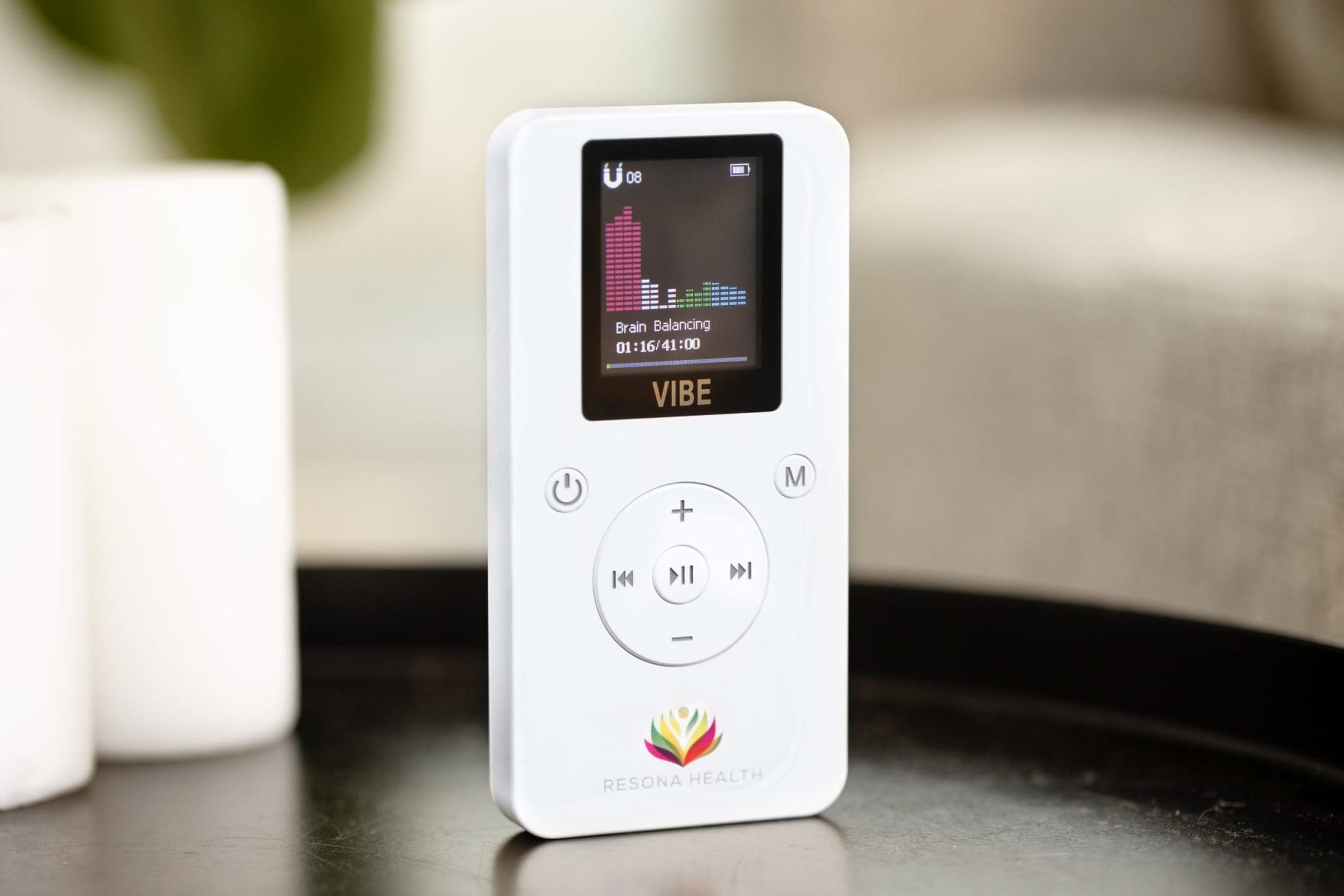
Precise electromagnetic frequencies for vagus nerve activation
Brainwave Alpha & Theta protocol for deep calm
Anxiety relief protocols for high-stress periods
Perfect for December overwhelm when active practice feels impossible
Ideal For:
Anxiety relief • Holiday stress • Nervous system balance • Deep relaxation
Science-backed electromagnetic frequency technology for vagal tone
Nature as Medicine
Research consistently shows that spending time in nature reduces cortisol levels.
One study found that 20-30 minutes in a natural setting produced the greatest efficiency in cortisol reduction per time spent, with cortisol levels dropping 21.3% per hour beyond the natural diurnal decline.¹⁰
Even if you can’t access wilderness, this works with urban green spaces.
Sit in a park during lunch. Walk through your neighborhood.
The key is being outside, without your phone, letting your attention settle on natural elements.
Learn more about using nature for stress resilience in this comprehensive guide.
Nature’s Stress-Relief Timeline
How quickly nature exposure reduces cortisol levels
Getting Settled
Your nervous system begins to shift • Mental chatter starts to quiet • Initial stress release begins
Maximum Efficiency Zone
⭐ 21.3% cortisol drop per hour¹⁰
Greatest stress hormone reduction efficiency • Optimal time investment for busy schedules
Continued Benefits
Sustained stress reduction • Deeper nervous system reset • Enhanced mental clarity and emotional balance
💡 The Sweet Spot
Just 20-30 minutes in nature produces measurable cortisol reduction—even in urban green spaces without your phone
Consistent Practice Over Intensity
Here’s what I’ve learned working with thousands of people: consistency beats intensity every time.
Five minutes of breathwork daily builds more resilience than an occasional hour-long meditation session.
Start small.
Pick one practice — extended exhalation breathing, a short walk outside, or simple mindfulness.
Do it every day for two weeks. Then add another practice.
The cumulative effect is remarkable.
Your nervous system literally adapts, building new neural pathways that support calm instead of reactivity.
December-Specific Strategies
This time of year amplifies stress for everyone. Year-end work deadlines collide with holiday obligations.
Family dynamics get complicated. Financial pressure increases.
Use these stress management strategies specifically for December:
Before high-stress events:
Do five minutes of slow breathing to pre-activate your parasympathetic system.
This isn’t about preventing stress — it’s about handling it better when it comes.
During overwhelm:
Step outside for even two minutes.
Cold air on your face, a few deep breaths, visual focus on something natural.
This interrupts the stress cascade before it spirals.
Daily recovery:
End each day with a simple practice — breathing, stretching, or brief meditation.
This prevents stress from accumulating day after day.
If you’ve been experiencing chronic stress that’s affecting your physical health, understanding the connection between stress and your body can help you recognize how deep this goes.
The Difference Between Coping and Thriving
Stress management is what you do when you’re already stressed.
Stress resilience is what prevents stress from destroying you in the first place.
The practices I’m sharing aren’t just coping mechanisms. They’re nervous system training.
When you practice slow breathing, you’re not just calming down at that moment — you’re teaching your vagus nerve to activate more easily next time.
When you spend time in nature, you’re not just taking a break — you’re reducing your baseline cortisol and improving your body’s stress recovery capacity.
This is the difference between surviving and thriving.
December is the perfect time to start. Not next month. Not after the holidays when things “calm down.” Now — when you need it most.
Your Complete Stress Management System + Community
The Urban Monk Academy provides comprehensive courses on stress management, meditation practices, breathwork techniques, and ongoing community support. Everything you need to build lasting resilience and thrive through life’s challenges.
Comprehensive stress management courses from foundational to advanced
Meditation & breathwork practices for daily resilience building
Community healing approach with ongoing support and accountability
Access to 50+ wellness courses including Temple Grounds
Build resilience that lasts with expert guidance and community support
You Don’t Have to White-Knuckle Through This
Chronic stress isn’t a character test you need to pass through willpower alone.
It’s a physiological state that requires physiological solutions.
The breathing exercises, vagus nerve activation, and nature exposure I’ve shared work because they address the actual mechanisms of your stress response.
Not your thoughts about stress. Not your attitude toward it. The nervous system regulation itself.
Start with what’s easiest.
Maybe that’s five minutes of extended exhalation breathing before bed.
Maybe it’s a 20-minute walk outside during lunch.
Maybe it’s using a technology like the VIBE device when you don’t have energy for active practice.
What matters is that you start.
Your nervous system is adaptable. It learned to be reactive — it can learn to be resilient again.
If you’ve reached a point of true burnout, this article on what actually works for burnout recovery goes deeper into restoration strategies.
The holidays will be demanding. Work will be intense. That’s reality.
But you can move through it with a nervous system that handles stress instead of one that breaks under it.
That’s what these practices build. Not immunity to stress — resilience in the face of it.
Sources
- Understanding the stress response. Harvard Medical School. 2024.
- A new model for the HPA axis explains dysregulation of stress hormones on the timescale of weeks. Mol Syst Biol. 2020.
- Physiology, Stress Reaction. StatPearls [Internet]. 2024.
- The physiological effects of slow breathing in the healthy human. Breathe (Sheff). 2017.
- Breath of Life: The Respiratory Vagal Stimulation Model of Contemplative Activity. Front Hum Neurosci. 2018.
- How Breath-Control Can Change Your Life: A Systematic Review on Psycho-Physiological Correlates of Slow Breathing. Front Hum Neurosci. 2018.
- Heart rate variability biofeedback: how and why does it work? Front Psychol. 2014.
- Upward spirals of the heart: Autonomic flexibility, as indexed by vagal tone, reciprocally and prospectively predicts positive emotions and social connectedness. Biol Psychol. 2016.
- Heart Rate Variability and Cardiac Vagal Tone in Psychophysiological Research – Recommendations for Experiment Planning, Data Analysis, and Data Reporting. Front Psychol. 2017.
- Urban Nature Experiences Reduce Stress in the Context of Daily Life Based on Salivary Biomarkers. Front Psychol. 2019.