
True nervous system regulation means teaching your body to feel safe again
You know that feeling when your heart races even though nothing’s wrong?
When your shoulders live somewhere near your ears and you can’t remember the last time you took a full breath?
That’s not anxiety talking — that’s your nervous system stuck in survival mode.
I’ve spent decades studying how our bodies respond to the modern world’s relentless demands.
What I’ve learned working with thousands of patients is this:
Nervous system regulation isn’t about staying calm. It’s about rewiring your body’s fundamental response to stress so you stop living in a constant state of emergency.
Here’s what you need to understand before we go further — and trust me, this information could shift everything about how you approach your health.
Keep reading, because somewhere in the next few minutes, I’m going to share a practice that one of my patients described as “better than therapy.”
Key Takeaways
- Nervous system regulation is essential for healing — your body cannot repair itself while stuck in defensive states.
- Polyvagal theory explains why simple relaxation techniques often fail: your nervous system operates in hierarchical survival states.¹,²
- Chronic stress dysregulates the HPA axis, leading to cortisol imbalance, inflammation, and increased disease risk.³,⁴
- The vagus nerve acts as your body’s “safety switch” — activating it shifts you from survival to restoration mode.
- Breathwork, specifically slow breathing at 5-6 breaths per minute, measurably increases vagal tone and parasympathetic activity.⁵,⁶
- Daily practices that activate parasympathetic nervous system support create lasting changes in stress resilience.
- Nervous system dysregulation impacts every system in your body — from digestion to immunity to cognitive function.
Regulate Your Nervous System at the Root
The Advanced Framework for Rewiring Your Stress Response — For Good
The next step for those ready to go beyond symptom management and address the foundation
Your body doesn’t speak English
Think about the last time someone told you to “just relax.”
Did it work? Of course not.
Your nervous system doesn’t respond to verbal commands — it responds to signals of safety or danger. And right now, for most of us, those danger signals never turn off.
Modern life keeps your sympathetic nervous system — your fight-or-flight response — chronically activated.
The buzzing phone, the inbox that never empties, the news cycle that never stops, the financial pressure, the relationship stress. Your body interprets all of it the same way: threat.
And here’s where conventional medicine often misses the mark: it treats your symptoms — the insomnia, the digestive issues, the anxiety, the brain fog — as separate problems.
But they’re not.
They’re all downstream effects of a nervous system that’s been locked in survival mode for so long it’s forgotten how to do anything else.
The science your doctor probably didn’t explain
Dr. Stephen Porges developed polyvagal theory in 1994, fundamentally changing how we understand stress responses.¹
His research revealed that our autonomic nervous system operates in three distinct states, organized hierarchically based on evolutionary development.¹,²
The newest system, unique to mammals, is our ventral vagal complex — the social engagement system. This is where healing happens.
When this system is active, your body feels safe enough to rest, digest, repair tissues, and engage socially. Your heart rate variability increases,²,¹⁹ inflammation decreases,²⁰,²¹ and your immune system functions optimally.²²
But when your nervous system detects threat — and in our modern world, that’s almost constantly — it drops down to older survival systems.
First comes sympathetic activation: fight or flight. Your heart races, cortisol floods your system, digestion shuts down.
If that doesn’t resolve the threat, your body drops to the most primitive state: dorsal vagal shutdown. This is where collapse, dissociation, and that “too exhausted to function” feeling lives.
The problem? Chronic stress keeps your hypothalamic-pituitary-adrenal (HPA) axis constantly activated.
Research shows that prolonged cortisol exposure leads to HPA axis dysregulation, which drives neuroinflammation, cognitive decline, immune dysfunction, and metabolic disorders.³,⁴,⁸
Your body literally cannot heal when it’s constantly preparing for battle.
The vagus nerve is your way back
The vagus nerve — the longest cranial nerve in your body — is the main pathway of your parasympathetic nervous system.
Think of it as your body’s reset button. When activated properly, it signals to every major organ system that it’s safe to stand down from high alert.
Here’s what activating your vagus nerve actually does: It slows your heart rate. It stimulates digestive function. It reduces inflammation by modulating immune responses.
It enhances HRV — heart rate variability — which research identifies as a key marker of stress resilience and autonomic flexibility.⁷
And the revolutionary part? You can train it.
What Happens When You Activate Your Vagus Nerve
The body-wide effects of vagal activation
⚡ VAGUS NERVE PATHWAY ⚡
Longest cranial nerve connecting brain to every major organ
Heart Rate & HRV
Slows heart rate naturally and increases heart rate variability — your body’s key marker of stress resilience
Stress Response
Reduces cortisol and anxiety by shifting your nervous system from fight-or-flight to rest-and-restore mode
Digestive Function
Stimulates digestive processes that shut down during stress — essential for nutrient absorption and gut healing
Inflammation Control
Modulates immune response and reduces chronic inflammation throughout your entire body system
Whole-Body Safety Signal
Tells every major organ system it’s safe to rest, repair, and restore — the foundation of all healing
Vagal activation shifts you from survival to restoration mode
Recent research demonstrates that slow breathing techniques at approximately 5-6 breaths per minute significantly improve vagal tone, increase parasympathetic activity, and reduce cortisol, anxiety, and stress.⁵,⁶,⁹
This isn’t just “feeling calmer” — this is measurable physiological change at the nervous system level.
I know what you’re thinking. You’ve tried deep breathing. It didn’t work.
Here’s why: random deep breaths don’t create the specific pattern needed to activate vagal pathways.
You need intentional breathwork that creates respiratory sinus arrhythmia — the natural fluctuation in heart rate that occurs when your breathing synchronizes with your cardiovascular system.¹⁰
Studies show that even a single session of slow, diaphragmatic breathing with longer exhalations than inhalations increases high-frequency heart rate variability — the gold standard measure of parasympathetic tone — in both young and older adults.¹¹
This isn’t placebo. This is neurobiology.
Build Lasting Vagal Tone Through Movement
Master the exact breathwork and body movement practices that activate your vagus nerve and stimulate parasympathetic pathways.
Comprehensive Qigong training designed for nervous system regulation
Coordinated breathing & movement that stimulate parasympathetic pathways
Build lasting vagal tone — not just temporary relaxation
💚 Ancient practices, modern neuroscience — precision tools for nervous system healing
What daily nervous system regulation actually looks like
One of my Free 5-Day Reset participants, Claudia, told me something that stuck with me:
“I just did the flow and I feel great — relaxed and focused. It works!”
That’s the power of nervous system regulation done right. Not months of therapy. Not another supplement stack. Just five days of actually teaching her body to feel safe again.
Another participant, Deanna, described it this way:
“The 3-2-1 practice made me feel really grounded. I have set up a journal to record the times and dates I do the practice.”
She’s experiencing what happens when you give your nervous system the daily signal it’s been waiting for: permission to rest.
This is what people miss about stress management — it’s not about eliminating stressors. It’s about building capacity to regulate your response.
Research on stress resilience practices demonstrates that resilience training enhances the ability to withstand stress and promotes adaptive coping strategies.¹²,¹³
Your nervous system needs daily input.
Just like you wouldn’t expect to build cardiovascular fitness with one workout, you can’t expect lasting nervous system changes without consistent practice.
The practices that work target vagal activation through specific mechanisms:
Breathwork: Slow, nasal, diaphragmatic breathing with extended exhalations. Start with at least 5 vagus nerve exercises that you can do anywhere, anytime.
The research is clear — six breaths per minute is the sweet spot for maximum vagal activation.⁵,⁹,¹⁰
Movement practices: Ancient traditions like Qigong and Tai Chi weren’t designed as exercise — they were designed as nervous system regulation tools.
These slow, intentional movements combined with specific breathing patterns create what modern science now measures as increased parasympathetic tone.
This is exactly what I teach in Temple Grounds, where you learn the foundational Qigong and meditation practices that have regulated nervous systems for thousands of years.
Frequency-based support: For those dealing with severe nervous system dysregulation — trauma, chronic anxiety, PTSD — sometimes you need additional support.
Research on pulsed electromagnetic field (PEMF) therapy shows that specific frequencies can support vagus nerve stimulation and autonomic nervous system modulation.¹⁴
One user reported:
“Using PEMF therapy has been a game-changer for my anxiousness. After just a few sessions, I noticed a profound sense of calm and clarity I hadn’t felt in years.”
The VIBE device offers four different protocols targeting anxiety, relaxation, vagal toning through alpha and theta brainwave states, and PTSD recovery.
With double-blind, placebo-controlled research supporting PEMF therapy benefits for vagus nerve stimulation,¹⁴ this technology represents a non-invasive way to support vagus nerve stimulation when traditional practices aren’t enough.
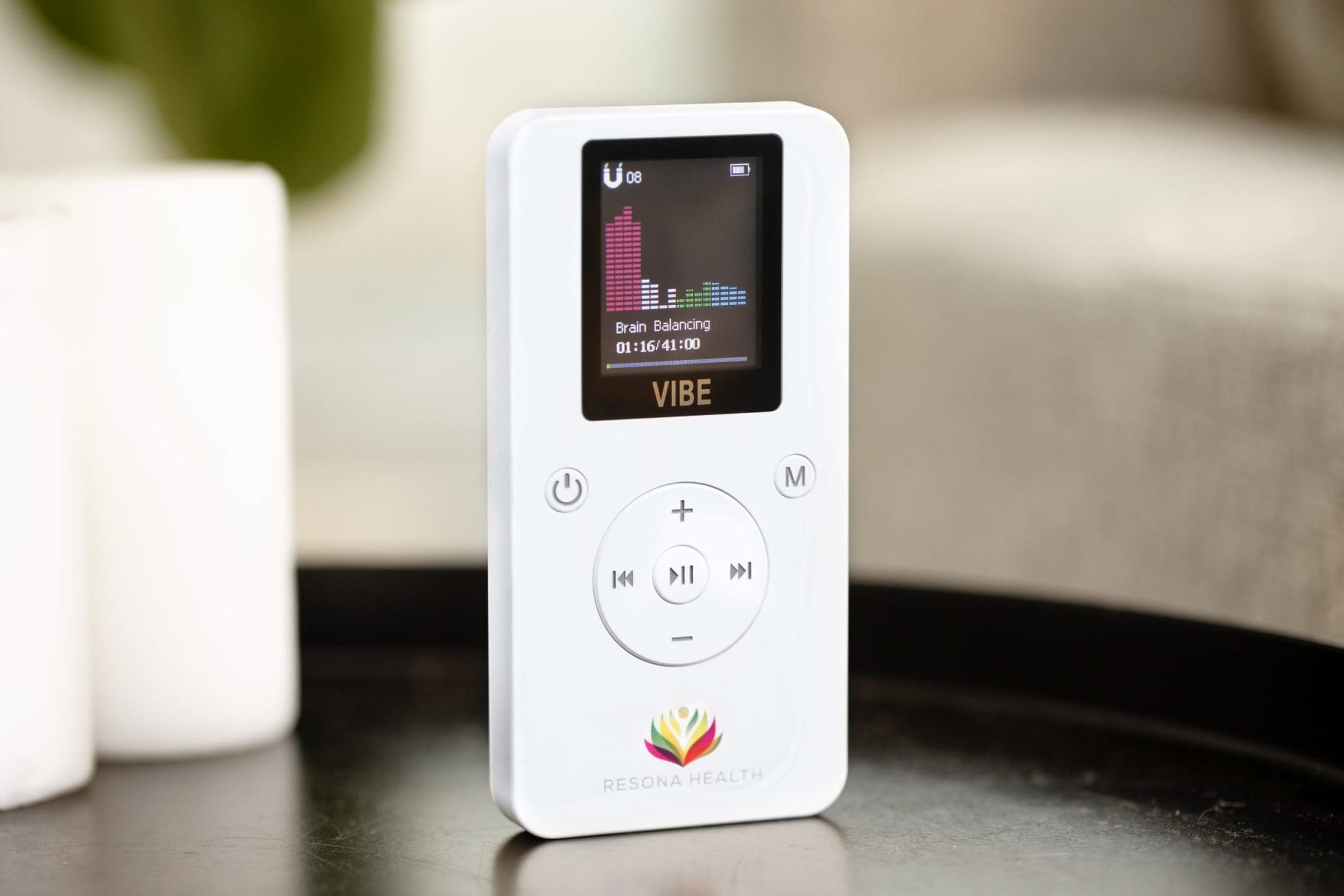
Science-Backed Nervous System Support at Home
When breathwork and movement aren’t enough, the VIBE device provides targeted PEMF frequencies for vagus nerve modulation.
🔬 Double-blind, placebo-controlled research supports PEMF for vagus nerve stimulation
Why your nervous system affects everything
Let me be direct about something conventional medicine often downplays: when your nervous system is dysregulated, every system in your body suffers.
How Nervous System Dysregulation Affects Every System
The cascade effect when your nervous system stays stuck in threat mode
⚠️ DYSREGULATED NERVOUS SYSTEM
↓ Creates downstream effects in ↓
Gut Health
Disrupted gut-brain axis leads to leaky gut, microbiome imbalance, and IBS symptoms — stress literally changes your gut environment
Immune Function
Suppressed immune response from constant cortisol exposure — chronic inflammation, frequent illness, autoimmune flares
Cognitive Function
Neuroinflammation and cortisol damage cause brain fog, poor memory, inability to focus — not aging, but stress
Metabolic Health
HPA axis dysregulation disrupts cortisol rhythms, blood sugar balance, thyroid function, and sex hormones
One dysregulated system affects them all
Regulate your nervous system, heal at the root
Your gut? The enteric nervous system — your “second brain” — is directly controlled by vagal pathways.
Chronic stress disrupts the gut-brain axis, leading to increased intestinal permeability, altered microbiome composition, and exacerbated symptoms of conditions like irritable bowel syndrome.¹⁵
This is why stress and gut health are inextricably linked.
Your immune system? Prolonged cortisol elevation suppresses immune function by inhibiting pro-inflammatory cytokine production and reducing lymphocyte activity.¹⁶
You can take all the supplements you want, but if your nervous system is stuck in threat mode, your immune system can’t function properly.
Your cognitive function? Research on patients with chronic cortisol exposure shows consistent cognitive decline, with elevated cortisol identified as a major risk factor for cognitive impairment.¹⁷
That brain fog, poor memory, inability to focus — it’s not aging. It’s your nervous system crying for help.
This is why I created the Free 5-Day Reset. In just 10-15 minutes a day, you’ll learn the foundational practices that shift your nervous system out of survival mode.
These aren’t theoretical exercises — they’re the same techniques I’ve used with thousands of patients who were told their symptoms were “just stress” or “all in their head.”
Shift From Survival to Healing in 5 Days
Get the exact practices that regulate your nervous system in just 10-15 minutes daily
Join hundreds who’ve discovered what true nervous system regulation feels like
The path forward starts with safety
Here’s what I need you to understand: you cannot think your way out of a dysregulated nervous system. You cannot positive-think your way to parasympathetic activation.
Your body needs bottom-up interventions that speak its language — the language of safety signals.
Mental resilience training and mindfulness meditation benefits are real, but they work best when your nervous system is already regulated enough to access them.
If you’re in active threat response, trying to meditate is like trying to do yoga during a house fire.
Start where you are.
If you’re dealing with burnout recovery or burnout prevention, the first step isn’t working harder on self-care — it’s teaching your body it’s actually safe enough to rest.
The research on voluntary slow breathing shows that increases in parasympathetic nervous control happen during practice, immediately after one session, and after multi-session interventions.¹⁸
Translation: you’ll feel benefits right away, and they compound over time.
This isn’t about perfection. It’s about consistent practice.
Even daily meditation practice or meditation for anxiety becomes more effective when you’re working with a nervous system that can actually access those calm states.
For those looking to go deeper — to really understand how to cultivate sustainable energy instead of constantly borrowing from tomorrow — Lights On is the advanced continuation of the Free 5-Day Reset.
You’ll learn not just the practices, but the principles behind them. How to read your body’s signals. How to titrate stress exposure for growth without overwhelm. How to build genuine stress resilience instead of just better coping mechanisms.
Master Sustainable Energy & Deep Resilience
Go beyond the basics of the 5-Day Reset into advanced techniques for lasting nervous system regulation
Energy Cultivation
Build power instead of borrowing from tomorrow
Deep Resilience
Transform stress response at the root
Advanced Principles
Understand the ‘why’ behind the practices
Permanent Change
Where transformation becomes lasting
💡 The next step after the Free 5-Day Reset for those ready to go deeper
Your next step
Your nervous system has been trying to protect you. It’s not broken — it’s doing exactly what it was designed to do in the face of relentless threat.
The problem is, those threats aren’t the kind your body evolved to handle.
You can continue pushing through, managing symptoms, wondering why nothing seems to stick. Or you can address the foundation — teaching your body that it’s safe to rest, digest, heal, and thrive.
Start with the Free 5-Day Reset. No cost, no commitment, just five days of practical techniques that thousands have used to shift out of survival mode.
You’ll discover practices like the Evening Shutdown Ritual that actually turns your brain off at night, and the 10-Minute Morning Protocol that primes your nervous system for regulation instead of reactivity.
If you’re ready for comprehensive nervous system training through ancient Qigong practices, Temple Grounds provides the complete roadmap.
You’ll learn the precise body movement and breathwork sequences that activate parasympathetic pathways and build lasting vagal tone.
And if you need additional support for severe anxiety or trauma responses, consider the VIBE device as a complement to your practice.
It’s not a replacement for the inner work, but it can help shift your nervous system enough that the inner work becomes possible.
Your body wants to heal. It’s waiting for the signal that it’s safe to do so. Give it that signal daily, and watch what becomes possible.
Master Sustainable Energy & Deep Resilience
Go beyond stress management — learn the principles and practices that rewire your nervous system at the root and build lasting energy from the inside out
The advanced continuation of the Free 5-Day Reset — for those ready to transform, not just cope
Ancient practices, modern neuroscience — precision tools for nervous system healing
Sources
- The polyvagal perspective. Biological Psychology. 2008.
- Polyvagal Theory: Current status, clinical applications, and future directions. Clinical Neuropsychiatry. 2025.
- The role of cortisol in chronic stress, neurodegenerative diseases, and psychological disorders. Cells. 2023.
- Understanding the relationships between physiological and psychosocial stress, cortisol and cognition. Frontiers in Endocrinology. 2023.
- The A52 Breath Method: A narrative review of breathwork for mental health and stress resilience. Stress and Health. 2025.
- Effects of voluntary slow breathing on heart rate and heart rate variability: A systematic review and a meta-analysis. Neuroscience & Biobehavioral Reviews. 2022.
- The Polyvagal Theory: Neurophysiological foundations of emotions, attachment, communication, and self-regulation. J Can Acad Child Adolesc Psychiatry. 2012.
- Neurobiological implications of chronic stress and metabolic dysregulation in inflammatory bowel diseases. Diseases. 2024.
- Breathe better, live better: the science of slow breathing and heart rate variability. Acta Neurologica Belgica. 2025.
- The promise of heart rate variability biofeedback: evidence-based applications. Biofeedback. 2013.
- Benefits from one session of deep and slow breathing on vagal tone and anxiety in young and older adults. Scientific Reports. 2021.
- The proactive-reactive resilience as a mediational variable between the character strength and the flourishing in undergraduate students. Frontiers in Psychology. 2022.
- The influence of cognitive control training on stress reactivity and rumination in response to a laboratory stressor and naturalistic stress. Behaviour Research and Therapy. 2015.
- Evaluating PEMF vagus nerve stimulation through neck application: A randomized placebo study with volunteers. Electromagnetic Biology and Medicine. 2024.
- Neurobiological implications of chronic stress and metabolic dysregulation in inflammatory bowel diseases. Diseases. 2024.
- Physiology, stress reaction. StatPearls. 2024.
- The impact of prolonged high-concentration cortisol exposure on cognitive function and risk factors: Evidence from Cushing’s disease patients. J Alzheimers Dis Rep. 2025.
- Effects of voluntary slow breathing on heart rate and heart rate variability: A systematic review and meta-analysis. Neuroscience & Biobehavioral Reviews. 2022.
- Harnessing non-invasive vagal neuromodulation: HRV biofeedback and SSP for cardiovascular and autonomic regulation. Medical International. 2025.
- The relationship between heart rate variability and inflammatory markers in cardiovascular diseases. Psychoneuroendocrinology. 2008.
- Heart rate variability and inflammation: A meta-analysis of human studies. Brain, Behavior, and Immunity. 2019.
- Heart rate variability predicts levels of inflammatory markers: Evidence for the vagal anti-inflammatory pathway. Brain, Behavior, and Immunity. 2015.