
You wake up exhausted even after eight hours of sleep. By 10 AM, you’re reaching for your second cup of coffee.
The afternoon crash hits at 2 PM like clockwork, and yet you lie awake at night, mind racing despite being completely drained.
If this sounds familiar, you’re not dealing with laziness or lack of willpower.
What you’re experiencing is adrenal fatigue — a condition where chronic stress has depleted your body’s stress response system to the point where it can’t function normally anymore.1
The good news?
Adrenal fatigue recovery is absolutely possible when you understand what’s really happening and address the root causes.
I’ve worked with thousands of patients in my practice who describe this exact pattern.
They feel “tired but wired,” unable to relax despite being exhausted, and they’ve tried everything from more sleep to more caffeine.
But none of it works because they’re not addressing the root cause.
In this article, you’ll discover the real science behind healing adrenal fatigue naturally, including the three-phase recovery timeline that actually works, the gut connection most doctors miss, and practical tools — including ancient practices and modern technology — that support your body’s natural healing process.
Keep reading because buried in this article is information that could finally explain why you’ve been struggling for so long, and more importantly, what to do about it.
Key Takeaways
- Adrenal fatigue (or HPA axis dysfunction) occurs when chronic stress depletes your stress response system, creating disrupted cortisol rhythms that leave you exhausted yet unable to relax.1
- Recovery happens in three phases: Rescue (stabilize), Rebuild (restore function), and Resilience (maintain long-term balance).
- Cortisol and adrenal health are intimately connected to gut health — inflammation and gut permeability can worsen HPA dysfunction.13
- Healing adrenal fatigue naturally requires more than rest; it demands targeted lifestyle changes, adaptogenic supplements for adrenal fatigue, and stress-management practices.
- The adrenal recovery timeline varies by individual but typically requires 3-12 months of consistent support.
- Comprehensive gut testing can reveal hidden inflammation, food sensitivities, and gut permeability issues that sabotage adrenal recovery.
- Ancient practices like Qigong and meditation directly regulate HPA axis function14 while modern tools like wearable technology can accelerate healing.12
Is Your Gut Sabotaging Your Adrenal Recovery?
Hidden inflammation and food sensitivities can keep your stress hormones dysregulated — no matter what else you try. Comprehensive testing reveals what conventional doctors miss.
Personalized protocols that address YOUR root causes
Understanding Adrenal Fatigue vs. HPA Axis Dysfunction
Let’s clear something up right away.
The term “adrenal fatigue” has become controversial in medical circles, with some practitioners arguing it doesn’t exist.
But here’s what I see in practice every single day: people whose stress response systems are completely dysregulated.
Whether you call it adrenal fatigue or HPA axis dysfunction, the reality is the same.
Your hypothalamic-pituitary-adrenal (HPA) axis — the command center that manages your body’s response to stress — has been pushed beyond its limits.1
Think of your HPA axis like a thermostat that regulates stress hormones, particularly cortisol and adrenal health.
Under normal conditions, cortisol follows a predictable rhythm: high in the morning to help you wake up, gradually declining throughout the day, and low at night so you can sleep.
This is your body’s natural stress response at work.
But chronic stress disrupts this delicate rhythm.
After prolonged activation, your HPA axis shifts into an “allostatic” state where baseline cortisol levels become elevated, your acute stress response becomes blunted, and it takes much longer for stress-induced cortisol to return to normal.2
The HPA Axis: Your Body’s Stress Command Center
The brain’s “thermostat” detects stress and releases CRH (corticotropin-releasing hormone) to activate your stress response system.
The “messenger gland” responds by releasing ACTH (adrenocorticotropic hormone) into your bloodstream.
Your adrenal glands produce cortisol — the primary stress hormone that mobilizes energy and prepares you for action.
When Dysregulated: This pathway stays activated 24/7, depleting your energy reserves and disrupting normal cortisol rhythms.
The system becomes both hyperactive and exhausted simultaneously — hence that “tired but wired” feeling.
A patient of mine, a 42-year-old executive, described it perfectly:
“I feel like my body forgot how to relax. I’m exhausted but my brain won’t shut off.”
Her story reflects what research shows: prolonged HPA axis activation leads to dysregulation on a timescale of weeks to months, affecting everything from your energy to your immune system.3
The Real Adrenal Fatigue Symptoms You Shouldn’t Ignore
Adrenal fatigue symptoms extend far beyond just being tired.
In my practice, I see patterns emerge again and again.
Here’s what healing adrenal fatigue naturally requires you to recognize first:
The “Tired But Wired” Paradox
You’re completely exhausted but can’t fall asleep or stay asleep. Your mind races at bedtime even though your body is screaming for rest.
This happens because disrupted cortisol rhythms — with levels too high at night — prevent your nervous system from downshifting into rest mode.4
The Morning Struggle
You wake up feeling like you never slept. That cortisol awakening response that should energize you? It’s blunted or absent.
One patient told me, “I need two alarms and three coffees just to feel halfway human by 10 AM.”
The Afternoon Crash
By 2-3 PM, you hit a wall.
Your energy tanks, brain fog sets in, and suddenly you need sugar or caffeine just to make it through.
This is your dysregulated cortisol rhythm failing to maintain steady energy throughout the day.
Stress Overreaction
Normal stressors that you used to handle easily now feel overwhelming.
A delayed email feels like a crisis. Traffic becomes unbearable.
Your stress tolerance has eroded because your HPA axis can’t mount an appropriate response anymore.5
The Gut-Stress Connection
Many people don’t realize their digestive issues are connected.
Bloating, irregular bowels, and food sensitivities often worsen during adrenal fatigue because chronic stress disrupts gut function.
This creates a vicious cycle — stress and gut health are intimately linked, and gut inflammation further dysregulates your HPA axis.13
If you’re nodding your head to three or more of these, it’s time to take adrenal fatigue recovery seriously.
The Three-Phase Adrenal Recovery Timeline
Here’s what most people get wrong about healing adrenal fatigue naturally: they expect quick fixes.
But your HPA axis didn’t become dysregulated overnight, and it won’t heal overnight either.
The adrenal fatigue recovery timeline follows three distinct phases, and understanding where you are helps set realistic expectations.
Phase 1: Rescue (Weeks 1-4)
This is about stabilization. Your immediate goal isn’t complete healing — it’s stopping the free fall.
What’s happening physiologically: Your HPA axis is in crisis mode.
Cortisol rhythms are severely disrupted, inflammation is high, and your body is running on adrenaline fumes.
Your action steps:
- Eliminate the obvious stressors: I know you can’t quit your job, but you can say no to that extra committee, skip the social obligation that drains you, or ask for help with household tasks.
- Prioritize sleep above everything: Even if you can’t sleep well, protect your sleep window. Dark room, cool temperature, no screens an hour before bed. Sleep quality issues directly impact adrenal recovery.
- Start adaptogenic support: Supplements for adrenal fatigue like ashwagandha or rhodiola can begin modulating your stress response immediately. More on this below.
- Address gut inflammation: If you have digestive issues, they’re likely worsening your HPA dysfunction. Consider starting with digestive enzymes and removing obvious inflammatory foods.
One patient, a nurse working night shifts, started with just these four changes.
Within three weeks, she reported, “I’m still tired, but I’m not walking around in a fog anymore. I can actually think clearly again.”
Phase 2: Rebuild (Months 2-6)
Now we’re working on restoration. Your HPA axis is no longer in crisis, and we can focus on rebuilding resilience.
What’s happening physiologically: Your cortisol rhythms are starting to normalize.
The blunted awakening response is gradually improving, and you’re beginning to sleep more consistently.
Your body is shifting from survival mode to repair mode.
Your action steps:
- Implement structured stress practices: This is where ancient wisdom meets modern science.
Practices like Qigong and meditation don’t just help you “relax” — they directly regulate HPA axis function by activating your parasympathetic nervous system.6
- Test for hidden stressors: This is critical. Comprehensive gut testing can reveal food sensitivities, gut permeability issues (leaky gut), and chronic inflammation that’s keeping your HPA axis activated. You can’t heal what you can’t see.
- Build your energy reserves: Now you can start gentle exercise. Walking, yoga, or light strength training — not intense HIIT that further stresses your system. Energy management techniques become crucial here.
- Fine-tune your adaptogen protocol: Based on how you’re responding, you might adjust dosages or try different adaptogens.
Rhodiola for energy and focus, ashwagandha for sleep and anxiety — healing adrenal fatigue naturally means personalizing your approach.
I had a patient who plateaued at month three.
When we ran gut permeability testing, we discovered severe leaky gut and sensitivity to 12 different foods. Once we addressed those, her adrenal recovery accelerated dramatically.
Stuck in Your Recovery? Your Gut Holds the Answers.
Many people plateau at this stage because hidden gut issues keep triggering their HPA axis. Food sensitivities, gut permeability, and inflammation markers that conventional doctors miss could be blocking your progress.
Comprehensive testing reveals zonulin, LPS, candida & more
Phase 3: Resilience (Months 6-12+)
This final phase is about building long-term stress resilience so you don’t end up back where you started.
What’s happening physiologically: Your cortisol rhythms are largely normalized.
You wake with energy, maintain it through the day, and wind down naturally at night.
Your stress response is appropriate to the situation — you can handle challenges without overreacting or collapsing.
Your action steps:
- Maintain your practices: The meditation, Qigong, or breathwork that got you here? They’re not temporary tools — they’re lifelong practices. The Temple Grounds course offers comprehensive training in these ancient energy cultivation practices.
- Set boundaries: This is non-negotiable. Healing adrenal fatigue naturally only to return to the lifestyle that broke you down makes no sense. You’ve learned what your body needs — honor that.
- Continue nutritional support: Your gut-HPA axis connection remains. Keep supporting gut health and energy levels with quality nutrition and targeted supplements.
- Monitor for early warning signs: Know your red flags. If you start sleeping poorly or craving sugar again, don’t ignore it — address it immediately before you spiral back.
The adrenal recovery timeline isn’t linear. You’ll have good weeks and setbacks.
But with consistent support, most people see significant improvement within 6-9 months and full recovery within a year.
Why Your Gut Health Matters for Adrenal Recovery
Here’s something most articles on adrenal fatigue recovery completely miss: your gut and your HPA axis are in constant communication.
And when your gut is inflamed, your adrenal recovery stalls.
The science is clear.
Chronic stress increases intestinal permeability — what we call leaky gut syndrome — allowing inflammatory compounds to enter your bloodstream.7
These inflammatory signals trigger your HPA axis to release more cortisol. More cortisol damages your gut lining further. It’s a vicious cycle that keeps you stuck.
The Gut-Adrenal Vicious Cycle
How chronic stress and gut dysfunction perpetuate each other
CHRONIC STRESS
Prolonged activation of your HPA axis
Leaky Gut Develops
Cortisol damages tight junctions in your gut lining, increasing intestinal permeability and allowing inflammatory compounds to escape.
Inflammation Surges
Bacterial toxins (LPS) and food particles enter your bloodstream, triggering widespread immune activation and systemic inflammation.
HPA Axis Reactivates
Inflammatory signals tell your brain there’s a threat, causing more cortisol release and further gut damage.
The cycle repeats — keeping you exhausted, inflamed, and unable to recover without addressing BOTH systems.
I had a patient who had been “doing everything right” for adrenal fatigue recovery for six months with minimal progress.
Her sleep was better, she was taking adaptogens, she’d reduced her work hours. But she was still exhausted and dealing with constant bloating and brain fog and anxiety.
When we tested her gut, we found severe intestinal permeability, elevated LPS (a bacterial toxin), and antibodies to 14 different foods.
Her immune system was in constant activation mode, keeping her HPA axis dysregulated no matter what else she did.
Once we addressed her gut inflammation with an elimination diet based on her test results, repaired her gut lining, and rebalanced her microbiome, everything changed.
Within eight weeks, her energy returned, her brain fog lifted, and she told me, “I finally feel like myself again.”
This is why I’m adamant about comprehensive testing. You can’t guess your way to healing.
Food sensitivity testing using IgG + C3d analysis reveals exactly which foods are triggering inflammation in YOUR body — not generic lists from elimination diets, but your specific triggers.
Master the Gut-Adrenal Connection
Learn the 7 Rs of Gut Healing in this comprehensive free training. Discover exactly how to test and treat the hidden gut issues draining your energy and keeping your stress response stuck in overdrive.
Complete gut-healing framework from Dr. Pedram Shojai
The testing also measures gut permeability markers like zonulin, occludin, LPS, and candida antibodies.
These biomarkers reveal the hidden damage in your gut that keeps triggering your stress response.
Think of it this way: if your house alarm keeps going off, you can take sleeping pills to ignore it, or you can find out what’s triggering the alarm and fix it. Comprehensive gut testing finds the trigger.
Supplements for Adrenal Fatigue That Actually Work
Let’s talk about supplements for adrenal fatigue. Not every adaptogen works for everyone, and timing matters as much as dosage.
Adaptogenic Herbs: These are plants that help your body “adapt” to stress by modulating cortisol and adrenal health. Research consistently shows they can reduce cortisol levels and improve stress resilience.8
Rhodiola rosea is my go-to for people who need energy without the jitters. It supports mitochondrial function, reduces fatigue, and improves mental clarity under stress.9
The key is timing — take it in the morning and early afternoon, never after 3 PM or it might interfere with sleep.
Ashwagandha works differently. It’s more calming, making it ideal for the “tired but wired” crowd who can’t shut off at night.
Studies show it can reduce serum cortisol by up to 27.9% and significantly lower stress scores.10
Take it in the evening to support better sleep and cortisol rhythm normalization.
The combined approach: Consider trying a comprehensive adaptogen formula like RESTORE Zen, which contains ashwagandha alongside other adaptogenic herbs specifically chosen to support the phases of adrenal fatigue recovery.
It’s designed to help normalize cortisol rhythms whether they’re too high or too low — adapting to what your body needs.
But here’s the truth: supplements alone won’t fix adrenal fatigue.
I’ve seen people spend hundreds of dollars on supplements while continuing the lifestyle that broke them down in the first place.
Healing adrenal fatigue naturally requires a comprehensive approach.
Ancient Practices for Modern Stress Recovery
Now we get to the practices that actually regulate your HPA axis at the nervous system level.
This isn’t “woo-woo” anymore — the research is solid.
Qigong and meditation directly influence your stress response by activating your parasympathetic nervous system (your “rest and digest” mode) and downregulating HPA axis activation.11
When practiced regularly, these ancient techniques literally rewire your brain’s response to stress.
I practice Qigong daily, and I teach it because I’ve seen what it does.
A stressed-out attorney came to me completely burned out. She couldn’t sit still, couldn’t quiet her mind, was constantly checking her phone.
I taught her a simple 10-minute Qigong routine focusing on breathwork and gentle movement.
Within two weeks, she reported sleeping better. By six weeks, her afternoon crashes had disappeared.
“I don’t know how it works,” she told me, “but something shifted. I feel calmer in a way that’s hard to explain.”
That’s the power of these practices. They work at a level beyond conscious thought, communicating directly with your autonomic nervous system.
Modern Technology Meets Ancient Wisdom
Here’s where it gets interesting. While ancient practices form the foundation, modern technology can accelerate healing adrenal fatigue naturally in ways that weren’t possible even a decade ago.
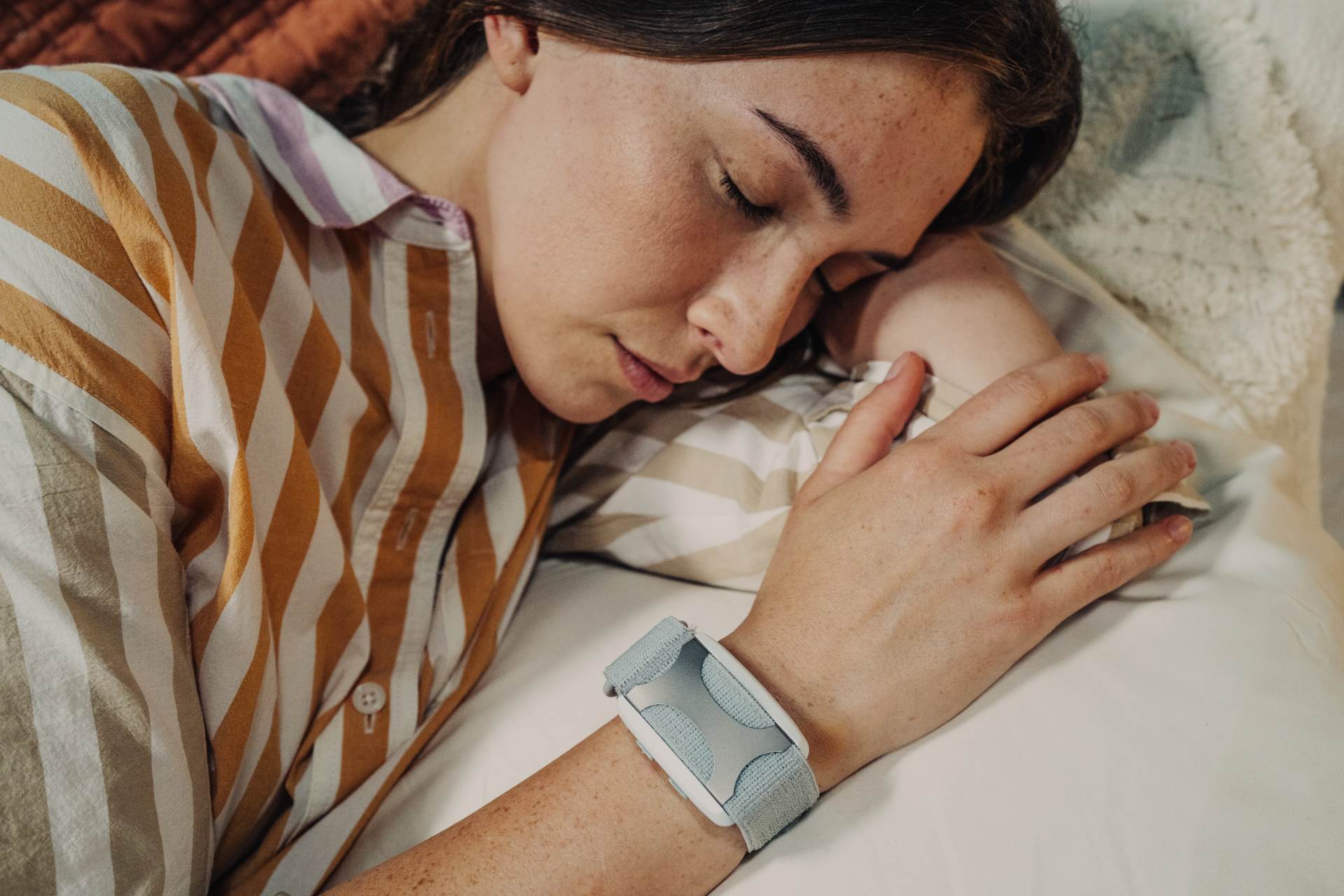
The Apollo Neuro wearable device is a perfect example.
This isn’t some trendy gadget — it’s backed by serious research published in peer-reviewed medical journals.
In a 12-week randomized controlled trial with medical and pharmacy students (some of the most stressed populations you’ll find), the Apollo Neuro device reduced burnout by 32%, improved overall wellbeing by 22%, and decreased stress scores by 23%.12
That’s significant improvement without any additional time commitment or behavior change — participants simply wore the device.
How does it work?
The Apollo uses gentle vibrations to activate your parasympathetic nervous system, essentially signaling to your body that it’s safe to relax.
It’s like having a meditation guide on your wrist, constantly helping your HPA axis downregulate.
I’ve recommended it to patients who struggle with traditional meditation practices, and the feedback has been remarkable.
One patient who couldn’t sit still for meditation found that wearing the Apollo during his commute helped him arrive at work calmer and more focused.
Another uses it at night and reports falling asleep faster than she has in years.
The beauty is that it complements everything else — the gut healing, the adaptogens, the lifestyle changes.
It’s not replacing your recovery work; it’s supporting it.
For a deeper dive into how this technology fits into burnout prevention strategies, I’ve written about the research and practical applications.
Your Personalized Adrenal Recovery Action Plan
Let’s make this practical. Healing adrenal fatigue naturally isn’t about doing everything at once — it’s about strategic, consistent action.
Start with testing: Before you change anything, get baseline data.
Comprehensive gut testing reveals food sensitivities, gut permeability, and inflammation markers that might be perpetuating your HPA dysfunction.
You can’t optimize what you can’t measure.
Phase your approach: Follow the three-phase timeline we discussed.
Focus on rescue and stabilization first (sleep, stress reduction, basic supplementation).
Don’t try to overhaul your entire life in week one.
Build your practice foundation: Start with just 10 minutes of Qigong or meditation daily.
That’s it. Consistency beats intensity every time.
Join The Urban Monk Academy for guided practices, community support, and comprehensive wellness education that grows with you. Free trial available.
Address your specific blockers: If gut issues are prominent, focus there first with targeted gut healing protocols. If sleep is your biggest challenge, make that the priority.
Personalization is everything.
Track your progress: Keep a simple journal noting energy levels, sleep quality, stress reactivity, and digestive function. This helps you see patterns and know what’s working.
Get support: Healing community support accelerates recovery significantly. Whether through an academy membership, coaching, or a support group, don’t try to do this alone.
The good news? You can rebuild your stress resilience.
Your HPA axis has remarkable capacity to heal when given the right support.
The bad news? It requires commitment and patience.
There’s no magic pill that fixes months or years of chronic stress overnight.
But the alternative — continuing to run on fumes, relying on caffeine and willpower, slowly watching your health decline — that’s not acceptable either.
You deserve to wake up with energy. To handle stress without collapsing. To feel like yourself again. And with the right approach, you will.
Ready to Address the Root Cause?
Stop guessing. Comprehensive testing reveals exactly what’s keeping you exhausted — food triggers, inflammation markers, gut damage — plus personalized protocols to fix it.
✓ IgG + C3d food sensitivity testing
✓ Gut permeability markers
✓ Inflammation & candida antibodies
✓ Personalized healing protocols
You can’t heal what you can’t see
Sources
- Ring M. “An Integrative Approach to HPA Axis Dysfunction: From Recognition to Recovery.” The American Journal of Medicine (2025).
- Juster RP, et al. “Allostatic load biomarkers of chronic stress and impact on health and cognition.” Neuroscience & Biobehavioral Reviews (2010).
- Karin O, et al. “A new model for the HPA axis explains dysregulation of stress hormones on the timescale of weeks.” Molecular Systems Biology (2020).
- Balbo M, et al. “Impact of sleep and its disturbances on hypothalamo-pituitary-adrenal axis activity.” International Journal of Endocrinology (2010).
- Patel H, et al. “Assessment of Hypothalamic–Pituitary–Adrenal (HPA) Axis Function in Chronic Stress: Correlation with Cortisol Rhythms and Immune Markers.” European Journal of Cardiovascular Medicine (2025).
- Pascoe MC, et al. “Mindfulness mediates the physiological markers of stress: Systematic review and meta-analysis.” Journal of Psychiatric Research (2017).
- Kelly JR, et al. “Breaking down the barriers: the gut microbiome, intestinal permeability and stress-related psychiatric disorders.” Frontiers in Cellular Neuroscience (2015).
- Tóth-Mészáros A, et al. “The effect of adaptogenic plants on stress: A systematic review and meta-analysis.” Journal of Functional Foods (2023).
- Cropley M, et al. “The Effects of Rhodiola rosea L. Extract on Anxiety, Stress, Cognition and Other Mood Symptoms.” Phytotherapy Research (2015).
- Chandrasekhar K, et al. “A prospective, randomized double-blind, placebo-controlled study of safety and efficacy of a high-concentration full-spectrum extract of ashwagandha root in reducing stress and anxiety in adults.” Indian Journal of Psychological Medicine (2012).
- Wang F, et al. “The Effects of Tai Chi on Depression, Anxiety, and Psychological Well-Being: A Systematic Review and Meta-Analysis.” International Journal of Behavioral Medicine (2014).
- McKennon SA, et al. “Evaluating the Impact of Apollo Neuro™ Wearable on Wellbeing in Medical and Pharmacy Students: A Preliminary Prospective Randomized Controlled Study.” The American Journal of Medicine (2025).
- Misiak B, et al. “The HPA axis dysregulation in severe mental illness: Can we shift the blame to gut microbiota?” Progress in Neuro-Psychopharmacology and Biological Psychiatry (2020).
- Ponzio E, et al. “Qi-gong training reduces basal and stress-elicited cortisol secretion in healthy older adults.” European Journal of Integrative Medicine (2015).