
You’ve probably heard that gratitude is good for you.
Maybe someone told you to start a gratitude journal, or you saw another post about “counting your blessings.”
And if you’re anything like most of my patients, you rolled your eyes a little.
Here’s what most people don’t know about the benefits of gratitude:
It’s not about forcing positive thoughts or slapping a smile on difficult circumstances.
Real gratitude actually changes your biology.
We’re talking measurable shifts in stress hormones, heart function, immune response, and even how your gut communicates with your brain.
In this article, you’ll discover the science behind why gratitude works, practical ways to practice it without the toxic positivity, and how this ancient practice supports the healing you’ve been working so hard to achieve.
You’ll also learn how to cultivate authentic appreciation even when life feels overwhelming.
Here’s the thing: understanding how gratitude affects your nervous system might be exactly what you need to finally shift out of the stress cycle that’s been keeping you stuck.
Keep reading because there’s real science here that connects to everything from sleep quality to digestive health.
Key Takeaways
- Gratitude reduces cortisol by up to 23% and improves heart rate variability, both supporting better stress resilience and cardiovascular health.¹ ²
- Regular gratitude practice activates the parasympathetic nervous system and strengthens vagus nerve function, directly impacting digestive health.³
- Research shows gratitude lowers inflammation markers and strengthens immune function through measurable biological pathways.⁴
- Simple daily practices like gratitude journaling can create lasting changes in brain chemistry and stress response.⁵
- The stress-gut connection means gratitude practices support digestive healing by reducing chronic stress that damages gut barrier function.⁶
- Comprehensive gut testing reveals hidden stress impacts, allowing targeted healing protocols that work alongside gratitude practices.
- You can start practicing gratitude today with simple techniques that take less than 10 minutes.
The Science of Gratitude Actually Changes Your Body
Let me be straight with you.
After decades of working with patients, I’ve seen people try everything to manage their stress and heal their bodies.
Supplements, diets, meditation apps, you name it.
But practicing gratitude?
That’s one of the most underutilized tools that actually has solid research behind it.
When you experience genuine gratitude, your body responds in specific, measurable ways.
Research shows that gratitude can reduce cortisol levels by approximately 23%.¹
That’s not a small number.
Cortisol is your primary stress hormone, and when it’s chronically elevated, it disrupts sleep, impairs digestion, and weakens immune function.⁷
But here’s where it gets really interesting.
Gratitude doesn’t just lower stress hormones — it actively strengthens your heart’s ability to adapt to stress.
Studies on heart rate variability (HRV) show that gratitude practices improve parasympathetic nervous system activation and increase HRV during gratitude exercises.²
HRV is basically a measure of how flexible and resilient your nervous system is.
Higher HRV indicates better stress recovery and improved overall health.⁸
The vagus nerve connects your brain to your gut, heart, and other vital organs, serving as the main component of your parasympathetic nervous system.⁹
When you practice gratitude, you’re literally activating this nerve, which triggers your body’s “rest and digest” mode.³
This is the state where healing actually happens.
Your gut can repair itself.
Your immune system can function properly.
Your body can finally catch up on all the maintenance it’s been postponing while you’ve been stuck in survival mode.
Why Gratitude Isn’t Toxic Positivity
I know what some of you are thinking.
“Dr. Pedram, my life is legitimately difficult right now. I can’t just think happy thoughts and pretend everything’s fine.”
You’re absolutely right. That’s not what we’re talking about here.
Toxic positivity is when you deny real problems and force yourself to “be positive” no matter what.
That’s spiritual bypassing, and it doesn’t work.
Authentic gratitude is different.
It’s about acknowledging what’s real AND finding genuine appreciation within that reality.
One of my students shared something powerful with me once.
She was dealing with a chronic illness, financial stress, and a difficult relationship.
She told me, “I can be grateful for my morning coffee, the fact that my body is fighting for me, and my one friend who really gets it — while still being honest that I’m struggling.”
That’s authentic gratitude.
Research backs this up.
Studies show that even people facing serious health challenges benefit from gratitude practices.¹⁰
The key is that it’s real, not performed.
You’re not pretending things are fine.
You’re training your brain to notice what’s actually working alongside what’s broken.
How to Practice Gratitude Without the Cringe Factor
Alright, let’s get practical.
You don’t need a fancy journal or a 30-day challenge to start benefiting from gratitude.
Here are methods that actually work in real life:
The Five-Minute Morning Practice
Before you check your phone, before the day hijacks your attention, spend five minutes thinking about three specific things.
Not generic stuff like “I’m grateful for my family.”
Get specific.
“I’m grateful that my partner made coffee this morning so I could sleep an extra ten minutes.”
Specific gratitude activates different brain pathways than vague appreciation.
The Evening Reflection
At the end of your day, take just a few minutes to note three things that went better than expected.
Maybe it’s a conversation that didn’t turn into conflict.
A task that took less time than you thought.
A moment when your body felt good.
This isn’t about pretending the hard parts didn’t happen — it’s about training your brain to notice what did work.
The Difficult Person Practice
Got someone in your life who pushes your buttons? Try this advanced move.
Find one thing about them that you can authentically appreciate.
Not because they deserve it or because you’re trying to be nice. But because it’s true.
Maybe it’s their persistence, their loyalty, or the way they taught you what boundaries you need.
This isn’t about condoning bad behavior.
It’s about freeing yourself from the resentment that keeps your stress hormones chronically elevated.¹¹
Research shows that even brief gratitude practices can shift your nervous system into a more balanced state within minutes.¹²
You don’t need hours of meditation. You need consistent, authentic moments of appreciation.
Start small.
If a journal feels like too much, try the gratitude buddy approach — find someone to text three things you appreciated that day.
The accountability helps, and sharing positive moments strengthens the neural pathways even more.
The Gut-Stress Connection Nobody Talks About
Here’s where this really matters for healing.
Chronic stress is one of the biggest barriers to gut health that I see in my practice.
You can take all the right supplements and eat all the right foods, but if your nervous system is stuck in fight-or-flight mode, your gut can’t heal properly.
Why?
Because when you’re stressed, blood flow redirects away from your digestive system toward muscles and organs needed for survival.¹³
Your gut lining becomes more permeable. Inflammation increases.
The beneficial bacteria in your microbiome get suppressed while opportunistic bacteria thrive.
Gratitude practices help break this cycle by activating the parasympathetic nervous system — the “rest and digest” state where your gut can actually do its job.³
When your vagus nerve is functioning well (which gratitude supports), it sends signals to your gut that it’s safe to heal, digest properly, and maintain a healthy barrier function.
I’ve seen this pattern repeatedly:
Patients who incorporate stress-reduction practices like gratitude alongside comprehensive gut testing and targeted protocols heal faster and more completely than those who focus on supplements alone.
Making It a Daily Practice That Actually Sticks
Here’s the truth about building new habits: willpower doesn’t work.
What works is making the practice so simple and so connected to something you already do that it becomes automatic.
My suggestion: anchor your gratitude practice to an existing routine.
Right after you brush your teeth at night, think of three things.
While you’re waiting for your coffee to brew, notice one thing that feels good at that moment.
During your commute, reflect on something that went well yesterday.
The key is specificity.
“I’m grateful for my health” doesn’t activate your brain the same way as “I’m grateful my knee didn’t hurt when I walked up the stairs today.”
Research indicates that specific, sensory-rich gratitude has more powerful effects on your nervous system than vague statements.¹⁴
And look, there will be days when you forget or when it feels impossible. That’s fine.
This isn’t about perfection. It’s about creating a gentle, consistent practice that supports your healing over time.
The Neuroscience That Makes Gratitude Work
Let’s get into the brain science for a minute, because understanding this helps you trust the process.
When you actively practice gratitude, you activate your medial prefrontal cortex — the area involved in decision-making, emotional regulation, and social connection.¹⁵
You’re also triggering dopamine and serotonin release, the neurotransmitters that improve mood and create feelings of reward and wellbeing.
But here’s the really cool part: consistent gratitude practice actually rewires your brain over time.
You’re literally strengthening neural pathways that make it easier to notice positive aspects of your life.
It’s like building muscle. The more you practice, the more automatic it becomes.
Research shows this isn’t just a temporary mood boost.
Regular gratitude practice is associated with reduced inflammation markers, better sleep quality, and improved cardiovascular outcomes.⁴
These are lasting biological changes, not just psychological ones.
The beautiful thing about understanding the neuroscience is that it removes the guilt.
You’re NOT failing at gratitude because you’re a negative person.
You’re working with decades of neural patterns that were built to keep you safe by scanning for threats.
Gratitude practice is simply training your brain to also notice what’s working, which creates a more balanced and accurate view of reality.
When Your Body Needs Extra Support
Sometimes gratitude practices alone aren’t enough, especially if your nervous system has been stuck in stress mode for years.
This is where technology can actually help.
I used to be pretty skeptical about devices and gadgets.
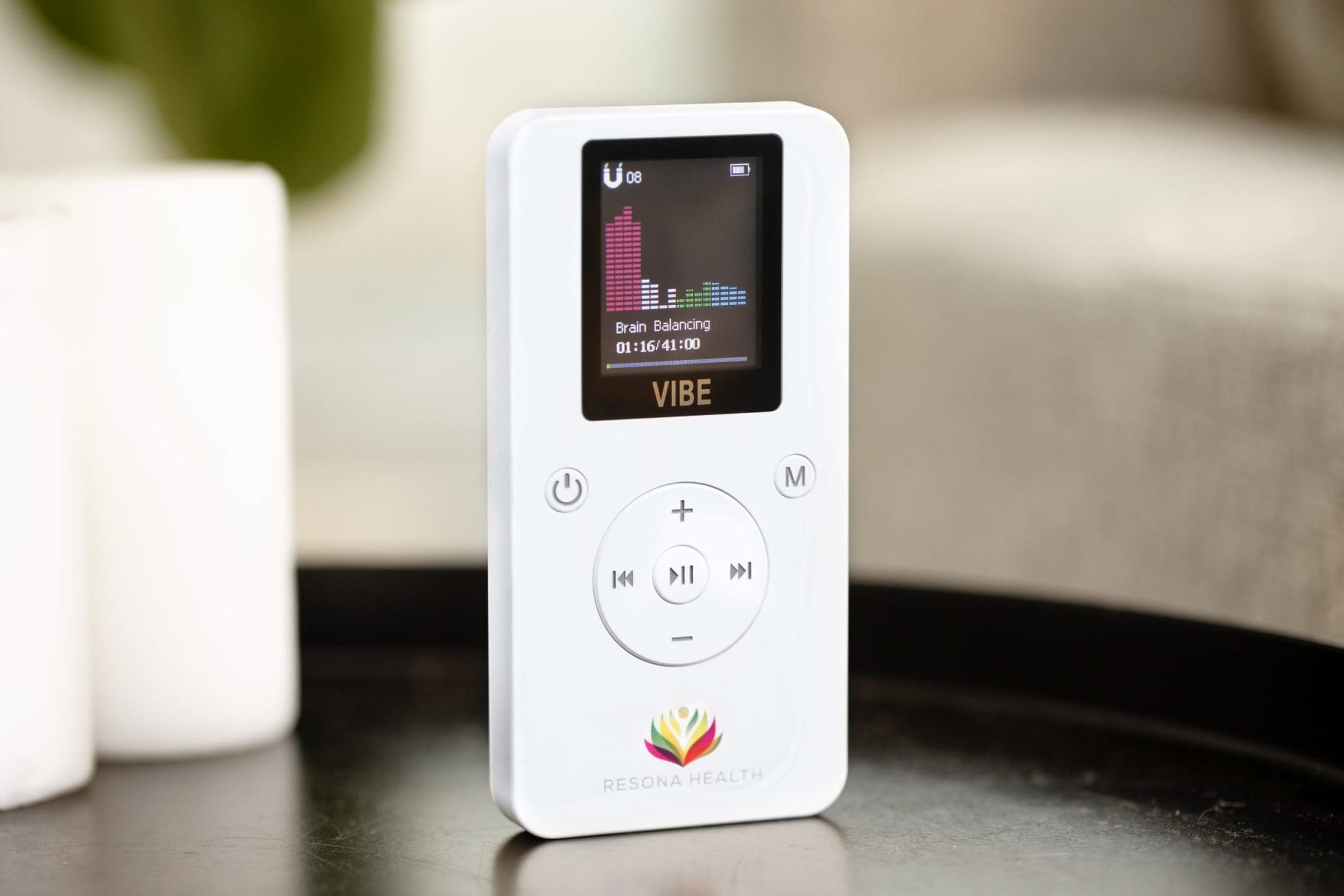
But after seeing what tools like the VIBE vagus nerve stimulator can do for people who are too exhausted or overwhelmed to maintain a consistent practice, I’ve changed my perspective.
The VIBE uses specific electromagnetic frequencies to activate your vagus nerve directly, helping shift your nervous system into that parasympathetic state we’ve been talking about.
It’s particularly helpful for people dealing with chronic stress, anxiety, or gut issues that haven’t responded to other approaches.
Think of it as training wheels for your nervous system.
It helps get you into the state where gratitude and other healing practices can actually take root.
Once you’re there, the practices become easier and more effective.

Your Next Steps
The benefits of gratitude aren’t about becoming a more positive person or pretending life is perfect.
They’re about giving your body the physiological environment it needs to heal, adapt, and thrive.
Start simple. Five minutes. Three specific things.
Notice how your body feels when you do this. Not the thoughts in your head, but the actual sensations in your chest, your shoulders, your gut.
Practice authentic appreciation without the performance.
Honor what’s real. Set boundaries where you need them. And give yourself credit for how far you’ve come, even if nobody else sees it.
Your nervous system will thank you. Your gut will thank you. And over time, you’ll build the kind of resilience that makes everything else you’re doing to heal actually work.
The science is clear: gratitude changes your biology.
The question isn’t whether it works.
The question is whether you’re willing to try it consistently enough to experience the benefits yourself.
Sources
- McCraty R, Childre D. The grateful heart: The psychophysiology of appreciation. In: Emmons RA, McCullough ME, editors. The Psychology of Gratitude. Oxford University Press; 2004. p. 230-255.
- Redwine L, et al. Pilot randomized study of a gratitude journaling intervention on heart rate variability and inflammatory biomarkers in patients with Stage B heart failure. Psychosomatic Medicine. 2016.
- Breit S, et al. Vagus nerve as modulator of the brain-gut axis in psychiatric and inflammatory disorders. Frontiers in Psychiatry. 2018.
- Hazzlet L, et al. Exploring neural mechanisms of the health benefits of gratitude in women: A randomized controlled trial. Brain, Behavior, and Immunity. 2021.
- Komase Y, et al. Effects of gratitude intervention on mental health and well‐being among workers: A systematic review. Journal of Occupational Health. 2021.
- Ahmed F, et al. Relationship between stress, diet, and gut microbiota: a cross-sectional study. Nutrition & Metabolism. 2025.
- Hannibal KE, Bishop MD. Chronic stress, cortisol dysfunction, and pain: a psychoneuroendocrine rationale for stress management in pain rehabilitation. Physical Therapy. 2014.
- Kim HG, et al. Stress and heart rate variability: a meta-analysis and review of the literature. Psychiatry Investigation. 2018.
- Bonaz B, et al. The vagus nerve at the interface of the microbiota-gut-brain axis. Frontiers in Neuroscience. 2018.
- Diniz G, et al. The effects of gratitude interventions: a systematic review and meta-analysis. Einstein (Sao Paulo). 2023.
- Leggett A, et al. Depressive Mood, Anger, and Daily Cortisol of Caregivers on High- and Low-Stress Days. Oxford Journals. 2014.
- Matvienko-Sikar K, Dockray S. Effects of a novel positive psychological intervention on prenatal stress and well-being: a pilot randomised controlled trial. Women and Birth. 2017.
- Chu B, et al. Physiology, Stress Reaction. StatPearls. 2024.
- Emmons RA, McCullough ME. Counting blessings versus burdens: an experimental investigation of gratitude and subjective well-being in daily life. Journal of Personality and Social Psychology. 2003.
- Karns C, et al. The Cultivation of Pure Altruism via Gratitude: A Functional MRI Study of Change with Gratitude Practice. Frontiers in Human Neuroscience. 2017.