
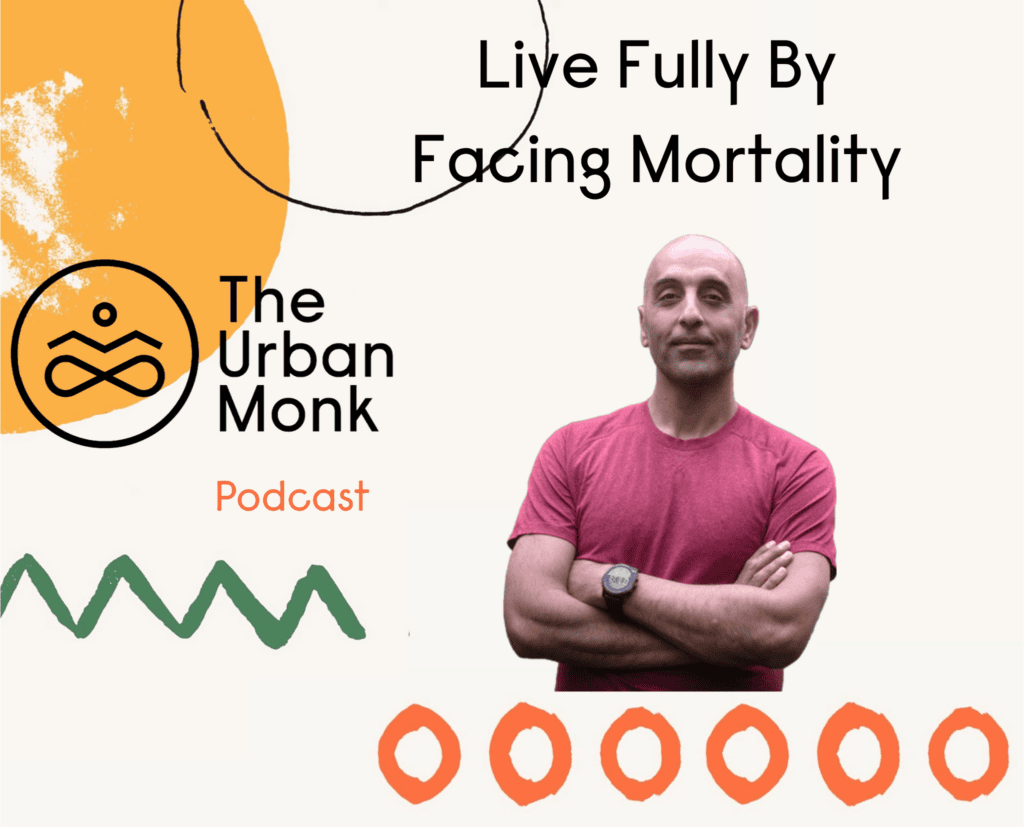
Dr. Pedram Shojai
Episode Description:
Pedram opens with a hard question: what would shift in you if you knew, with total certainty, that you had one year left to live? Drawing on a personal story from Varanasi, where he witnessed cremation rituals on the Ganges, he introduces the psychology of mortality awareness, starting with Ernest Becker’s “The Denial of Death” and Terror Management Theory (Greenberg, Solomon, Pyszczynski). He explains how mortality reminders can trigger either defensive, fear-based behavior (tribalism, status-seeking, rigidity) or growth-oriented values like authenticity and presence, depending on how the awareness is held. He connects this to Irvin Yalom’s work on “awakening experiences,” Dacher Keltner’s research on awe and the default mode network, and then walks through contemplative frameworks from the Tibetan (maranasati, the Bardo teachings) and Daoist (Hun and Po) traditions. He closes with a practical framework, the three impermanence gates, and teaches a nightly practice called the evening review, along with homework to identify and act on one postponed thing.
Listen to the episode on Spotify here or on your favorite podcast platforms and check out the Free 5-Day Reset here.
Podcast show notes:
[00:00] The One Year Exercise
- Pedram asks listeners to sit with the idea of having 12 months left to live
- Not a bucket list exercise, a clarity exercise
- Notices how priorities instantly reorganize under this frame
[00:03] A Story From Varanasi
- Pedram recounts witnessing cremation rituals on the Ganges
- Describes the intensity of being present at a literal confrontation with death
[00:05] Terror Management Theory
- Origins in Ernest Becker’s “The Denial of Death”
- Developed further by Greenberg, Solomon, and Pyszczynski
- Mortality salience drives tribalism, status-seeking, and rigid worldviews
[00:09] Why These Patterns Are Hard to Break
- Overwork, busyness, and distraction are anxiety management systems, not just bad habits
- They keep people displaced from the present moment
[00:10] When Mortality Awareness Turns Growth-Oriented
- Research from Greenberg, Laura King, and Ken Sheldon (University of Missouri)
- Under the right conditions, mortality awareness produces authenticity and presence instead of fear
[00:11] Yalom’s Awakening Experiences
- Irvin Yalom’s “Staring at the Sun” and existential psychotherapy
- Confronting mortality directly, rather than avoiding it, reduces its power
[00:13] Awe and the Default Mode Network
- Dacher Keltner’s research on awe shrinking self-referential DMN activity
- Mortality contemplation, done well, produces its own form of awe
[00:16] Tibetan Buddhist Framework
- Maranasati, mindfulness of death, as a foundational practice
- The Tibetan Book of the Dead reframed as a consciousness training manual, not a funerary text
[00:20] Daoist Framework: Hun and Po
- The Hun (heavenly, Yang consciousness) and Po (earthly, Yin vitality)
- Daily practice as preparation for a coherent, clear transition at death
[00:21] The Three Impermanence Gates
- Biographical gate: memento mori, the Jesuit deathbed reflection, Steve Jobs’ Stanford speech
- Moment gate: noticing the micro-deaths within each breath and thought
- Dissolution gate: temporary release of identity through deep meditation, breathwork, or threshold states
[00:30] A Note on Plant Medicine
- Pedram shares a personal experience with 5-MeO-DMT
- Clarifies he is not advocating this path, but acknowledges it as one route people are exploring
[00:30] The Evening Review Practice
- A nightly practice: review the day backwards without judgment
- Ask, if this had been your last day, would you be at peace with how you spent it
- Let tomorrow appear as a gift rather than a to-do list
[00:38] Homework
- Identify one postponed thing and take a single concrete step toward it
- Write one sentence answering what you are not giving enough of yourself to
- Practice the evening review for seven consecutive nights
Key Takeaways
- Mortality awareness sharpens attention and reorganizes priorities almost instantly
- Terror Management Theory explains why status-seeking and busyness are so hard to interrupt
- Confronting death directly reduces its power more than avoiding it does
- Awe and mortality contemplation both quiet the self-referential default mode network
- The Tibetan and Daoist traditions both treat death preparation as a form of full aliveness
- The evening review is a nightly rehearsal for living, not a morbid exercise
- Real change happens when mortality awareness moves into action, not just reflection
Resources Mentioned
- Ernest Becker, The Denial of Death
- Jeff Greenberg, Sheldon Solomon, and Tom Pyszczynski (Terror Management Theory)
- Laura King and Ken Sheldon, University of Missouri
- Irvin Yalom, Staring at the Sun
- Dacher Keltner, UC Berkeley (research on awe)
- The Tibetan Book of the Dead
- Steve Jobs’ Stanford commencement address
This episode is for educational purposes only and not intended as medical advice. Consult with qualified healthcare practitioners for personalized guidance.
www.theurbanmonk.com