
If you watched the video above, you already know my working theory: your 2 AM wake-ups and your after-dinner bloating aren’t two separate complaints.
They may be two symptoms of the same hidden inflammation pattern.
In this post I want to go further than the video had time for, because understanding why you wake up at 2 AM matters more than just knowing that you do.
Let’s start with why this pattern gets dismissed in the first place, and why you keep waking up at the same time every night even though your labs keep coming back clean.
But if what you’ve just watched is already resonating, you don’t have to wait through the rest of this before doing something about it.
Some of you are ready to skip ahead.
If you’re ready to skip ahead, the free Deep Sleep Solution breaks down the mechanism and your next steps, including how to get your own testing data if you want it.
Key Takeaways
- A 2 AM wake-up that follows a bloated, uncomfortable dinner may point to a delayed immune reaction to food, not a sleep disorder on its own.
- Standard bloodwork is built to catch disease, not the low-grade immune signaling that can keep your nervous system from fully downshifting at night.
- Eating within three hours of bedtime is independently linked to more frequent nighttime awakenings, separate from what you actually ate.¹
- Food-specific IgG reactivity, paired with complement activation, has been shown to correlate with measurable inflammatory markers, not just theoretical ones.² ³
- Two things to do tonight, whether or not you’re ready to test: track dinner, bloating, and wake-time, and write down your ten most-eaten “healthy” staples.
Why you wake up at 2 AM isn’t random
Here’s the frustrating part. You’ve already done the obvious things.
You cleaned up your diet, cut back on the wine, tried gluten-free, maybe dairy-free, maybe low FODMAP for a stretch.
You’ve read the sleep hygiene basics more times than you can count.
And still, dinner feels like a coin toss.
Some nights you’re fine.
Some nights you’re bloated before the dishes are done, and a few hours later you’re wide awake, sometimes hot, sometimes anxious, sometimes just running through a mental checklist of what could possibly be wrong with you.
Standard medicine is built to find disease, not to explain why you feel functional but not well.
Your doctor is trained to look for anemia, thyroid dysfunction, overt autoimmune markers, infection, cancer.
Good, we need that.
But if those come back clear, you’re told you’re fine, even though you know you’re not.
What’s missing from that panel is the immune conversation happening in your gut hours after you eat, and that conversation may be exactly why you wake up at 2 AM instead of sleeping through.
Your labs are normal. You still feel terrible.
That gap between “normal” and “well” is exactly what the Upstream Health Masterclass was built to close. It’s free, and it walks you through what standard labs are actually designed to miss.
The immune response your standard labs miss
When you eat a food your immune system is reacting to, especially against a backdrop of a stressed gut lining, you typically don’t get a dramatic allergic response.
No hives, no swollen lips, nothing that reads as an emergency.
Instead, you get bloating, heaviness, subtle inflammation, and disrupted sleep that shows up a few hours later.¹ ²
This is a big part of the sleep-digestion connection I keep coming back to with patients.
Here’s what that delay actually looks like when you map it out hour by hour.
Why an immediate allergy test won’t catch this
0 HOURS — DINNER
You eat. No reaction yet. Nothing feels wrong in the moment.
1 TO 3 HOURS LATER
Immune activation begins quietly. Bloating, heaviness, and gut irritation set in.
HOURS AFTER THAT
Your nervous system, still managing the inflammatory response, pulls you out of deep sleep.
This delay is exactly why food reactions get missed by standard same-day testing.
That gap between eating and symptoms is exactly why a same-day allergy panel won’t catch what’s happening in your gut.
Dinner is usually the largest, most complex meal of the day, eaten when your nervous system is already carrying the accumulated load of everything else.
Sauces, grains, dairy, alcohol, dessert, restaurant oils, fermented foods. You eat it, you lie down, gut motility slows, and fermentation can increase.
Meanwhile your immune signaling doesn’t clock out at five. It’s active around the clock, and food-specific IgG reactions have been shown to correlate with measurable increases in inflammatory markers like IL-6 and TNF-alpha, alongside worse self-reported sleep quality, in controlled dietary trials.¹ ²
This isn’t a fringe idea.
Elimination diets guided by IgG testing have shown symptom improvement in randomized clinical trials for conditions rooted in low-grade immune activation.³
Stop guessing which foods are fighting you.
The Gut Barrier Test + Food Sensitivity Panel maps your actual immune reactivity, not just guesses from an elimination diet.
Your nervous system can’t repair what it’s still defending
If your gut is irritated after dinner, your nighttime physiology may not feel safe enough to drop into deep restoration.
This is not a metaphor.
Threat physiology and deep sleep physiology are mutually exclusive states. You cannot fully repair while your immune system is actively sounding alarms,⁵ and this is a big reason cortisol and sleep problems tend to travel together in the patients I see.
It helps to see these two states side by side, because your body is only ever running one of them at a time.
Your body can only run one program at a time
DEFEND MODE (Sympathetic)
Immune system activated · Cortisol elevated · Digestion slowed · Heart rate up · Sleep stays shallow
REPAIR MODE (Parasympathetic)
Immune system calm · Cortisol low · Digestion steady · Heart rate down · Deep sleep possible
A gut still fighting a reactive dinner keeps you in the top box, not the bottom one.
Once you see it laid out like that, the gut-brain connection stops feeling abstract.
The gut and the brain stay in constant conversation through immune signals, microbial metabolites, inflammatory mediators, and the vagus nerve.
Reviews of the sleep-immune relationship describe this as a genuinely bidirectional loop, where disrupted sleep drives inflammation and inflammation disrupts sleep continuity right back, reinforcing itself night after night.⁵
Circulating IL-6, one of the key cytokines in that loop, follows its own rhythm tied closely to how continuous your sleep actually is, with levels shifting when sleep is fragmented rather than sound.⁶
If you haven’t already, it’s worth working through vagus nerve exercises as a way to help your body recognize safety before you ever get to the food question.
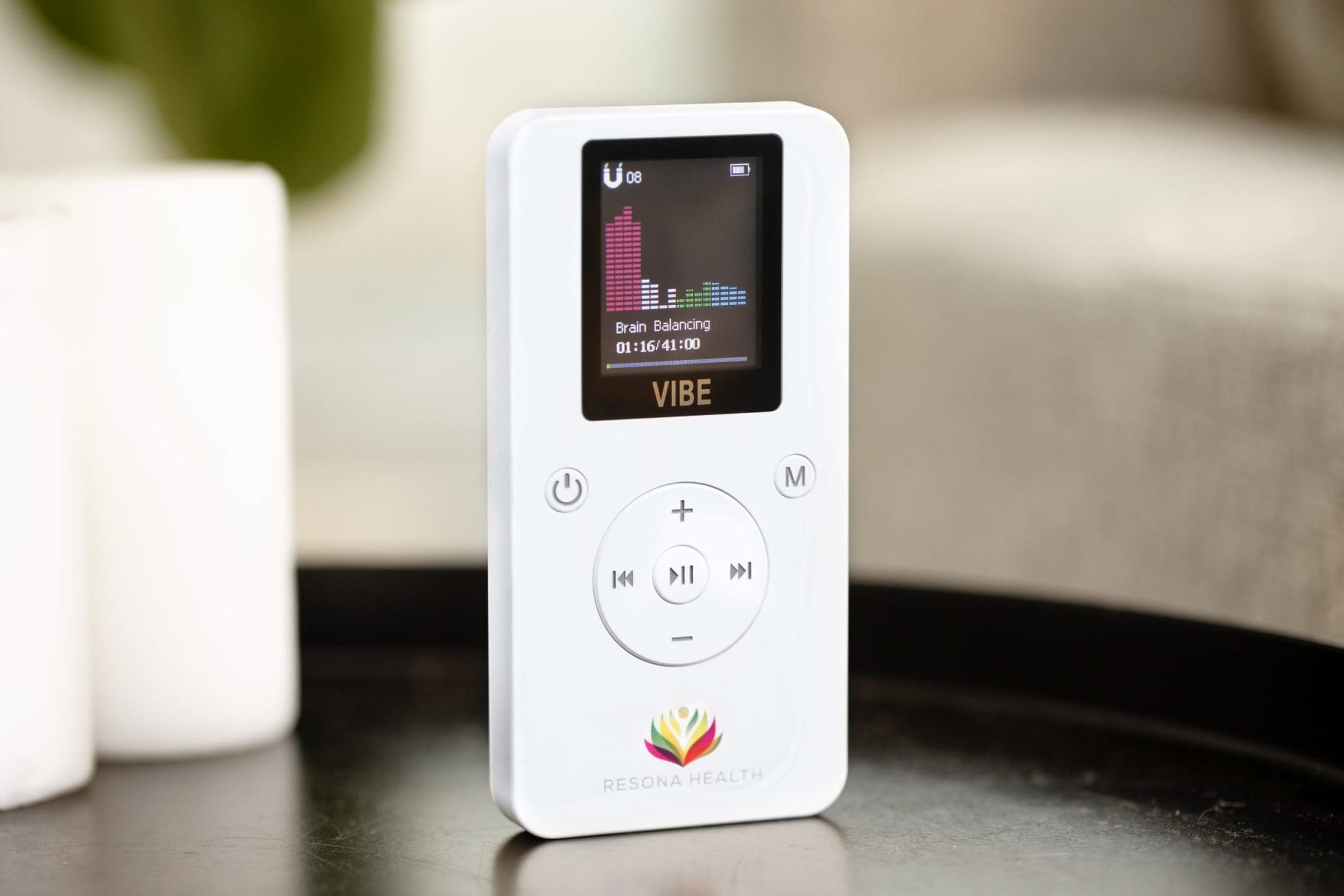
Help your nervous system finally downshift.
VIBE uses gentle PEMF therapy to support vagal tone and coax your body out of defend mode, so repair mode has a real chance to take over at night.
The gut barrier is a border crossing, not a tube
I think the biggest mental shift here is realizing your gut isn’t a pipe that food passes through. It’s an interface.
Food, microbes, toxins, and proteins sit on one side. Your bloodstream, immune system, liver, and nervous system sit on the other.
The gut lining is the border crossing between them, and that crossing is supposed to be intelligent about what it lets through.
Here’s the difference between a border that’s doing its job and one that isn’t.
What’s actually crossing your border
INTACT BARRIER
Tight junctions stay closed · Only fully broken-down nutrients pass through · Immune system stays quiet
COMPROMISED BARRIER
Tight junctions loosen · Undigested particles and microbial byproducts slip through · Immune system reacts
The border doesn’t ask if a food is “healthy.” It only asks if it’s recognized.
That’s the mechanism behind why a food you’ve eaten safely for years can suddenly start causing problems.
When that border gets irritated, permeability increases, and research measuring zonulin, a key marker of intestinal barrier integrity, has linked higher levels directly to elevated systemic inflammatory markers.⁴
Once that barrier is compromised, your immune system can start reacting to foods that should be completely harmless.
This is why a food can be organic, whole, and objectively “healthy,” and still be a problem for you specifically if you’re eating it daily.
Fear isn’t useful here. Accuracy is what actually creates freedom.
Find out what’s crossing your border.
The Gut Barrier Test + Food Sensitivity Panel shows you exactly which foods your immune system is still reacting to.
Two things you can start tonight, even if you’re not ready to test
Testing is the fastest way to get a real answer, and if you’re ready for that now, I’d genuinely rather you start today than wait.
But if a full panel isn’t happening for you this week, that’s not a reason to sit in limbo.
Here are two things you can start tonight that keep you moving instead of just waiting around.
First, for the next seven nights, track three things:
- what you ate for dinner,
- whether bloating showed up within three hours,
- and whether you woke between 1 and 3 AM.
Don’t change your diet yet. If you start cutting foods randomly, you destroy the pattern before you understand it, and you need the pattern to know where to look next.
Second, write down the ten foods you eat most often, especially the ones you consider healthy staples.
Almonds, eggs, Greek yogurt, oats, salmon, avocado.
Not because these are bad foods, but because if your immune system is reacting to one of your daily staples, you may be feeding the exact fire you’re trying to put out, with a health halo sitting on top of it.
This is the same root-cause thinking behind the root cause method for falling asleep faster rather than chasing another supplement.
Ready to actually restore deep sleep?
The Deep Sleep Solution walks you through rebuilding real, restorative sleep, and if you’re ready to go deeper, it’s also where you can access the full testing option.
What this pattern is actually telling you
Not every 2 AM wake-up is a gut problem.
Stress, alcohol, blood sugar swings, hormones, poor light exposure, and plenty of other factors can all disrupt sleep on their own.
But if your wake-ups reliably follow bloating after dinner, that pattern deserves respect rather than another shrug.
Your body isn’t betraying you. It’s communicating, and the earlier you listen, the less noise you have to dig through later.
If this is the piece that’s been missing from your sleep work so far, it may be worth revisiting how to fix your sleep when nothing else has worked alongside what you’ve just read here, and pairing both with the circadian fundamentals in resetting your circadian rhythm when the basics aren’t enough.
Get the answer your labs couldn’t give you.
The Gut Barrier Test + Food Sensitivity Panel turns the guesswork into a clear, personalized answer.
Frequently Asked Questions
A few of the questions I hear most often when this pattern starts to click for someone:
Why do I specifically wake up around 2 AM and not another time?
There’s no single universal clock for this, but 2 AM sits within the window where a reactive dinner has had a few hours to trigger gut and immune signaling, and where your nervous system is deep enough into the night that any unresolved threat response can pull you out of restorative sleep.
Could this be something other than food?
Yes.
Stress, alcohol, medications, sleep apnea, hormonal shifts, and pain can all cause similar wake-ups.
The gut-immune pattern is one strong candidate to rule in or out, not the only explanation.
Do I need to eliminate foods to find out?
Not yet.
Tracking first protects the pattern.
Random elimination before you understand what’s actually happening tends to create more confusion, not less.
Is bloating always connected to sleep problems?
Not always, but when bloating, fatigue, brain fog, and disrupted sleep show up together and repeat, it’s worth widening the lens beyond digestion alone.
Sources
- Does the Proximity of Meals to Bedtime Influence the Sleep of Young Adults? A Cross-Sectional Survey of University Students, International Journal of Environmental Research and Public Health, 2020
- Food-Specific IgG-Based Elimination Diet Decreased IL-6, TNF-α, and CGRP and Improved Symptoms in Adults With Migraine, Frontiers in Nutrition, 2025
- Food Elimination Based on IgG Antibodies in Irritable Bowel Syndrome: A Randomized Controlled Trial, Gut, 2004
- Influence of Diet and Levels of Zonulin, Lipopolysaccharide and C-Reactive Protein on Cardiometabolic Risk Factors in Young Subjects, Nutrients, 2021
- Sleep and Cytokines: A Bidirectional Dialogue Involving Rest and Immunity, Diseases, 2026
- Circadian Interleukin-6 Secretion and Quantity and Depth of Sleep, The Journal of Clinical Endocrinology & Metabolism, 1999