
Most sleep advice is wrong — here’s how to fix your sleep at the root
If you’ve tried every sleep tip in the book — the magnesium, the blue-light glasses, the bedtime routine — and you’re still lying awake at 2 a.m. with a body that refuses to shut off, I want you to know something: it’s not your fault.
Most sleep advice targets the symptom. What I want to walk you through today is the root.
In this article, you’ll learn why your nervous system is the real gatekeeper of deep, restorative sleep, what’s actually happening in your brain when you’re not getting it, and the sequential steps that will help you genuinely fix your sleep — not just mask it.
If you’d rather hear me walk through the full system live, the Free Restorative Sleep Masterclass covers everything in detail. But keep reading — there’s a lot here that’s useful on its own.
Key Takeaways
- Your body cannot sleep if it doesn’t feel physiologically safe — sleep aids don’t change this.
- Neuroception, your nervous system’s below-conscious threat detection system, is a primary driver of insomnia.
- Deep, restorative sleep is when your brain activates its glymphatic system to flush toxic metabolic waste.
- Waking up tired is often a sign of poor sleep quality, not just poor sleep quantity.
- Chronic gut inflammation can disrupt the gut-brain axis in ways that directly interfere with sleep.
- Cortisol dysregulation keeps many people in a “tired but wired” state — and this is addressable.
- Restorative sleep is not a luxury; it’s necessary — it is when the body repairs, detoxifies, and regulates hormones.
The real reason you can’t sleep
Here’s something I used to say in my sleep lab that still holds: your body doesn’t care about your sleep hygiene routine if it thinks it’s in danger.
Go back 100,000 years. You’re a hunter-gatherer. The tribe has stopped for the night. You’re exhausted. But you can only lie down and drift off if someone you trust is on watch — if the perimeter feels secure. Your nervous system had to give the all-clear before sleep was permitted.
Research on Hadza hunter-gatherers confirms this is not just metaphor — sleep has always been a state of profound vulnerability, and the nervous system evolved specifically to detect whether conditions are safe enough to allow it.¹,²
That ancient wiring is still running inside you.
This is what’s known as neuroception — a term coined by neuroscientist Dr. Stephen Porges to describe the nervous system’s continuous, unconscious scanning for signals of safety or threat.²,³
If your neuroceptive system is reading your internal environment as dangerous — from chronic stress, gut inflammation, or unresolved tension — sleep simply will not come the way it’s supposed to. Not really.
The conventional approach to sleep focuses on behaviors: dim the lights, keep a consistent schedule, put your phone down. Those things matter. But they’re the finishing coat, not the foundation. If your nervous system is stuck in low-grade threat mode, no routine is going to override it.
What’s actually happening in your brain
Most people think of sleep as the mere absence of wakefulness. It’s not. It’s one of the most active biological processes your body runs — and what happens during those hours determines your next-day function and your long-term health.
One of the most important neuroscience discoveries of the past decade is the glymphatic system — a waste-clearance network in the brain that’s primarily active during deep slow-wave sleep.⁴
During this phase, cerebrospinal fluid flows through the space between brain cells (known as the interstitial space — essentially the fluid-filled gaps surrounding neurons), flushing out toxic metabolic waste, including proteins like amyloid-beta, which accumulates in Alzheimer’s disease.⁵
A landmark study published in Science found that this interstitial space expands by roughly 60% during sleep compared to wakefulness, enabling dramatically increased clearance to occur.⁶ When sleep is disrupted, that process is significantly impaired — and those waste products accumulate in the brain.
This is why brain fog is such a consistent sign of poor sleep quality. And it’s why waking up exhausted after eight hours isn’t a mystery — if you’re not cycling through proper sleep architecture, you’re not getting the restorative benefit even when the clock says you were in bed long enough.
The gut connection most sleep advice skips
Here’s where a lot of people’s sleep problems actually live.
Research is increasingly clear that the gut-brain axis runs both ways.⁷ That highway — primarily mediated by the vagus nerve — means what’s happening in your gut is directly informing your brain’s sense of safety or alarm.
A comprehensive review published in Brain Medicine found that disruptions in gut microbiota composition are closely linked to sleep disturbances across multiple disorders, including insomnia, through neuronal pathways, immune modulation, and metabolic signaling.⁸, ⁹
I’ve seen this pattern play out in practice for years. Patients who’ve tried everything for sleep often have underlying gut inflammation they don’t know about — food sensitivities, intestinal permeability, dysbiosis. Start working on that, and sleep starts to shift.
The sleep-digestion connection is one of the most underappreciated levers in all of functional sleep medicine.
The “tired but wired” trap
You’re genuinely exhausted. Every cell wants rest. But the moment your head hits the pillow, your mind turns on. You can feel the fatigue but you can’t access sleep.
This is a cortisol rhythm problem.
Cortisol manages your blood sugar, immune response, and sleep-wake cycle.¹⁰ When chronic stress or sleep debt disrupts its natural curve, cortisol stays elevated in the evening — and it tells your nervous system to stay alert. Poor sleep raises cortisol. Elevated cortisol impairs sleep. The cycle feeds itself.
What breaks it isn’t a stronger sleep aid — it’s addressing the underlying signal. Cortisol and sleep problems respond well to nervous system regulation work, which we’ll get to next.
What actually works — in the right order
Here’s the sequential framework I use with patients — each step builds on the one before it, so the order matters.
Start with your nervous system.
The first move is to create genuine physiological safety signals.
Vagus nerve exercises are one of the most underused tools for this.
The vagus nerve is the primary conduit between your brain and your body’s internal state — when you activate it appropriately, you move toward calm and rest.
A randomized controlled trial published in Brain Sciences found that transcutaneous vagus nerve stimulation significantly improved sleep quality scores in patients with primary insomnia compared to a control group.¹¹
Simple practices — slow diaphragmatic breathing, humming, cold water on the face — can begin shifting your nervous system’s baseline within days.
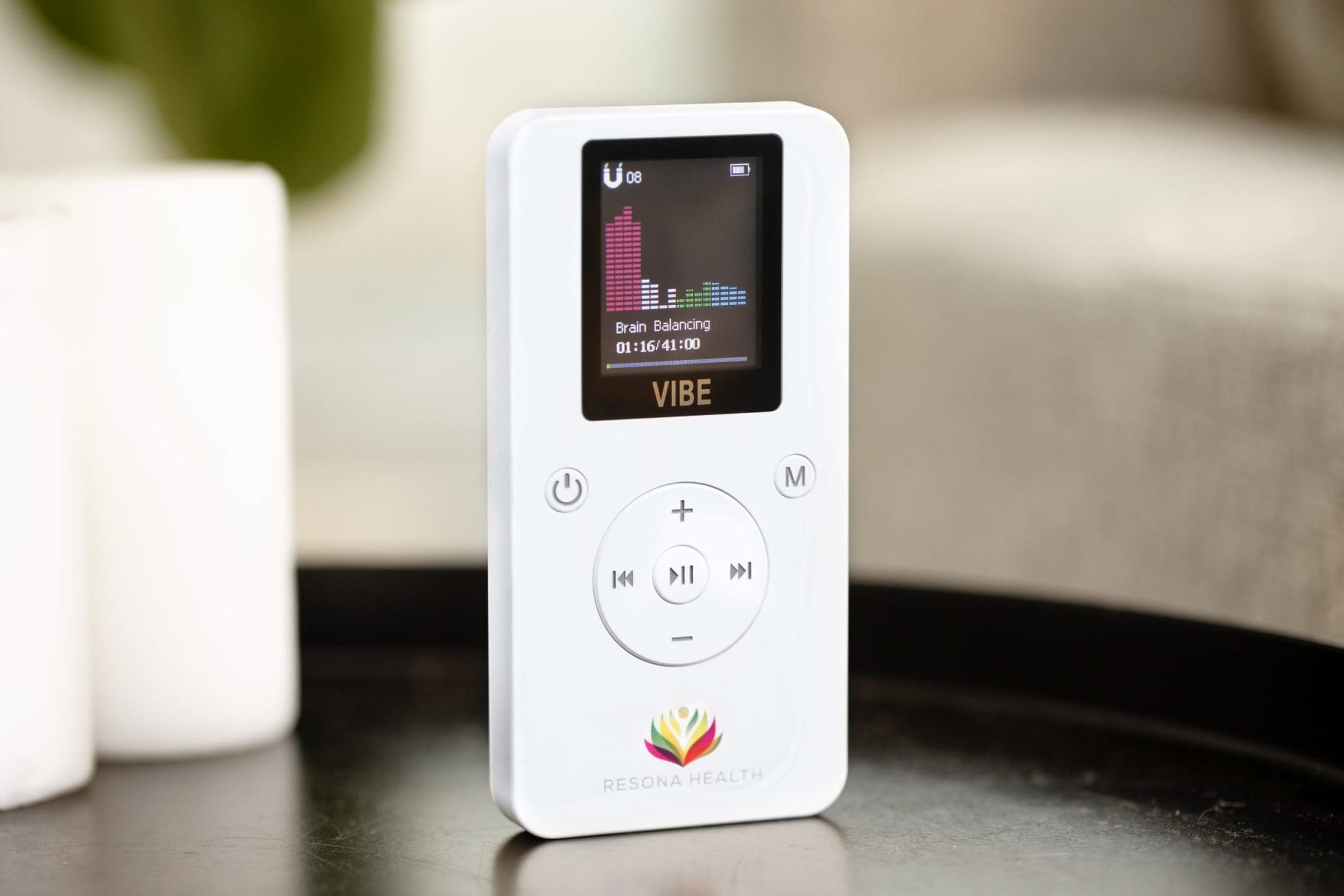
Reduce your internal inflammatory load.
If gut inflammation is running a low-grade alarm in your body, you have to address the source.
Common culprits include food sensitivities, blood sugar instability, and inflammatory dietary patterns.
Sleep hygiene practices beyond the basics covers a lot of the dietary and environmental factors most sleep guides skip entirely.
Anchor your cortisol rhythm.
Morning sunlight exposure within 30 minutes of waking is one of the most powerful — and free — tools for regulating your cortisol curve. It sets the biological anchor that determines when melatonin rises in the evening.
In combination with genuine evening wind-down (not just dimming screens, but actually transitioning out of alertness), this resets the rhythm most people with insomnia have lost.
Protect your deep sleep architecture.
If you want to understand how to fall asleep faster at a root cause level, the answer often lies less in what you do at bedtime and more in what you do all day — exercise timing, meal timing, light exposure.
Deep slow-wave sleep is when growth hormone is secreted, cellular repair occurs, and the glymphatic system does its nightly cleanse.
Protecting this stage matters as much as your total hours.
The honest timeline
I’ll be direct with you — this is a three-to-twelve month process done right.
I went through a serious bout of insomnia myself. I ran sleep labs. I went deep into the research.
The framework I came out with — addressing the nervous system’s safety signals, reducing internal inflammation, and restoring the cortisol-melatonin rhythm — is the one that worked for me and for hundreds of patients.
One of my students said it well:
“I went from exhausted and anxious to energized and calm in six weeks. I can feel my nervous system shifting in real time.”
That kind of shift doesn’t come from a supplement. It comes from working the full system.
If you want to explore the connection between sleep and brain fog as you start this process, that’s a great companion read.
The bottom line
You cannot supplement or medicate your way to genuine restorative sleep if your nervous system is still running a threat program.
The body is extraordinarily intelligent. When it perceives safety, it sleeps. When it perceives danger — even low-grade, below-conscious danger from gut inflammation, cortisol dysregulation, or chronic stress — it stays on alert.
Fixing your sleep means creating the conditions for safety, from the inside out. That’s the work. And it’s very doable.
Ready to go deeper?
Join me for the free Restorative Sleep Masterclass, where I walk through the complete three-step system — the physiology, the root causes, and the practical protocol that’s helped thousands of people sleep soundly again. It’s free, and it could be the most useful hour you spend this week.
If you’re also curious about how nervous system rewiring goes beyond sleep — clearing brain fog, reclaiming energy, rebuilding your stress response — the Lights On Method free webinar covers the broader framework I use with high-performers ready to change the underlying system, not just the symptoms.
Sources
- Chronotype variation drives night-time sentinel-like behaviour in hunter-gatherers, Proceedings of the Royal Society B: Biological Sciences, 2017.
- Polyvagal Theory: A Science of Safety, Frontiers in Integrative Neuroscience, 2022.
- The polyvagal theory: New insights into adaptive reactions of the autonomic nervous system, Cleveland Clinic Journal of Medicine, 2009.
- The Sleeping Brain: Harnessing the Power of the Glymphatic System through Lifestyle Choices, Brain Sciences, 2020.
- Sleep, Cerebrospinal Fluid, and the Glymphatic System: A Systematic Review, Sleep Medicine Reviews, 2022.
- Sleep Drives Metabolite Clearance from the Adult Brain, Science, 2013.
- The gut microbiota–brain axis in behaviour and brain disorders, Nature Reviews Microbiology, 2021.
- Brain-gut-microbiota interactions in sleep disorders, Brain Medicine, 2025.
- Multiomics Analysis Reveals Aberrant Metabolism and Immunity Linked Gut Microbiota with Insomnia, Microbiology Spectrum, 2022.
- Sleep Deprivation, StatPearls, National Library of Medicine, 2023.
- Transcutaneous Vagus Nerve Stimulation Could Improve the Effective Rate on the Quality of Sleep in the Treatment of Primary Insomnia: A Randomized Control Trial, Brain Sciences, 2022.