Natural energy boosters that cultivate sustainable stamina from the inside out
You wake up exhausted. Again. Your third cup of coffee barely makes a dent. The afternoon crash hits harder each day, and you’re too tired to enjoy the things that used to light you up.
You’ve tried everything — more sleep, vitamins, cutting back sugar — but nothing sticks.
Here’s what most people miss:
Natural energy boosters aren’t about finding the right stimulant or supplement. They’re about restoring your body’s ability to generate and sustain energy at the cellular level.
In this article, you’ll discover how to break free from the caffeine cycle, support your mitochondrial function, optimize your circadian rhythm, and tap into ancient energy cultivation practices that actually work.
These strategies address the root causes of exhaustion rather than masking symptoms. Keep reading to learn exactly what your body needs when caffeine stops working.
Key Takeaways
- Natural energy boosters address cellular energy production rather than temporarily masking fatigue with stimulants.
- Chronic caffeine dependence can increase adenosine receptor density, contributing to tolerance and creating withdrawal-based fatigue¹,².
- Mitochondrial support through nutrients like CoQ10 and PQQ enhances your cells’ ability to produce ATP through complementary mechanisms³,⁴.
- Morning sunlight exposure regulates circadian rhythm, increasing cortisol for alertness and setting the stage for better nighttime sleep⁵,⁶.
- Qigong practices activate the parasympathetic nervous system and may reduce cortisol levels, supporting stress resilience⁷,⁸.
- Gut inflammation can trigger systemic inflammation contributing to chronic fatigue, making comprehensive testing essential for identifying hidden energy drains⁹,¹⁰.
- The vagus nerve acts as a master regulator of the parasympathetic nervous system, directly influencing energy restoration and resilience.
Stop Borrowing Energy.
Start Cultivating It.
Temple Grounds teaches you to generate vitality from within — not borrow it from stimulants. Master ancient energy practices adapted for modern life with Dr. Pedram Shojai’s foundational course.
Discover ancient techniques for sustainable energy
When Caffeine Becomes the Problem
If you’re reading this, chances are you’ve noticed that coffee doesn’t work like it used to. Maybe you’re drinking more to feel the same alertness. Or maybe you feel wired but exhausted at the same time.
Research shows that chronic caffeine consumption leads to upregulation of adenosine receptors in the brain.¹,²
When caffeine wears off, those extra receptors bind with accumulated adenosine, causing rebound fatigue that’s worse than your baseline tiredness.
One study examining caffeine tolerance found that regular intake (60-75 mg/kg daily in animal models) resulted in complete tolerance to caffeine’s stimulant effects.²
The Caffeine Tolerance Cycle
Coffee blocks adenosine receptors, creating temporary alertness.
Your brain upregulates adenosine receptors to compensate.
Same dose produces weaker effects. You need more to feel alert.
More cups daily just to maintain baseline function.
When caffeine wears off, excess receptors bind adenosine — creating worse fatigue than before.
The Problem: You’re borrowing energy from tomorrow to feel alert today — creating a debt cycle that keeps getting worse.
This isn’t about demonizing your morning coffee. It’s about recognizing when you’ve crossed from using caffeine strategically to depending on it just to function.
The difference matters because dependency-driven energy is borrowed energy — you’re constantly in debt to the next cup.
Breaking this cycle doesn’t mean quitting cold turkey. It means building real energy reserves so caffeine becomes optional rather than essential.
Break Free from the Caffeine Cycle
Discover sustainable energy cultivation practices during your 2-week free trial of The Urban Monk Academy, where you can access Temple Grounds and ancient techniques for lasting vitality.
Access Temple Grounds and the full Academy library
Your Cellular Power Plants Need Support
Mitochondria are responsible for the vast majority of cellular ATP production through oxidative phosphorylation.³
When these cellular powerhouses are damaged by chronic stress, inflammation, poor nutrition, or toxins, no amount of sleep or stimulants can compensate.
Think of it this way: if your mitochondria are struggling, you’re trying to run a high-performance engine on a failing battery.
You might get temporary boosts from caffeine, but you’re not addressing the fundamental energy shortage.
Two nutrients show particularly strong evidence for mitochondrial support:
Coenzyme Q10 (CoQ10) acts as an electron carrier in your mitochondrial membranes, directly facilitating ATP production.
It also functions as a powerful antioxidant, protecting mitochondria from oxidative damage.⁴
Research demonstrates that CoQ10 supplementation can reduce subjective fatigue and improve ATP synthesis in conditions involving mitochondrial dysfunction, such as heart failure and statin-induced myopathy.⁴,¹¹
Pyrroloquinoline Quinone (PQQ) takes a different approach.
While CoQ10 optimizes existing mitochondria, PQQ stimulates mitochondrial biogenesis — the creation of new mitochondria.³
Research demonstrates that PQQ enhances mitochondrial function through activation of PGC-1α, a major pathway regulating mitochondrial growth.³,¹²
The two nutrients work synergistically: CoQ10 improves efficiency while PQQ increases capacity.
Beyond supplementation, supporting your mitochondria requires addressing what damages them.
That includes managing chronic stress, reducing gut inflammation, getting adequate antioxidants from food, and incorporating movement that stimulates mitochondrial biogenesis without overtaxing an already depleted system.
Align With Your Body’s Natural Rhythms
Your circadian rhythm isn’t just about sleep.
It regulates energy levels, hormone secretion, body temperature, and even how efficiently your cells produce ATP throughout the day.⁵
The single most powerful way to optimize this system? Morning sunlight exposure.
When light hits your retinas within the first hour of waking, it signals your suprachiasmatic nucleus — your brain’s master clock — to suppress melatonin and increase cortisol.⁶
This cortisol-awakening response is essential for feeling alert and energized.
Research shows that morning light exposure helps anchor your sleep-wake cycle, improving both sleep quality at night and daytime energy.⁵,⁶
Practical application:
- Get outside within 30-60 minutes of waking for 10-20 minutes (longer if it’s cloudy).
- Face toward the sun, but don’t stare directly at it.
- Skip sunglasses during this time — your eyes need light exposure.
- If you absolutely can’t get outside, use bright artificial lights as a substitute until natural sunlight is available.
Beyond morning light, circadian optimization involves strategic eating windows. Your digestive system and metabolic function follow circadian patterns.
Eating your largest meals earlier in the day when insulin sensitivity is naturally higher can improve energy levels and prevent the afternoon crash that comes from poorly timed eating.¹³
Evening wind-down routines matter too. Dim lights 2-3 hours before bed, minimize blue light exposure from screens, and create separation between your active day and sleep preparation.
This signals your body to shift toward melatonin production and energy restoration.
Your 24-Hour Energy Blueprint
Align with your body’s natural rhythms for sustained energy
Get sunlight within 60 minutes of waking (10-20 minutes)
Triggers cortisol awakening response and suppresses melatonin for natural alertness.
Eat largest meals earlier when insulin sensitivity peaks
Strategic eating windows prevent afternoon crashes and optimize metabolic function.
Dim lights 2-3 hours before bed, minimize blue light
Signals your body to shift toward melatonin production and restoration mode.
Deep sleep and cellular restoration
Your body repairs tissues, consolidates memories, and recharges energy systems.
Key Insight: Your circadian rhythm regulates energy, hormones, and ATP production throughout the day — not just sleep.
Cultivate Energy Through Ancient Practices
There’s a fundamental difference between consuming energy and generating it.
Stimulants, even healthy ones, are consumptive. They borrow from your reserves.
Traditional Qigong practices, developed over thousands of years, actually cultivate life force energy — what the Chinese call “Qi.”
I know this might sound esoteric if you haven’t experienced it. But the mechanisms are increasingly validated by modern research.
Qigong combines specific movements, breathwork, and focused intention to activate the parasympathetic nervous system and may help reduce stress-related hormone levels.⁷,⁸
A systematic review examining Qigong as a treatment for depression found that it was effective in reducing depressive symptoms through activating the parasympathetic nervous system, with significant effects on diastolic blood pressure — a key indicator of autonomic function.⁷
Additionally, research on Qigong training in older adults showed reductions in basal cortisol levels across the day and blunted cortisol responses to acute mental stress.⁸
One of our survey respondents described it perfectly:
“I used to drain myself trying to power through exhaustion. Qigong taught me how to actually fill my tank instead of just managing what’s left.”
Unlike high-intensity exercise that can further deplete an already exhausted system, Qigong generates energy as you practice.
People consistently report feeling more energized after a session, not depleted.
The practices are accessible regardless of fitness level, making them ideal for people who are too exhausted for conventional exercise.
Experience Real Energy Cultivation
Temple Grounds teaches you to generate sustainable vitality through Qigong, breathwork, and ancient practices adapted for modern life. Dr. Pedram Shojai’s foundational course in energy cultivation.
Learn to cultivate energy, not borrow it
Support Your Nervous System’s Master Switch
Your vagus nerve connects your brain to virtually every major organ.
It’s the primary pathway of your parasympathetic nervous system — the rest-and-restore mode that’s essential for energy recovery.
When your vagus nerve function is strong (high “vagal tone”), your body efficiently shifts between activation and restoration.
When it’s weak, you get stuck in chronic stress mode, which gradually depletes your energy reserves even when you’re technically resting.
Simple practices that strengthen vagal tone include:
- Deep, diaphragmatic breathing — especially extending your exhale longer than your inhale.
- Humming or singing, which mechanically stimulates the vagus nerve.
- Cold water exposure on your face or neck.
- Gargling vigorously.
- Qigong and meditation practices that emphasize breath awareness.
For people dealing with significant vagus nerve dysfunction, targeted vagus nerve stimulation can accelerate recovery.
The VIBE device uses gentle electrical stimulation to activate the vagus nerve, supporting parasympathetic activation and improving the body’s natural restoration cycles.
Activate Your Body’s Master Reset Switch
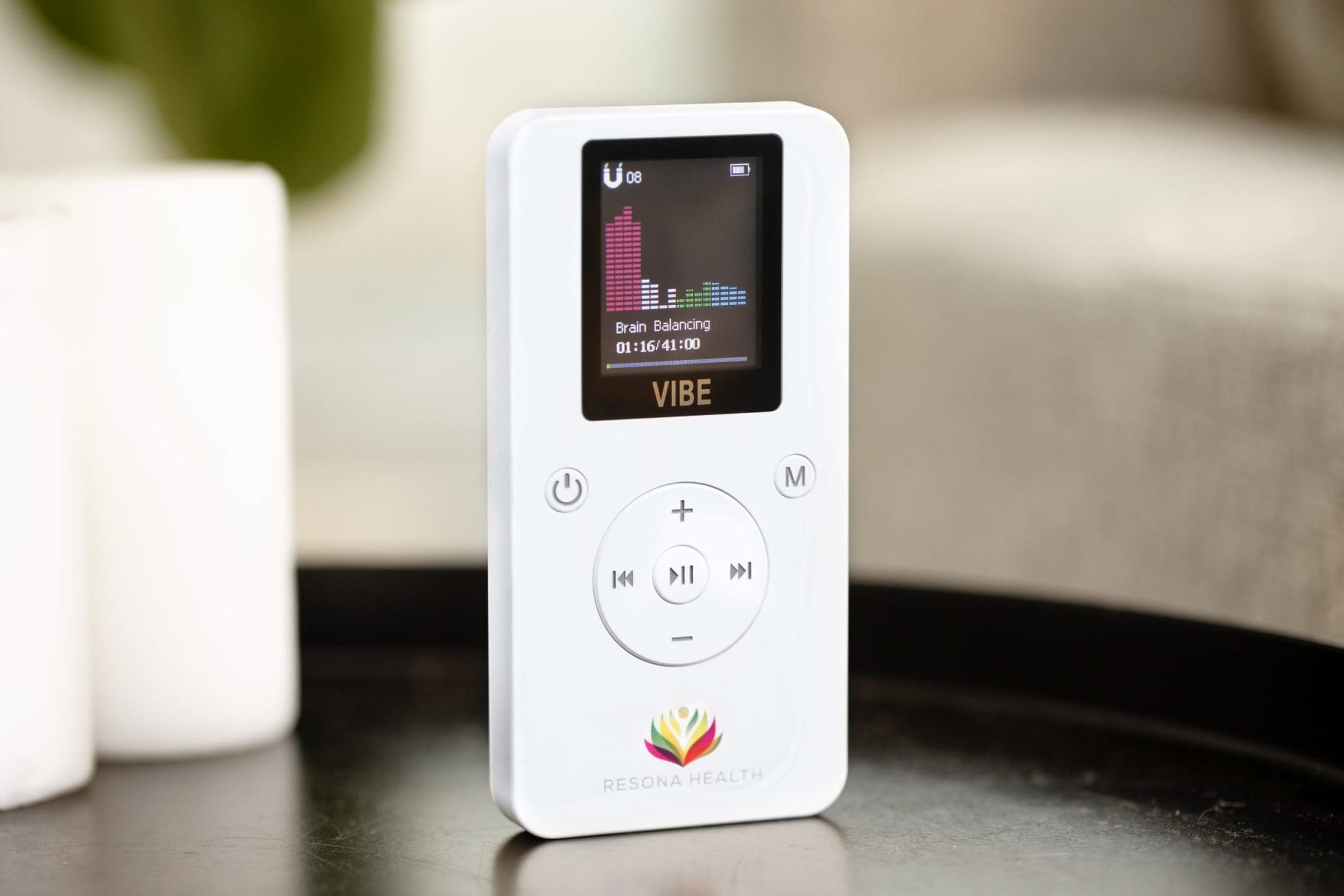
The VIBE device uses clinically-validated vagus nerve stimulation to enhance parasympathetic activation and support your body’s natural energy restoration cycles.
Support nervous system regulation and energy recovery
Test What’s Actually Draining You
Here’s what drives people crazy: You’re doing everything “right” — eating well, sleeping enough, taking vitamins — but you’re still exhausted.
That’s often because hidden factors are actively draining your energy faster than you can rebuild it.
Gut inflammation is a major culprit.
When your intestinal barrier is compromised (increased intestinal permeability), inflammatory compounds leak into your bloodstream. This triggers system-wide inflammation that contributes to chronic fatigue.⁹,¹⁰
Studies examining chronic fatigue syndrome have identified gut inflammation and increased intestinal permeability as key factors, with inflammatory cytokines like IL-6, TNF-α, and IL-1β contributing to systemic inflammation and fatigue symptoms.⁹,¹⁰
Food sensitivities compound the problem.
Unlike true allergies, sensitivities create delayed inflammatory responses that you might not connect to the foods triggering them.
You eat something that seems healthy, but your immune system treats it as a threat, launching an inflammatory response that drains energy for hours afterward.
Hidden Energy Drains Checklist
Testing reveals what lifestyle changes can’t fix
Zonulin: Gate-keeper protein between intestinal cells
Occludin: Structural protein maintaining tight junctions
LPS (Lipopolysaccharide): Triggers systemic inflammation when leaked into bloodstream
Candida Antibodies: Indicates immune response to yeast overgrowth draining energy
Food Sensitivity Panels: Identifies specific foods triggering hours-long inflammatory responses
❌ GUESSING
Random elimination diets, trial and error supplements, frustration
✓ TESTING
Precise data, targeted protocols, faster results
Why This Matters: These hidden drains actively deplete energy faster than you can rebuild it — no amount of sleep or supplements compensates.
Comprehensive testing identifies these hidden energy thieves:
- Zonulin and occludin measure intestinal barrier integrity.
- LPS (lipopolysaccharide) indicates bacterial endotoxin leakage.
- Candida antibodies reveal fungal overgrowth.
- Food sensitivity panels identify which specific foods trigger your immune response.
One client described testing as the breakthrough they’d been searching for:
“I’d been exhausted for years. Turned out I was reacting to foods I ate daily — eggs, dairy, almonds. Within three weeks of removing them, my energy came back. I had no idea food could do that.”
Stop Guessing. Start Knowing.
Comprehensive gut testing reveals hidden inflammation, food sensitivities, and barrier dysfunction — complete with personalized protocols to address what testing reveals.
Know exactly what’s draining your energy
The Path Forward
Natural energy boosters aren’t quick fixes. They’re about rebuilding your body’s capacity to generate and sustain energy naturally.
This takes consistency, but it also creates lasting change rather than borrowed energy that crashes when the stimulant wears off.
Start with the foundation: morning sunlight within an hour of waking, even for just 10 minutes.
This single practice begins to reset your circadian rhythm and improves both immediate alertness and nighttime sleep quality.
Add one energy cultivation practice. It doesn’t have to be complex.
Five minutes of intentional breathwork or gentle Qigong movements generates more energy than it consumes, making it sustainable even when you’re depleted.
Consider testing if you’ve been struggling despite making lifestyle changes.
Hidden inflammation and food sensitivities can sabotage even the best efforts at energy management techniques, and identifying specific triggers removes obstacles rather than just pushing harder against them.
Support your mitochondria with targeted nutrients. CoQ10 and PQQ together address both efficiency and capacity of cellular energy production.
Most importantly, shift your mindset from managing exhaustion to cultivating vitality.
The difference is profound. One keeps you trapped in limitation. The other opens possibilities you’ve forgotten existed.
Your Energy Transformation Starts Here
Join The Urban Monk Academy’s 2-week free trial to access Temple Grounds, comprehensive energy cultivation programs, and a community of people rebuilding their vitality from the ground up.
Start Your Free 2-Week Trial →
Access Temple Grounds and the complete Academy library
Sources
- Adenosine, caffeine, and sleep–wake regulation: state of the science and perspectives. J Sleep Res. 2022.
- The Effects of Caffeine on Blood Platelets and the Cardiovascular System through Adenosine Receptors. International Journal of Molecular Sciences. 2024.
- A role for the antioxidants coenzyme Q10 and pyrroloquinoline quinone in mitigating obesity-associated reproductive dysfunction. Biology of Reproduction. 2026.
- Combined Supplementation of Coenzyme Q10 and Other Nutrients in Specific Medical Conditions. Nutrients. 2022.
- The role of sunlight in sleep regulation: analysis of morning, evening and late exposure. BMC Public Health. 2025.
- The importance of residential dusk and dawn light exposure for sleep quality, health, and well-being. Sleep Medicine Reviews. 2023.
- The Neurophysiological and Psychological Mechanisms of Qigong as a Treatment for Depression: A Systematic Review and Meta-Analysis. Frontiers in Psychiatry. 2019.
- Qi-gong training reduces basal and stress-elicited cortisol secretion in healthy older adults. European Journal of Integrative Medicine. 2015.
- The potential therapeutic approaches targeting gut health in myalgic encephalomyelitis/chronic fatigue syndrome (ME/CFS): a narrative review. Journal of Translational Medicine. 2025.
- Gut inflammation in chronic fatigue syndrome. Nutrition & Metabolism. 2010.
- Therapeutic potential of coenzyme Q10 in mitochondrial dysfunction during tacrolimus-induced beta cell injury. Scientific Reports. 2019.
- Pyrroloquinoline quinone stimulates mitochondrial biogenesis through CREB phosphorylation and increased PGC-1α expression. Journal of Biological Chemistry. 2009.
- The Effects of Breakfast Consumption and Composition on Metabolic Wellness with a Focus on Carbohydrate Metabolism. Advances in Nutrition. 2016.