
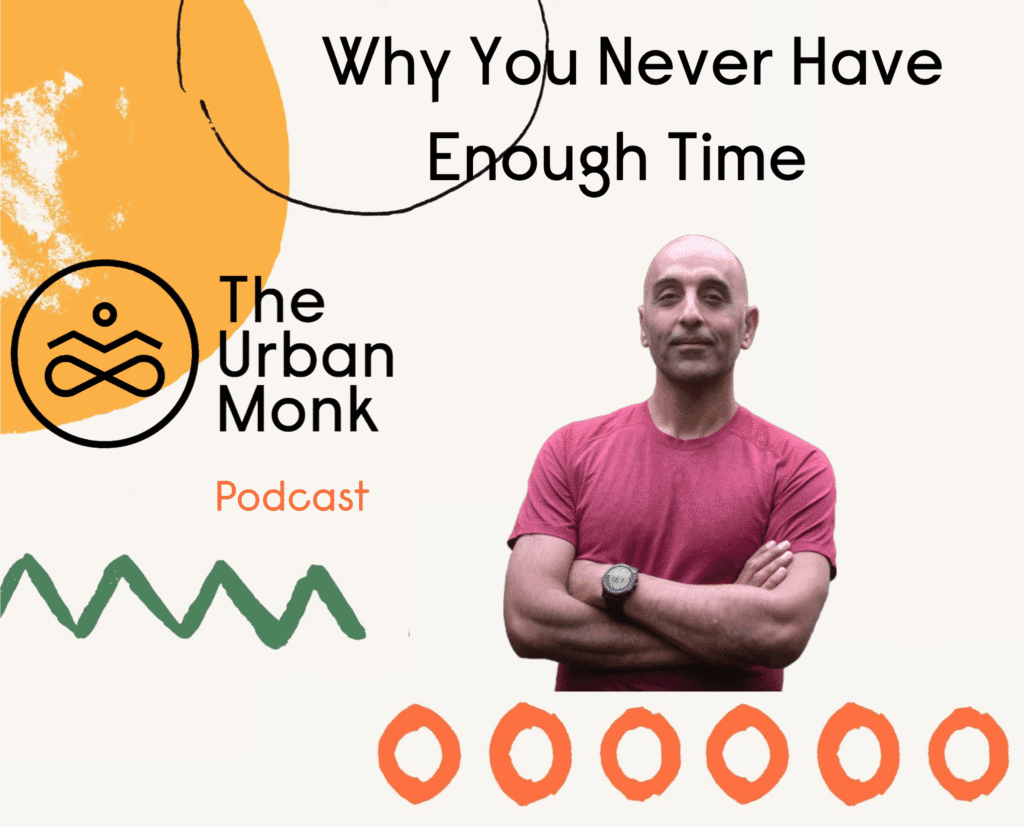
Dr. Pedram Shojai
Episode Description:
Dr. Pedram Shojai dives into chronoception (time perception) and why most people feel trapped in time scarcity. He explains how rushing creates compression, which makes hours disappear into autopilot—and how presence does the opposite, expanding time into something rich and spacious. This 40-minute teaching breaks down the neuroscience behind why one present hour beats ten distracted ones, introduces three core practices for creating time abundance, and addresses member questions on trauma, empaths, and managing life’s competing priorities. Pedram challenges the cultural trance of “slave time” and invites listeners to reclaim their relationship with time itself.
Listen to the episode on Spotify here or on your favorite podcast platform and check out the Urban Monk Academy here.
Podcast show notes:
[00:00:00] Introduction to chronoception and time scarcity
- Most people feel they never have enough time
- Time scarcity isn’t real—it’s about your relationship to time
[00:01:00] How time compression happens
- Your brain tracks time by information processed
- Autopilot mode processes minimal information, making time compress
[00:02:00] The autopilot trap
- Days blur together, weeks disappear
- You weren’t present for the time—it compressed
[00:03:00] The vicious cycle of rushing
- Time scarcity makes you rush, rushing makes you less present
- Creates more compression, increases scarcity
- Most people spend entire lives in this cycle
[00:04:00] Time abundance through presence
- When fully present, time expands subjectively
- One present hour beats ten distracted hours
- Think about last time you were absorbed—time did something weird
[00:05:00] Training chronoception
- Time expansion practices make subjective time feel spacious
- Time estimation training helps you stop over-committing
- Accessing flow states where time becomes less relevant
[00:06:00] Three core practices introduced
- Expansion: Pause for three breaths, 10 times daily
- Single-tasking: One task with full attention, no distractions
- Notice your rush: Most times you’re not late, just habituated
[00:09:00] The Gandhi paradox
- Trying to save time by rushing creates scarcity
- Being present creates abundance
- “Busy day, so I’ll meditate two hours instead of one”
[00:10:00] Why this matters beyond time management
- Your relationship with time is your relationship with life
- Always rushing means surviving, not living
- Time scarcity equals life scarcity
[00:11:00] Track your flow states
- Notice when time disappears vs. expands
- These are clues to your personal flow triggers
[00:13:00] Permission to slow down
- Recognizing the rush-scarcity cycle in your life
- Slowing down actually creates more time
[00:14:00] Q&A begins: Course logistics and honest self-reporting
- Feedback on PDFs, audio tracks, printer-friendly versions
- Be honest with baseline assessments—often off by 50-60%
[00:16:00] Member shares chronoception breakthrough
- Immediate time abundance and “111” synchronicity
- Mini miracles present themselves when you’re not overlooking them
[00:18:00] Layering the weeks properly
- Don’t skip ahead—you’ll have gaps like missing third grade math
- Stay in your lane, pick up each skill sequentially
[00:20:00] For empaths: Picking up others’ emotions
- Many empaths in the room
- Energy perception and hygiene coming in future modules
- Walking into groups can be disorienting without boundaries
[00:22:00] When your spouse is always rushing
- Be the change you want to see
- You can’t preach to a spouse—double down on transforming yourself
[00:23:00] Master chronoception to change rooms
- Stay in your own time zone
- Hot knife through butter—you’ll change the vibration of any room
[00:25:00] Trauma, ADHD, and time perception
- Different relationship with time, compressed timeline
- Always waiting for other shoe to drop, heightened fight or flight
- Trauma tears you out of now, anchors you in the then
[00:28:00] Empaths vibrate with the room
- Learn to emanate frequency of love, peace, stability
- Be key ingredient in soup, not take on flavor of soup
[00:30:00] Time estimation being off
- 20 minutes feels like hour—accelerated presence
- Could go opposite direction—subjective experience of time
[00:32:00] Time management is event management
- If you put 300 things on calendar, day looks stressful
- Who controls your calendar?
[00:33:00] The power of saying no
- Every no to something new is yes to your stated priorities
- Only so much time, energy, money—how are you allocating it?
[00:34:00] Life gardening and priorities
- Want to see things on calendar that reflect stated priorities
- Talk is cheap—show me your calendar
[00:35:00] Breaking free from slave time
- Cultural trance propagated by billions of dollars to keep you dancing
- Reprioritize your time, focus, breath back on yourself
[00:37:00] The practices are where the gold is
- Modules are just this guy talking
- Practices teach life skills—do them and gain introspective learning
[00:39:00] Closing: Keep stepping
- Sometimes sliding, sometimes climbing
- You’re incredibly powerful—you just forgot
Key Takeaways
- Time scarcity is created by compression when you’re not present
- One present hour beats ten autopilot hours
- Three practices: pause for three breaths 10x daily, single-task with full attention, notice your rush habit
- Time management is event management—saying no protects your yes
- Trauma and ADHD compress time by keeping you in heightened states
- Cultural “slave time” keeps your attention off yourself
Resources Mentioned
- The Art of Stopping Time by Dr. Pedram Shojai
- Lights On Course – Week 6: Chronoception module
- Time expansion meditation
- 3-2-1 Practice
- Ho’oponopono – Polynesian blessing practice
This episode is for educational purposes only and not intended as medical advice. Consult with qualified healthcare practitioners for personalized guidance.
www.theurbanmonk.com