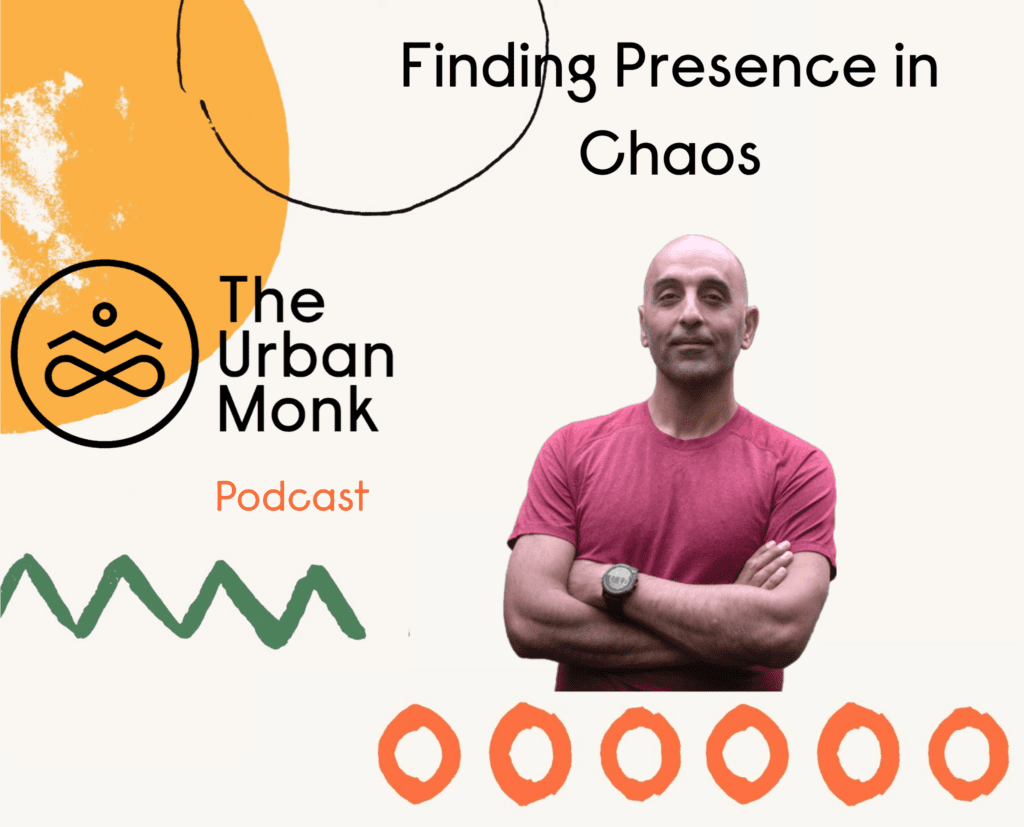
Dr. Pedram Shojai
Episode Description:
Dr. Pedram Shojai discusses navigating anxiety and overwhelm in turbulent times by anchoring attention inward rather than being swept up in external chaos. He shares his decision to release the Lights On book for free rather than water it down for mass market appeal, introduces an upcoming AI-powered health research tool called Upstream, and addresses student questions about the Lights On curriculum. The conversation covers the importance of embodiment over peak experiences, the challenge of journaling and slowing down, and upcoming deep work on decalcifying the pineal gland. This call emphasizes doing the practices rather than collecting them, finding agency through local service, and building internal stability when external circumstances feel uncontrollable.
Listen to the episode on Spotify here or on your favorite podcast platform and check out the Urban Monk Academy here.
Podcast show notes:
[00:00] Introduction and Upstream Tool Preview
- New AI research tool “Upstream” launching next week for academy members
- Validates studies from PubMed and multiple sources, includes medical textbooks
- Adjustable complexity levels: simple explanations, standard detail, or deep scientific dive
- Designed to trace symptoms back to root causes across gut, oral, and hormone health
[00:03] Managing Anxiety in Chaotic Times
- How to emotionally triage external events beyond your control
- The danger of living headline to headline: “a scared animal is a dumb animal”
- Finding agency through local service rather than trying to solve global problems
- Why forest bathing and small acts of service matter more than constant news consumption
[00:06] Publishing Decision: Keeping the Work Intact
- Publisher wanted to “dumb down” the Lights On book for mass market
- Pedram’s decision to walk away and release the book for free instead
- Why students deserve the real work, not a watered-down version
- The problem with the attention economy and why dilution serves no one
[00:08] The Science Behind Lights On Practices
- How perceptual arrays activate consciousness
- Preview of upcoming pineal gland chapter and decalcification work
- Connection between ancient spiritual practices and modern neuroscience
- The role of DMT and MAO in religious and mystical experiences
[00:16] Q&A: Curriculum Troubleshooting
- Addressing student questions about getting stuck in the practices
- The importance of methodically building foundations before advanced work
- Why embodiment matters more than peak experiences
- Remote viewing program background and accessing natural states of awareness
[00:21] The Challenge of Journaling
- Why handwriting is difficult in our fast-paced culture
- The relationship between penmanship quality and nervous system state
- Audio journaling and AI alternatives versus gold standard pen-to-paper
- How writing by hand creates different neural pathways than typing
[00:24] Observing Your Relationship with Time
- The lesson behind the annoyance of slowing down to write
- What we’re losing as technology replaces handwriting and spell-checking
- Teaching kids to actually spell versus relying on autocorrect
- Balancing technology use with analog practices
[00:32] Health Practices for Austin Retreat
- Retreat dates: May 30-31 in Austin, Texas
- How Pedram selects practices based on who’s in the room
- Drawing from 192 different Qigong sets across lineages
- Greatest hits: Silk Weavers, Triple Burner, Daoist level two visualization work
[00:33] Daily Practice Recommendations
- The 3-2-1 Daily Reset as non-negotiable anchor practice
- Following weekly homework assignments in sequence
- When to linger on practices that feel particularly challenging or powerful
- How to incorporate new concepts into your daily 3-2-1 practice
[00:35] Understanding Interoception and Emotion
- Is hunger an emotion or a sensation?
- How to separate physical feelings from emotional reactions
- The elephant parable: exploring each perceptual array individually before integrating
- Decoupling bodily sensations from the labels we assign them
[00:40] Third Eye and Pineal Gland Work
- Coming in week 40 of the curriculum
- How fluoride and other factors cause calcium buildup in the pineal gland
- Using boron and magnesium to decalcify
- The pineal gland as a photosensitive organ in the center of the brain
- Specific Daoist practices for opening the third eye
- Warning: this work creates irreversible awakening
[00:45] The Power of Documentation
- Why we can’t accurately track progress subjectively
- Medical symptom questionnaires show changes we don’t notice day-to-day
- The value of looking back at earlier journal entries
- How external factors (toe pain, noisy kids, world events) cloud self-assessment
[00:48] Digital Addiction and Brain Changes
- Stanford research on addictive circuitry in devices
- How Instagram was designed as a slot machine for attention
- The impact on young people and writing skills
- Teachers encouraging spell-check dependency
[00:52] Community and Closing
- Monthly book: The Four Agreements
- Upcoming retreat information
- The value of in-person practice together
Key Takeaways
- Focus on local problems you can solve rather than consuming fear-inducing headlines about things beyond your control.
- The Lights On book will be released for free rather than watered down for mass market.
- Embodiment through consistent practice matters more than peak experiences.
- Journaling by hand provides biofeedback about your nervous system state.
- The 3-2-1 Daily Reset is your anchor practice with weekly assignments building on it.
- Separate physical sensations from the emotional labels you assign them.
- Pineal gland work comes in week 40 after proper foundations are built.
- Document your practice because subjective progress tracking is unreliable.
Resources Mentioned
- Upstream (AI health research tool launching next week)
- Ancient Practices Retreat (May 30-31, 2026, Austin)
- The Four Agreements by Don Miguel Ruiz
- 3-2-1 Daily Reset
- Temple Grounds
- support@theurbanmonk.com
This episode is for educational purposes only and not intended as medical advice. Consult with qualified healthcare practitioners for personalized guidance.
www.theurbanmonk.com