
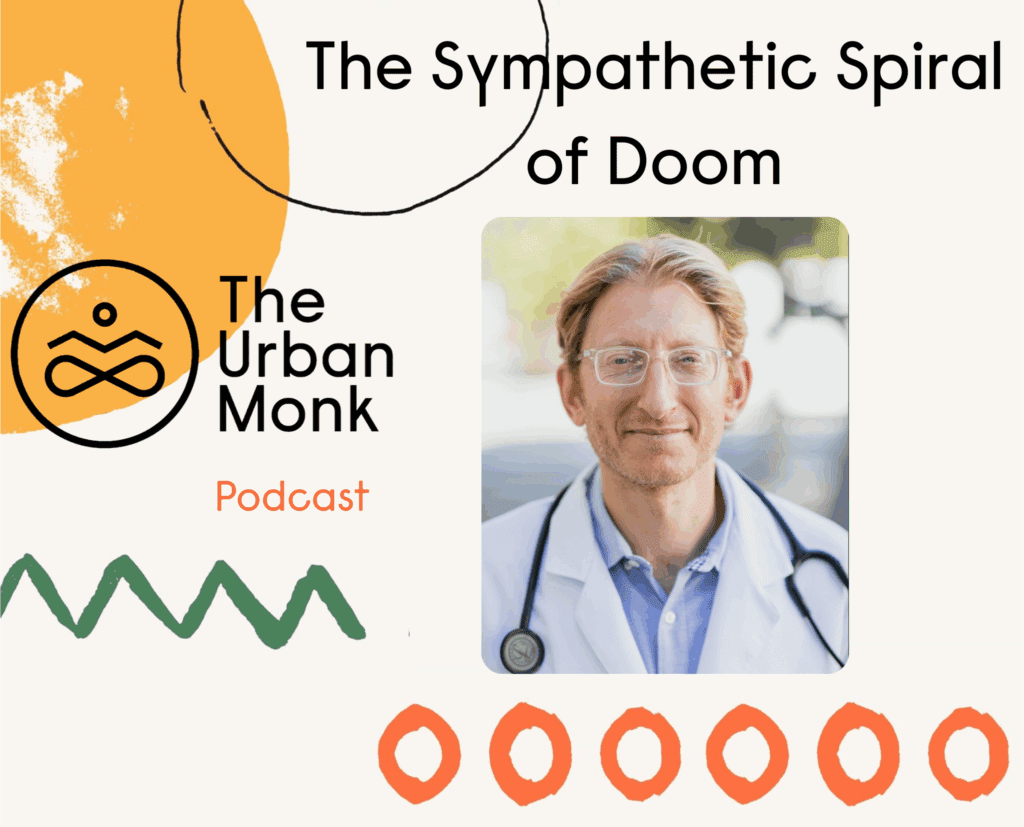
Dr. Scott Sherr
Episode Description:
Dr. Pedram Shojai sits down with integrative medicine physician Dr. Scott Sherr to unpack one of the most overlooked health crises of our time: the sympathetic spiral of doom. When your nervous system gets stuck in fight-or-flight mode, your mitochondria desperately try to produce more energy but lack the resources to sustain it. The result? Plummeting energy, skyrocketing stress, and a body that can’t heal itself. Dr. Sherr explains the intricate dance between sympathetic nervous system activation and mitochondrial dysfunction, revealing how this vicious cycle begins and, more importantly, how to break it. From the surprising role of the GABA system to strategic use of supplements like methylene blue, this conversation offers a roadmap out of chronic stress and exhaustion. If you’re wired but tired, doing more but accomplishing less, this episode is your wake-up call.
Listen to the episode on Spotify here or on your favorite podcast platform and check out the Urban Monk Academy here.
Podcast show notes:
Introduction [00:00:00 – 00:02:00]
- Dr. Shojai introduces the Gateway to Health podcast focus on health, wellness, and weight loss content
- Overview of the “sympathetic spiral of doom” – when sympathetic nervous system activation overwhelms mitochondrial capacity
- Introduction to Dr. Scott Sherr and his integrative approach to health optimization
Dr. Sherr’s Background and the Cultural Problem [00:02:00 – 00:04:00]
- Growing up as the son of a chiropractor and transitioning to conventional medicine
- The “sleep is for quitters” culture in medical training
- Introduction to Health Optimization Medicine and Practice (HOMP)
- Shifting focus from disease management to health optimization
- Recognizing the sympathetic spiral in clinical practice: patients who are “wired but tired”
The Sympathetic-Mitochondrial Connection [00:04:00 – 00:07:00]
- Autonomic nervous system basics: sympathetic (fight-or-flight) vs parasympathetic (rest-digest-detox)
- How chronic sympathetic activation forces mitochondria to produce excessive energy
- The role of catecholamines (norepinephrine, epinephrine, dopamine) and cortisol
- Energy production isn’t free: ATP comes with reactive oxygen species (free radicals)
- Cell danger response: when mitochondria shut down to protect themselves
- The chicken-and-egg problem: sympathetic stress causes mitochondrial dysfunction, which worsens sympathetic activation
The Car in the Closed Garage Analogy [00:07:00 – 00:09:00]
- Why revving the engine (pushing harder) makes things worse
- The challenge of treating patients stuck in this spiral
- Why supplements alone don’t work when you’re “clamped down” in fight-or-flight
- The critical need to address both sympathetic activation AND mitochondrial support simultaneously
The GABA System: The Unsung Hero [00:09:00 – 00:13:00]
- GABA (gamma-aminobutyric acid) as the primary inhibitory neurotransmitter
- Glutamate and GABA represent 80% of brain neurotransmission
- How chronic stress depletes GABA
- GABA deficiency symptoms: anxiety, depression, insomnia, tremors
- Why depression is more likely a GABA deficiency than serotonin deficiency
- The problematic reliance on SSRIs despite lack of evidence for serotonin deficiency theory
- GABA as a sensory gate: controlling information flow into awareness
- Anxious brains: 70,000 thoughts per day becomes 120,000 thoughts with anxiety
The Glutamate-GABA Balance [00:13:00 – 00:17:00]
- Why you shouldn’t just buy glutamate supplements
- The MSG example: what glutamate overload feels like
- Converting glutamate to GABA requires magnesium and B6 (both commonly deficient)
- The glutamine-glutamate-GABA pathway
- Why GABA supplements often indicate a leaky blood-brain barrier
- The diagnostic value of GABA supplement response
- How healing gut permeability affects GABA supplement efficacy
Practical GABA System Support [00:17:00 – 00:23:00]
- The importance of experiencing parasympathetic nervous system activation
- Alcohol and benzodiazepines: why they work and why they’re problematic
- Natural GABA receptor support: cannabis (CBD, CBG, CBN) and kava
- Nicotinamide GABA (B3-GABA): crosses blood-brain barrier effectively
- Muscimol from Amanita muscaria mushroom for sleep support
- Layering supplement support with lifestyle interventions
- Meditation, breathwork, yoga, and Qigong as long-term solutions
The Gut-Brain Connection [00:18:00 – 00:20:00]
- Chinese medicine perspective: digestive dysfunction leads to pensiveness and worry
- The prevalence of leaky gut in modern populations
- How leaky gut depletes essential nutrients
- The challenge of helping people who feel hopeless and exhausted
- Reactive anxiety when coming out of sympathetic dominance
The Caffeine Problem [00:23:00 – 00:27:00]
- Caffeine as the world’s most widely used nootropic
- How caffeine blocks adenosine receptors to create wakefulness
- The “adenosine crush” and inevitable crash
- Caffeine tolerance, dependence, and the morning headache trap
- Using caffeine tactically vs. habitually
- Better alternatives for memory and focus
- Downstream hormonal effects
- The productivity paradox: doing less with a calmer nervous system produces better results
- Parenting with a regulated nervous system
Mitochondrial Function Fundamentals [00:29:00 – 00:34:00]
- Quadrillions of mitochondria in the human body
- Variable mitochondrial density: red blood cells have zero, eggs and sperm have thousands
- Highest concentrations: reproductive cells, brain, heart, liver, muscles
- Where mitochondrial dysfunction shows up: fertility, brain fog, mental health, fatigue
- Mental health disorders as mitochondrial issues (responding to ketogenic diets)
- 94% of US adults have some element of mitochondrial dysfunction
- Only 6% are metabolically healthy
The Six Major Drivers of Mitochondrial Dysfunction [00:31:00 – 00:34:00]
- Insulin resistance (75% of US adults affected)
- Chronic sympathetic activation (the spiral discussed throughout)
- Environmental toxins
- Infections (COVID, mold, Lyme)
- Medications (birth control, PPIs, metformin)
- Lack of stimulation
The Clinical Approach [00:34:00 – 00:39:00]
- Meeting patients where they are
- The leverage of sleep optimization
- Sleep’s role in detoxification via the glymphatic system
- Wind-down routines without alcohol
- Sleep hygiene: consistent timing, dark room, separate beds if needed
- Movement as medicine: combating sedentary lifestyles
- Cornerstone habits: behaviors that cascade into other positive changes
- Charles Duhigg’s “The Power of Habit” recommendation
The Fractal Nature of Health [00:39:00 – 00:41:00]
- Finding base fractals in health optimization
- The Inception principle: helping people believe they discovered solutions themselves
- Sleep as a leverage point: brutal awareness in the quiet night
- “Don’t believe everything you think” – the survival-focused mind
Beyond the Magic Bullet [00:41:00 – 00:45:00]
- Why single supplements don’t solve complex problems
- Creating an ecosystem of health rather than chasing one solution
- The meditation parallel: moving from practice to state of being
- Using technology, wearables, and supplements as temporary scaffolding
- Building intuitive understanding of physiology
- Programming the mind or letting it run to chaos
Advanced Interventions [00:45:00 – 00:49:00]
- Methylene blue for mitochondrial support (4-25mg dosing range)
- Supporting energy production and detoxification
- Importance of clean, uncontaminated sources
- Hyperbaric oxygen therapy (HBOT): when and when NOT to use it
- Why HBOT can make things worse if done during sympathetic spiral
- Optimal timing: 3-6 months after baseline optimization
- Combining therapies: methylene blue + red light + HBOT + sauna
- Being a “conductor” of health optimization rather than following protocols
The Business of Healing [00:49:00 – 00:51:00]
- The lecture titled “Please Don’t Put Them in a Chamber”
- Why providers should tell patients to wait when appropriate
- The paradox: chambers provide stress relief by removing phones and distractions
- Nuance over one-size-fits-all approaches
Resources and Closing [00:51:00 – 00:53:00]
- Dr. Scott Sherr’s website: DrScottSherr.com
- Health Optimization Medicine and Practice: HOPEhope.org
- Troscriptions company products (TRO Calm, TRO Zzz, Just Blue, Blue Canine)
- OneBase Health for technology and software integration
- Dr. Shojai’s reminder: test gut lining, take action, move forward
Key Takeaways
- The sympathetic spiral of doom is a vicious cycle where stress damages mitochondria, which triggers more stress
- GABA system support is critical but requires understanding co-factors and avoiding oversimplification
- Sleep and movement are the most leveraged cornerstone habits
- Supplements and advanced therapies work best after baseline optimization
- 94% of US adults have mitochondrial dysfunction
- The goal is creating an ecosystem of health, not finding a magic bullet
This episode is for educational purposes only and not intended as medical advice. Consult with qualified healthcare practitioners for personalized guidance.
www.theurbanmonk.com