Ancient Longevity Practices Are Finally Getting the Scientific Validation They Deserve
Somewhere in the late 1990s, I sat in a monastery courtyard watching an elderly man move through a Qigong form. Smooth. Deliberate. Every transition exact.
He finished and stood there looking more present — more here — than most people half his age I’d seen in a clinic. I asked his student how old the man was. Eighty-one.
That image has stayed with me for thirty years, because it wasn’t magic. It was the result of longevity practices sustained across a lifetime — rooted in an understanding of the body that predates modern medicine by centuries.
And what I’ve watched unfold in research labs over the last two decades is essentially Western science catching up to what Taoist masters figured out empirically, through observation and practice, a very long time ago.
In this article, you’ll learn which ancient health practices for long life are now backed by peer-reviewed research, why the difference between lifespan and healthspan matters more than you think, and how stress, movement, fasting, community, and gut health all connect in the same longevity framework.
Stay with me — the practical part toward the end is where it gets actionable.
Key Takeaways
- Longevity practices that work are consistent, daily, and integrated — movement, breath, community, purpose, and gut health operating as a system, not isolated habits.
- Chronic stress accelerates biological aging through multiple pathways simultaneously — including systemic inflammation, DNA damage, and telomere shortening (the protective caps on the ends of chromosomes that shorten with age and stress).¹˒²
- Deliberate, low-intensity movement like Qigong and Tai Chi reduces inflammatory markers and improves cardiovascular function in ways high-intensity exercise alone does not.³
- Time-restricted eating activates autophagy — the body’s cellular cleanup process — directly linked to slower accumulation of age-related cellular damage.⁴
- Strong social bonds and a clear sense of purpose are independently associated with up to a 50% increased likelihood of survival, across 148 studies and over 300,000 participants.⁵
- Gut microbiome diversity and barrier integrity are now recognized as central to healthy aging, with dysbiosis linked to the systemic inflammation that drives most age-related disease.⁶
- The gap between lifespan and healthspan is where these practices do their most important work — not just adding years, but keeping those years vital.
Qigong & Tai Chi Course
Your Longevity Practice Starts Here
Temple Grounds is the foundational Qigong and Tai Chi course built on 30+ years of lineage-trained practice — designed to fit real life.
| ● |
Lineage-trained sequences rooted in Taoist tradition |
| ● |
Supports stress resilience, energy, and healthy aging |
| ● |
Self-paced — built for real, busy lives |
Start Temple Grounds →
Self-paced · Lifetime access · Lineage-trained
The Difference Between Living Longer and Living Well
Most people, when they think about living longer, are picturing more years. What people actually want is more good years — more decades of energy, clarity, and presence.
That’s the distinction between lifespan and healthspan, and it’s the one that ancient health practices for long life have always been oriented toward.
Taoist medicine never separated “adding years” from the quality of those years. The whole framework was built around cultivating jing (constitutional essence), qi (vital energy), and shen (spirit) — maintaining these three across a lifetime so that aging happened gracefully rather than as a cascade of accumulated breakdowns.
What researchers now call biological age maps remarkably well onto what traditional Chinese medicine was measuring through pulse diagnosis and vitality indicators long before we had biomarkers and telomere tests.
The goal was never just survival. It was thriving for as long as possible. That reframing matters enormously when you look at which longevity practices actually move the needle.
Research Explainer
Lifespan vs. Healthspan: What the Research Actually Measures
Lifespan
Total years alive
The raw number of years from birth to death — the metric modern medicine has historically optimized for.
↕
Healthspan
Years lived with vitality
The number of years lived with energy, cognitive clarity, physical function, and emotional presence — the metric ancient traditions were always optimizing for.
The Gap — Visualized
The gap between the two bars is where chronic disease, decline, and lost quality of life accumulate.
Why the gap exists
Modern medicine excels at extending lifespan — but the final years are often marked by chronic disease, medication dependency, and diminished function. Healthspan lags behind.
Where ancient practices intervene
Practices like Qigong, time-restricted eating, and community-based living don’t just add years — they compress morbidity, keeping the vital years longer and the decline shorter.
The Taoist Framework
“The goal was never just survival. It was thriving — for as long as possible.”
| Jing — Essence |
| Qi — Vital Energy |
| Shen — Spirit |
theurbanmonk.com · Dr. Pedram Shojai, OMD
What Taoist Longevity Secrets Teach Us About Stress
If you had to identify the single greatest accelerant of biological aging, chronic stress would be a strong candidate.
Research from UCLA’s Cousins Center confirms it drives accelerated aging through multiple simultaneous pathways — systemic inflammation, DNA damage, and telomere shortening.¹
Telomeres, to put it simply, are the protective caps at the ends of your chromosomes. Think of them like the plastic tips on shoelaces — when they erode, the chromosome itself begins to fray. Elevated cortisol is directly associated with shorter telomere length.²
Science Breakdown
How Chronic Stress Ages You Faster: 3 Simultaneous Pathways
The Core Problem
Chronic stress doesn’t age you through one mechanism — it accelerates biological aging through three pathways operating at the same time, compounding the damage with every passing day.
The 3 Pathways
Pathway 01
Systemic Inflammation
What happens
Elevated cortisol keeps the immune system in a low-grade activation state. Over time this chronic inflammatory signaling damages tissues, accelerates cellular aging, and drives the conditions associated with age-related disease.
Inflammation is now recognized as a primary driver of nearly every major chronic disease — from cardiovascular disease to neurodegeneration.¹
What happens
Oxidative stress generated by chronic cortisol elevation damages DNA strands directly. The body’s repair mechanisms become overwhelmed, and errors accumulate — accelerating cellular dysfunction and mutation risk.
UCLA’s Cousins Center research confirms chronic stress drives DNA damage as a distinct aging pathway, separate from and compounding inflammation.¹
Pathway 03
Telomere Shortening
What happens
Elevated cortisol is directly associated with accelerated shortening of telomeres — the protective caps at the ends of chromosomes. As they erode, the chromosome itself becomes vulnerable to damage.
Higher cortisol concentrations are significantly associated with shorter leukocyte telomere length in high-risk young adults.²
The Telomere Analogy
👟
Think of telomeres like the plastic tips on shoelaces. When the tip erodes, the lace — the chromosome itself — begins to fray. Chronic stress wears those tips down faster.
Sources
¹ Brain, Behavior, and Immunity, 2022 — Stress-Induced Biological Aging: A Review and Guide for Research Priorities
² Scientific Reports, 2022 — Higher Hair Cortisol Concentrations Associated with Shorter Leukocyte Telomere Length
theurbanmonk.com · Dr. Pedram Shojai, OMD
This is one of the most underappreciated Taoist longevity secrets: the body cannot build vitality while it’s perpetually in survival mode.
Ancient healers were precise observers of what happened to people in chronic activation — and equally precise about what restored them.
Breath was always the primary tool. Not as a relaxation technique in the modern sense, but as a direct lever on the nervous system.
The breathing practices I trained in at the monastery are physiological interventions that shift the body from sympathetic dominance toward parasympathetic tone — activating the vagus nerve and downregulating the stress response.
Modern research consistently shows that Tai Chi and Qigong significantly improve heart rate variability (HRV) — a key marker of vagal tone and autonomic resilience.³
You can read more about how Qigong specifically rewires the brain’s stress response — the science behind it is worth understanding.
PEMF Vagus Nerve Stimulator
Support Your Nervous System Between Practices
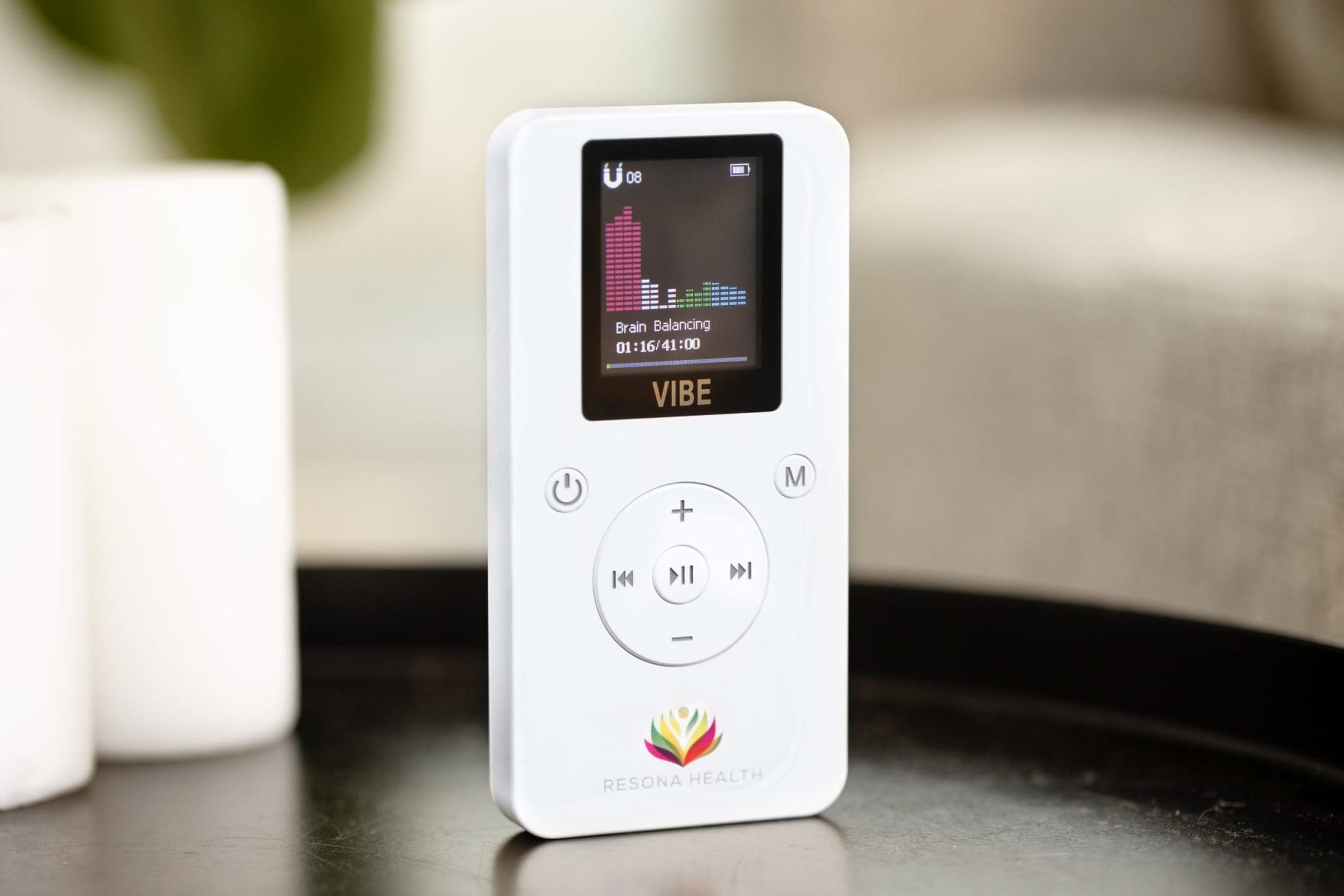
The VIBE is a portable PEMF device designed to activate parasympathetic tone — a natural complement to breathwork and Qigong for anyone serious about stress resilience and longevity.
| ● |
Activates the vagus nerve to shift out of sympathetic dominance |
| ● |
Portable PEMF technology — use it anywhere, anytime |
| ● |
Designed to complement breathwork, Qigong, and daily practice |
Explore the VIBE →
Portable · PEMF Technology · Designed for Daily Use
Movement as Medicine — The Blue Zone Lifestyle in Practice
The ancient longevity traditions don’t prescribe intensity — they prescribe rhythm. And Blue Zone lifestyle practices confirm exactly that.
In Okinawa, Ikaria, and Sardinia — populations with exceptional rates of healthy aging — the characteristic movement isn’t high-intensity training. It’s walking. Gardening. Low-intensity physical activity woven into the fabric of daily life. Not a regimen, but a rhythm.
Qigong and Tai Chi operate in this register. The metabolic demands are real and the neuromuscular coordination is sophisticated, but the emphasis is on flow and sustained practice.
What that produces over time is remarkable: improved balance, reduced inflammatory markers, better cardiovascular efficiency, and improved quality of life across multiple conditions.³
Blue Zone Research
The Blue Zone Movement Blueprint
The Core Insight
Populations with the highest rates of healthy aging don’t have gym memberships — they have rhythm. Movement woven into daily life, not scheduled as a workout.
🇯🇵
Blue Zone · Japan
Okinawa
Primary movement
Gardening, walking, and floor-based living that requires daily squatting, rising, and low-level movement throughout the entire day — not in blocks.
No structured exercise routine — yet cardiovascular health and mobility markers rival populations decades younger.
🇬🇷
Blue Zone · Greece
Ikaria
Primary movement
Hillside walking as part of daily errands and social visits. The terrain itself provides natural resistance training — incidental, sustained, and lifelong.
Among the lowest rates of dementia in the world — researchers attribute this in part to lifelong low-intensity movement and social connection combined.
🇮🇹
Blue Zone · Italy
Sardinia
Primary movement
Shepherding and farming across hilly terrain — functional, purposeful movement tied to livelihood and community. Never exercise for its own sake.
Home to the highest concentration of male centenarians on Earth — a pattern researchers link directly to lifelong occupational movement.
Why Qigong & Tai Chi Fit This Blueprint
| ● |
Low metabolic demand — sustainable daily practice, not recovery-dependent |
| ● |
Sophisticated neuromuscular coordination that builds balance and proprioception over time |
| ● |
Generates energy rather than depleting it — designed to cultivate vitality, not consume it |
What the Research Shows³
↓ Inflammation
Reduced inflammatory markers in practitioners of Qigong and Tai Chi across multiple study populations
↑ HRV
Improved heart rate variability — a key marker of autonomic resilience and cardiovascular health
↑ Balance
Significant improvements in balance and fall prevention — one of the strongest predictors of longevity in older adults
Source
³ Heart and Mind, 2024 — Effects of Tai Chi and Qigong on Heart Rate Variability: A Systematic Review and Meta-Analysis
theurbanmonk.com · Dr. Pedram Shojai, OMD
Explore more on Taoist movement practices for aging well if you want to go deeper.
One student shared it simply after starting Qigong: “I just did the flow and I feel great — relaxed and focused. It works.” That’s not surprising. These practices were designed to generate energy, not just consume it.
🌿
Temple Grounds
Ready to Make Movement a Daily Practice?
Temple Grounds gives you the Qigong and Tai Chi sequences built for longevity — self-paced and lineage-trained.
Explore Temple Grounds →
Cyclical Eating as a Holistic Anti-Aging Approach
Taoist dietary traditions were never about deprivation. They were about timing, quality, and seasonality — eating with natural cycles rather than against them.
What we now call intermittent fasting or time-restricted eating is a modern codification of practices embedded in traditional cultures for millennia.
The mechanism behind why it works as a holistic anti-aging approach is now well understood: when the body goes without food for extended periods, it activates autophagy — a cellular housekeeping process where damaged proteins and dysfunctional organelles are broken down and recycled.⁴
This is associated with reduced cancer risk, neuroprotection, and improved metabolic health. Chronic eating — snacking all day, eating late, never pausing — suppresses it.
The Taoists didn’t know about autophagy. But they understood that giving the body time to rest and restore was foundational to longevity. The principle translates directly.
Cellular Biology Explainer
What Happens Inside Your Cells When You Fast
The Mechanism
Fasting isn’t just about what you don’t eat — it triggers a cascade of cellular repair processes that accumulate damage during constant feeding simply cannot activate.
The 3 Phases of a Fasting Window
Hours 0–4 · Fed State
Digestion & Glucose Metabolism
What’s happening
The body is processing the last meal — breaking down carbohydrates into glucose, releasing insulin, and directing energy toward immediate use and glycogen storage. Cellular repair is on hold.
Autophagy is actively suppressed during this phase. The body prioritizes anabolism — building — over cellular housekeeping.
Hours 4–12 · Transition State
Glycogen Depletion & Metabolic Shift
What’s happening
Insulin levels fall as blood glucose normalizes. The body begins drawing on glycogen stores in the liver. As glycogen depletes, the metabolic switch toward fat oxidation begins — and cellular cleanup signals start to activate.
This transition window is where the body begins signaling cellular maintenance pathways. The length of this phase varies with metabolic health and prior meal composition.
Hours 12–24+ · Fasted State
Autophagy Activation
What’s happening
With glycogen depleted and insulin low, the body fully activates autophagy — breaking down damaged proteins and dysfunctional organelles, recycling their components for cellular repair and renewal.
Research shows intermittent time-restricted eating may meaningfully increase autophagic flux in humans — reducing the cellular debris that drives age-related dysfunction.⁴
Autophagy — What It Actually Does
The body’s cellular cleanup & recycling system
| ● |
Breaks down and removes damaged proteins before they accumulate into dysfunction |
| ● |
Clears dysfunctional mitochondria — restoring cellular energy production efficiency |
| ● |
Linked to reduced cancer risk, neuroprotection, and improved metabolic resilience |
What suppresses autophagy
Frequent snacking, late-night eating, and never extending the overnight fast keep insulin elevated and block the cellular cleanup window from opening. The body stays in build mode — never entering repair mode.
The Taoist Principle Behind the Science
Ancient dietary traditions prescribed eating with natural cycles — not from deprivation, but from the understanding that rest and restoration are as essential as nourishment. The body needs time to turn inward. Modern science now confirms exactly why.
Source
⁴ The Journal of Physiology, 2025 — Intermittent Time-Restricted Eating May Increase Autophagic Flux in Humans: An Exploratory Analysis
theurbanmonk.com · Dr. Pedram Shojai, OMD
Community and Purpose — The Longevity Variables You Can’t Supplement
You can’t supplement your way out of loneliness, and you can’t biohack your way to purpose.
Blue Zone research consistently identifies two factors that cut across culture, geography, and diet: strong social bonds and a clear reason to get up in the morning.
In Okinawa, they call it ikigai. In Sardinia, it’s multi-generational family. In Nicoya, Costa Rica, it’s plan de vida.
Taoist philosophy has always been clear on this. These practices were never solitary — they were transmitted in lineage communities, from teacher to student, with accountability and relationship at the center.
A landmark meta-analysis spanning 148 studies and over 300,000 participants found that individuals with stronger social relationships had a 50% increased likelihood of survival — a finding that held across age, sex, and health status.⁵
Community isn’t optional. For longevity purposes, it’s foundational.
The Gut Is Where Longevity and Energy Cultivation Converge
In Traditional Chinese Medicine (TCM), the digestive system was always the root of post-natal vitality — the source through which we extract nourishment and life force from food.
Longevity and energy cultivation were inseparable in Taoist medicine, and both depended on a healthy, functioning gut.
Modern research is arriving at the same place. The gut microbiome regulates immune function, systemic inflammation, neurotransmitter production, and metabolic health across the entire lifespan.⁶
Gut barrier breakdown — when the intestinal lining becomes compromised — is increasingly recognized as a driver of the chronic low-grade inflammation that underlies most age-related disease.⁶
Conventional medicine does an excellent job identifying and treating acute gut conditions. Where there’s often a gap — not from lack of care, but from how medical specialties are structured — is in catching early gut barrier dysfunction before it becomes a diagnosable condition.
Functional testing closes that gap.
Functional Gut Testing
Your Gut Is the Foundation of Every Longevity Practice
The KBMO Gut Barrier + Food Sensitivity Panel tests the markers that matter most — the ones standard testing doesn’t catch — so you can stop guessing and start building a foundation that holds.
What gets tested
| ● |
Zonulin & Occludin — gut barrier integrity markers |
| ● |
LPS & Candida — systemic inflammation triggers |
| ● |
22 most reactive foods — personalized sensitivity panel |
Test, don’t guess.
Get Tested Now →
Functional Testing · Clinically Validated Markers · Root-Cause Insights
Putting It All Together
I’ve spent over thirty years studying these traditions — embedded in lineage-based teaching, in monasteries and clinics, with teachers who passed this knowledge down the same way I received it: through practice, through relationship.
What I’ve learned is that the longevity practices that work aren’t complicated. They’re consistent. They’re daily. And they’re integrated — movement, breath, community, purpose, and digestion working together as a system.
That integration is what a true holistic anti-aging approach looks like. A way of living.
The research is now confirming what ancient healers practiced for millennia. The question is whether you act on it.
Here’s where to start:
If you want a structured, sustainable entry point into these practices, Temple Grounds is it — the foundational Qigong and Tai Chi course built for people who want lineage-trained practices that actually fit their lives.
If you want the full framework distilled — nervous system rewiring, energy cultivation, perceptual clarity — The Lights On book is the most comprehensive thing I’ve put together across thirty years of practice and clinical work.
And if your gut health hasn’t been on your longevity radar yet, it’s time. The KBMO Gut Barrier Panel + Food Sensitivity Panel gives you the data to stop guessing and start building a foundation that actually holds.
Ancient longevity practices weren’t waiting for science to validate them. But science has finally caught up — and what it found was worth the wait.
The Complete Framework
The 5 Pillars of an Integrated Longevity Practice
Not isolated habits — a living system where each pillar strengthens the others
Why Integration Matters
Any one of these pillars alone produces results. Together — operating as a daily system — they produce the compounding effect that ancient traditions called thriving, and that modern research now calls compressed morbidity.
The longevity principle
Deliberate, low-intensity movement practiced daily — not as exercise, but as a rhythm. Qigong and Tai Chi build cardiovascular resilience, neuromuscular coordination, and anti-inflammatory effects without recovery debt.
The body was designed for sustained, gentle movement — not intermittent intensity. Blue Zone populations confirm it. Ancient traditions built it in by design.³
The longevity principle
Breathwork is the most direct lever on the autonomic nervous system. Slow, deliberate breathing activates vagal tone, lowers cortisol, and shifts the body from sympathetic dominance toward parasympathetic restoration — the state where repair happens.
Improved heart rate variability from Tai Chi and Qigong practice is measurable — and HRV is one of the most reliable biomarkers of biological resilience and healthy aging.³
🌙
Pillar 03
Cyclical Eating
The longevity principle
Eating in alignment with natural cycles — honoring fasting windows, seasonal rhythms, and food quality — activates autophagy and metabolic repair. It’s not caloric restriction; it’s timing and intention.
Time-restricted eating patterns consistent with traditional dietary wisdom are now associated with increased autophagic flux — the cellular cleanup process directly linked to slowed biological aging.⁴
The longevity principle
Strong social bonds are not a soft benefit — they are a measurable biological driver of survival. Accountability, belonging, and shared practice create the relational container that makes every other pillar sustainable.
A meta-analysis of 148 studies and 300,000+ participants found strong social relationships associated with a 50% increased likelihood of survival — holding across age, sex, and health status.⁵
The longevity principle
The gut is where every other pillar lands. Microbiome diversity regulates immune function, neurotransmitter production, systemic inflammation, and metabolic health. A compromised gut undermines every longevity practice built on top of it.
Gut microbiome diversity and barrier integrity are now recognized as central to healthy aging — with dysbiosis directly linked to the chronic inflammation driving most age-related disease.⁶
How the Pillars Work Together
“The longevity practices that work aren’t complicated. They’re consistent. They’re daily. And they’re integrated.”
| ● |
Movement reduces stress → Breath deepens the shift → Eating supports the repair → Community sustains the practice → Gut health amplifies every result |
| ● |
No single pillar is optional — each one either reinforces or undermines the others |
| ● |
This is what a true holistic anti-aging approach looks like: a way of living, not a protocol |
theurbanmonk.com · Dr. Pedram Shojai, OMD
Sources
- Stress-Induced Biological Aging: A Review and Guide for Research Priorities, Brain, Behavior, and Immunity, 2022
- Higher Hair Cortisol Concentrations Associated with Shorter Leukocyte Telomere Length in High-Risk Young Adults, Scientific Reports, 2022
- Effects of Tai Chi and Qigong on Heart Rate Variability: A Systematic Review and Meta-Analysis, Heart and Mind, 2024
- Intermittent Time-Restricted Eating May Increase Autophagic Flux in Humans: An Exploratory Analysis, The Journal of Physiology, 2025
- Social Relationships and Mortality Risk: A Meta-Analytic Review, PLOS Medicine, 2010
- The Gut Microbiome, Aging, and Longevity: A Systematic Review, Nutrients, 2020