
Why Your Hormone Therapy Might Not Be Working: The Missing Link Your Doctor Isn’t Talking About
You’re doing everything right. You’ve worked with your doctor to dial in your hormone replacement therapy. Your labs look perfect on paper. Yet somehow, you still wake up exhausted, struggle to lose weight, feel mentally foggy, and wonder why your body isn’t responding the way it should. Hormone detoxification is one lens for exploring that broader conversation with a qualified clinician, alongside a careful review of symptoms, treatment, and gut health.
Sound familiar?
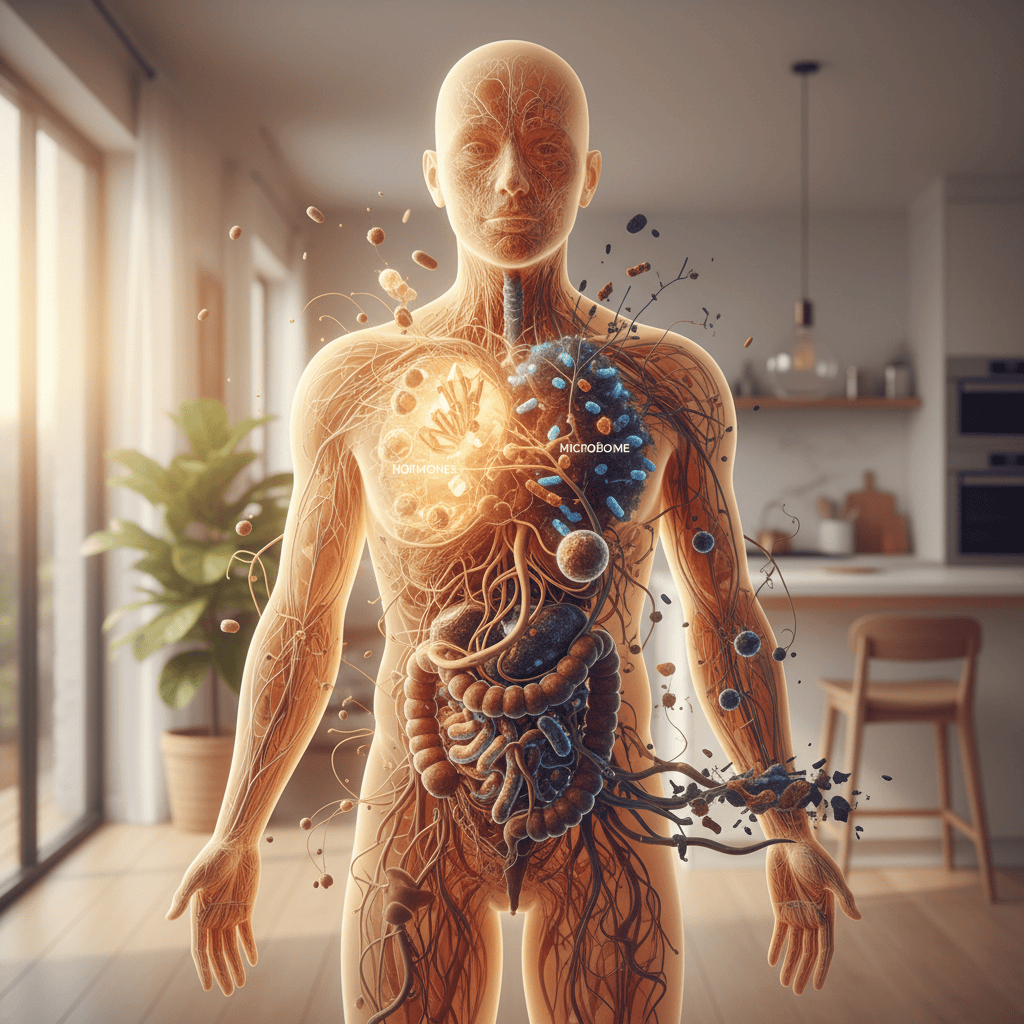
Here’s what most conventional approaches miss: your hormones don’t work in isolation. They’re part of an intricate dance involving trillions of gut bacteria and your body’s detoxification systems. When these systems fall out of sync, even “perfect” hormone levels won’t deliver the results you’re seeking.
Let me explain what’s really happening inside your body—and more importantly, what you can do about it.
For additional education on the digestive side of this conversation, explore The Urban Monk’s Gut Health resources.
Your Gut Microbiome: The Hormone Command Center You Didn’t Know You Had
Inside your digestive tract lives a metropolis of approximately 100 trillion microorganisms that function like a metabolically active endocrine organ [9]. These aren’t just passive residents—they’re actively managing your hormones in ways that can make or break your hormone therapy.
Here’s the fascinating part: after your liver processes hormones (both your natural ones and any you’re taking as replacement), it packages them up and sends them into your gut via bile. Certain gut bacteria produce an enzyme called β-glucuronidase that can “unpackage” these hormones, allowing them to be reabsorbed back into your bloodstream [2].
When your gut microbiome is balanced, this recycling system works beautifully. But when dysbiosis strikes—an imbalance in your gut bacterial populations—things go sideways fast. Too much β-glucuronidase activity? You end up with excess estrogen circulating, even without taking hormones. Too little bacterial diversity from antibiotic use or poor diet? Your body can’t properly recycle hormones, leaving you deficient despite supplementation.
This explains why your hormone labs might look “normal” while you still feel terrible.
Hormone Detoxification, Inflammation, and How Your Gut Affects Hormone Signaling
Your gut bacteria do more than recycle hormones—they produce powerful signaling molecules called short-chain fatty acids (SCFAs) like butyrate, propionate, and acetate [14]. These compounds serve double duty: they fuel your intestinal cells while simultaneously controlling inflammation and improving insulin sensitivity throughout your entire body.
When your microbiome is disrupted, SCFA production plummets. This sets off a domino effect. Your intestinal barrier becomes compromised—think of it as your gut developing tiny leaks. Bacterial fragments called lipopolysaccharides (LPS) slip through these gaps and trigger systemic inflammation [18].
This chronic low-grade inflammation doesn’t just make you feel lousy—it actively sabotages your hormone therapy by:
- Blocking insulin receptors, promoting weight gain and metabolic dysfunction
- Reducing production of sex hormone binding globulin (SHBG), which throws off your hormone balance
- Disrupting cortisol rhythms, leaving you wired and tired
- Interfering with how your cells respond to hormones at the receptor level
You could have perfect hormone levels in your blood, but if inflammation is blocking your cellular receptors, those hormones can’t do their job. It’s like having a key that can’t open the lock.
The Toxin Factor: Environmental Chemicals That Hijack Your Hormones
Here’s where things get even more complex. We’re all swimming in a sea of endocrine-disrupting chemicals (EDCs)—from plastics to pesticides to personal care products. These chemicals don’t just pass through your body harmlessly. They accumulate, interfere with your natural hormones, and block the very receptors your hormone replacement therapy is trying to activate.
Your liver is responsible for clearing these toxins through a two-phase detoxification process. Phase I transforms chemicals into intermediate forms, while Phase II packages them for elimination. But here’s the catch: this system requires specific nutrients to function, and it can be easily overwhelmed by toxin exposure, chronic stress, or—you guessed it—gut dysbiosis [9].
When your gut microbiome is disrupted, it impairs your liver’s detoxification capacity. The same inflammation that blocks hormone receptors also slows down toxin clearance. You end up in a vicious cycle: toxins build up, further disrupting your microbiome, creating more inflammation, and making your hormone therapy less effective.
The Brain-Gut-Hormone Axis: Why Your Mood Affects Your Metabolism
Your gut bacteria also produce neurotransmitters—GABA, serotonin precursors, and dopamine—that directly influence your hypothalamic-pituitary-adrenal (HPA) axis [2]. This is the master control system regulating stress hormones, thyroid function, and sex hormones.
Through multiple pathways including the vagus nerve and immune signaling, your gut is in constant communication with your brain, influencing everything from cortisol release to how your body responds to stress. When this gut-brain connection is disrupted, your entire endocrine system can fall out of balance, regardless of how much hormone replacement you’re taking.
What You Can Actually Do About It
The good news? Understanding these connections opens up new therapeutic possibilities beyond simply adjusting hormone dosages. Here’s where to start:
Support your microbiome foundation:
- Eat fermented foods like sauerkraut, kimchi, and kefir
- Include prebiotic fibers from vegetables, fruits, and resistant starches
- Consider a high-quality probiotic, especially after antibiotic use
- Limit processed foods and artificial sweeteners that harm beneficial bacteria
Reduce your toxic burden:
- Choose organic produce when possible, especially for high-pesticide foods
- Replace plastic food containers with glass
- Switch to clean personal care products and household cleaners
- Support liver detoxification with cruciferous vegetables and adequate hydration
For general background on environmental exposures and endocrine disruptors, see the National Institute of Environmental Health Sciences overview.
Address inflammation systematically:
- Incorporate omega-3 fatty acids from wild-caught fish or quality supplements
- Include anti-inflammatory spices like turmeric and ginger
- Prioritize sleep—it’s when your body repairs and detoxifies
- Manage stress through practices like meditation, breathwork, or time in nature
Work with an integrative practitioner who understands these connections:
- Request comprehensive stool testing to assess your microbiome
- Consider evaluating your toxic burden and detoxification capacity
- Optimize nutrient status for both hormone function and detoxification pathways
The Bottom Line
Your hormones, gut bacteria, and detoxification systems are in constant conversation. When that conversation breaks down, no amount of hormone replacement alone will restore optimal function. The path forward requires addressing all three simultaneously—healing your gut, supporting detoxification, and optimizing hormone levels as an integrated whole.
Your body is wiser than we often give it credit for. When you create the right internal environment, it knows what to do.
Ready to dig deeper? See my free series on supporting your gut-hormone connection, or schedule a consultation with a qualified integrative practitioner who can help you address the root causes of your hormone resistance. Your body is telling you a story—it’s time to listen.
Sources
These sources correspond to the numbered citations in the article and are provided for further reading.
- [2] How the gut microbiome shapes learning and memory: A comprehensive review. IBRO Neuroscience Reports (2025).
- [9] Diabetes Mellitus as an Integrated Microbiome, Immune, and Metabolic Disorder with Clinical Implications for Multisystem Complications and Public Health. Journal of Clinical Medicine (2026).
- [14] Nutrition and the gut microbiome: a symbiotic dialogue influencing health and disease. Frontiers in Nutrition (2026).
- [18] Microbiome modulation as a therapeutic strategy for alcohol-induced gut dysbiosis and associated disorders. Antonie van Leeuwenhoek (2025).
- [4] From farm to fork: Microplastic contamination in the meat and dairy supply chain. Current Research in Food Science (2026).